

 Suche
Suche
 Mein Konto


A study has found that pregnant women who take painkillers are more likely to have complications.
Researchers at Aberdeen University found that there were higher rates of premature births and stillbirths among women who took over-the-counter painkillers such as paracetamol and ibuprofen.
Premature birth was about 50 percent more likely in women who took one of five common painkillers at some point during their pregnancy.
And the study, which looked at more than 150,000 pregnancies over three decades, showed the risk of stillbirth was 33 percent higher.
Up to eight in ten expectant mothers take painkillers to relieve pregnancy symptoms such as fever and joint pain.
But there is conflicting advice about which ones should be taken, with some considered safe and others not.
The NHS says paracetamol is the "first choice" painkiller for pregnant women, but warns against taking high-dose aspirin and anti-inflammatory drugs such as ibuprofen.
Researchers at Aberdeen University argued that their findings suggest the current guidelines need an “urgent” update.
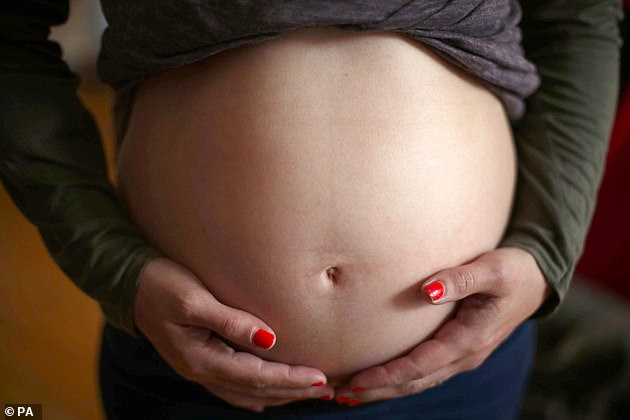
Researchers at Aberdeen University found that there were higher rates of premature births, stillbirths and neonatal deaths among those who took over-the-counter painkillers such as paracetamol and ibuprofen


Up to eight in 10 expectant mothers take painkillers to ease pregnancy symptoms, but there are conflicting recommendations about which medication to take. The NHS says paracetamol (left) is the 'first choice' painkiller for pregnant women, but warns against taking high-dose aspirin and anti-inflammatory drugs such as ibuprofen (right).
The study, one of the largest of its kind, examined more than 151,141 pregnancies between 1985 and 2015.
The team examined the medical notes of women who had taken acetaminophen, aspirin, ibuprofen, diclofenac and naproxen.
Paracetamol is currently considered safe in pregnancy.
But high-dose aspirin is not recommended for pain relief because it can affect the baby's circulation, especially after 30 weeks.
And NSAIDs, which are all the other three, are not recommended for expectant mothers because they are known to affect babies' circulation and kidneys.
The results, published in the scientific journal BMJ opened show that a total of three out of ten women (29 percent) took over-the-counter painkillers during pregnancy.
But the number was twice as high in pregnancies between 2008 and 2015, suggesting use is "increasing rapidly," the researchers said.
Mothers who took at least one of the five painkillers were more likely to have complications. This also included a 28 percent higher risk of their baby having a low birth rate.
The risk of neural tube defects - related to the brain and spine - was 64 percent higher in mothers taking the drugs, while hypospadias, a birth defect that affects the penis, was 27 percent more likely.
Neonatal mortality - when a baby dies within the first four weeks - was 50 percent higher, the results showed.
The researchers warned that taking paracetamol in combination with other NSAIDs was the riskiest mix.
They did not suggest why the drugs caused harm to unborn babies, noting that the mechanism would need to be uncovered in future studies.
Aikaterini Zafeiri, a doctoral researcher at the university and lead author of the study, said expectant mothers should always seek medical advice before taking over-the-counter medications.
She said: “Given the study results, easy access to non-prescription painkillers combined with the availability of misinformation as well as accurate information online raises safety concerns.
“This is particularly true if incorrect or only partially informed decisions about self-medication are made during pregnancy without medical advice.
“It should be emphasized that paracetamol in combination with NSAIDs is associated with a higher risk and pregnant women should always consult their doctor or midwife before taking over-the-counter medications.
“We would encourage a strong strengthening of official advice for pregnant women.”