

 Suche
Suche
 Mein Konto
Novel method uses nanopore tweezers to facilitate inhibition of the SARS-CoV-2 helicase at single nucleotide resolution

In a recent study published on the bioRxiv* preprint server: Researchers visualized the mechanism of action and inhibition of severe acute respiratory syndrome coronavirus 2 (SARS-CoV-2) nonstructural protein 13 (NSP13) with high spatiotemporal resolution. Study: Inhibition of SARS-CoV-2 helicase with single nucleotide resolution. Image credit: atdigit/Shutterstock *Important note: bioRxiv publishes preliminary scientific reports that are not peer-reviewed and therefore should not be considered conclusive, intended to guide clinical practice/health-related behavior, or treated as established information. Background Of all 15 SARS-COV-2 NSPs, NSP13, a ribonucleic acid (RNA) helicase, is crucial for its replication. However, there are currently no approved antiviral medications that...

Novel method uses nanopore tweezers to facilitate inhibition of the SARS-CoV-2 helicase at single nucleotide resolution
In a recent study published in bioRxiv * Preprint server: Researchers visualized the mechanism of action and inhibition of nonstructural protein 13 (NSP13) of severe acute respiratory syndrome coronavirus 2 (SARS-CoV-2) with high spatiotemporal resolution.
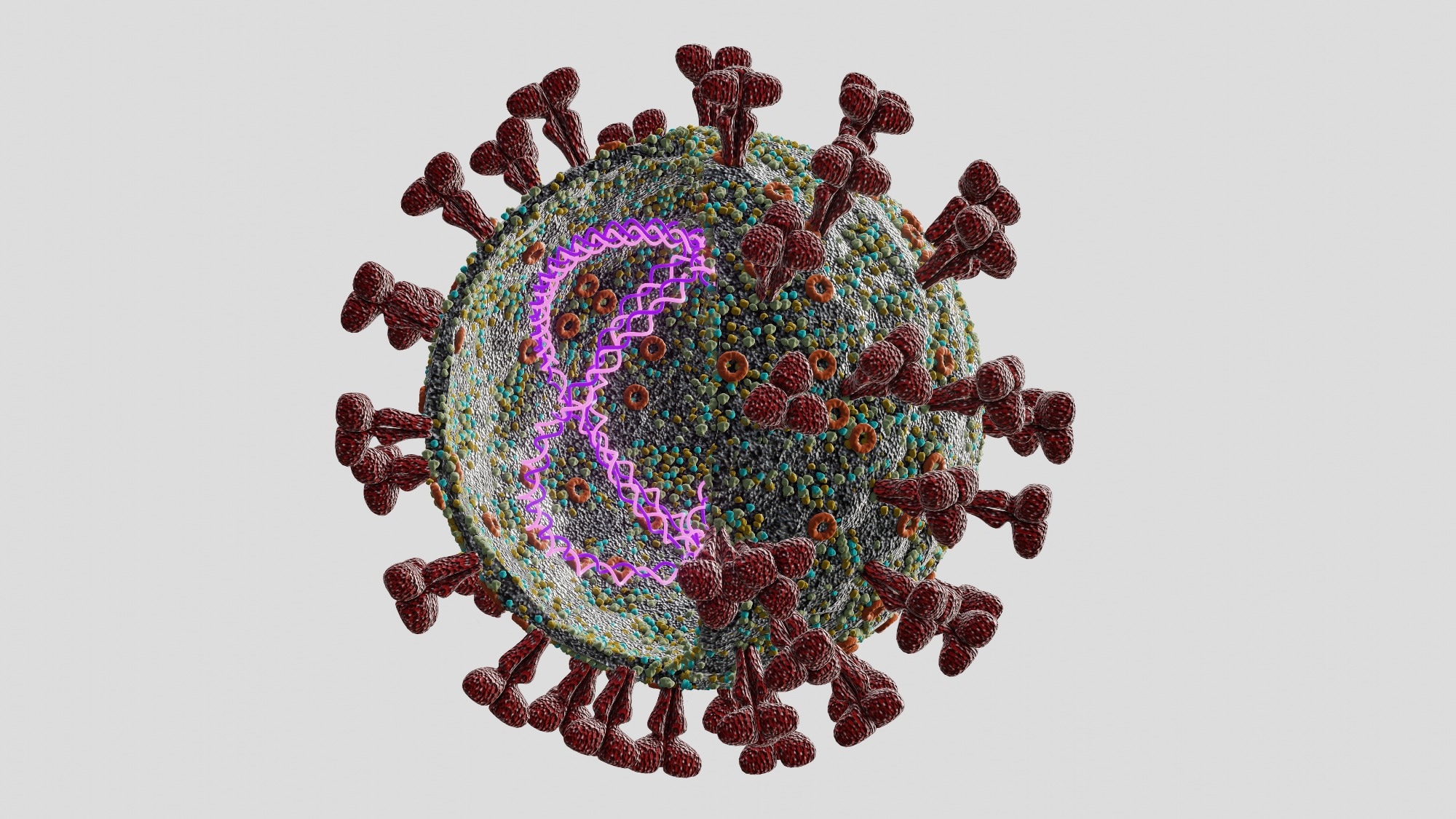
Studie: Hemmung der SARS-CoV-2-Helikase mit Einzelnukleotidauflösung. Bildnachweis: atdigit/Shutterstock
*Important NOTE:bioRxiv publishes preliminary scientific reports that are not peer-reviewed and therefore should not be considered conclusive, intended to guide clinical practice/health-related behavior, or treated as established information.
background
Of all 15 SARS-COV-2 NSPs, NSP13, a ribonucleic acid (RNA) helicase, is crucial for its replication. However, there are currently no approved antiviral drugs that target NSP13. Unlike SARS-CoV-2 structural proteins, the amino acid sequence of nsp13 is one of the most conserved among many types of coronaviruses (CoV) (e.g., Middle Eastern Respiratory Syndrome CoV) and SARS-CoV-2 variants of concern (VOCs). including Omicron. Taken together, this makes nsp13 an attractive broad-spectrum antiviral target with the potential to combat future CoV outbreaks.
Structural and biochemical studies have shown that nsp13 is a superfamily 1B (SF1B) RNA helicase. It utilizes an inchworm mechanism for translocation along single-stranded (ss) nucleic acid (NA) substrates, through which nsp13 likely unwinds NA duplexes. Due to its small step size, single-molecule techniques were unable to decipher the speed at which nsp13 moves along its NA substrate. Such resolution could provide insight into how inhibitory molecules influence their mode of action.
About the study
In the present study, researchers developed single-molecule picometer resolution nanopore tweezers (SPRNT) to measure the steps of SARS-CoV-2 nsp13 movement on DNA strands. In addition, they showed how SPRNT can be used to determine the mechanism of action of a helicase inhibitor. The team designed a single nanopore of Mycobacterium smegmatis porin A (MspA) within a phospholipid bilayer. A voltage applied to this membrane caused a current of ions to flow through the nanopore, drawing negatively charged NA through the pore.
Different NA bases within the nanopore caused unique ionic current blocks that could be decoded into the NA sequence. A helicase bound to the captured NA strand comes to rest at the pore edge and pulls the NA, leading to successive ionic current steps. The team resolved these into single-nucleotide steps on submillisecond time scales to observe the movement of the helicase along the NA. At the same time, they determined the NA sequence of the substrate in the helicase.
It is also noteworthy that SPRNT exerted a force proportional to the applied voltage on the enzyme/NA complex, which supported or resisted the movement of nsp13, depending on which end of the nanopore NA was bound to. In addition, the team observed the movement of NSP13 along NAs in the presence of the adenosine triphosphatase (ATPase) inhibitor ATPγS.
Study results
The researchers recorded 2,413 individual NSP13 translocation and unwinding events and 27,641 helicase steps. The study results confirmed that NSP13 translocated along ssDNA and unwound DNA duplexes at a rate of approximately 100 base pairs per second. The NSP13 translocation rate was ATP dependent, with the maximum reaction rate (Vmax) between 600 and 3000 s−1 and the Michaelis constant (Km) between 100 and 700 µM for ATP, depending on the underlying sequence context within NSP13. Such large differences in translocation rates at different DNA positions suggested that NA base identity influenced NSP13 translocation kinetics.
The study results also showed that the NSP13-DNA complex was less stable and was easier to break apart with force. Varying the supporting force from ~24 PicoNewtons (pN) to ~44 pN at saturated ATP did not cause a significant change in the average translocation rate of NSP13. Furthermore, this suggested that NSP13 translocation was predominantly an ATP hydrolysis-driven movement.
The authors also found that the steps for unwinding the dsDNA duplex were (on average) almost eight times longer than those for ssDNA translocation. Furthermore, unwinding of dsDNA was slower than translocation of ssDNA, although their residence times were correlated. A similar effect was observed in another study examining the SF1A helicase PcrA using SPRNT. Interestingly, the RNA-dependent RNA polymerase (RdRp) of SARS-CoV-2 and NSP13 form a complex at approximately 170 nt/s at 37°C, similar to what was observed as NSP13 unwinding speed with SPRNT.
Furthermore, the authors found that ATPγS impaired the action of NSP13 via several different kinetic processes. However, the predominant mechanism depended on the application of supporting force. Although ATPγS is not a viable drug candidate for NSP13, it demonstrated the power of SPRNT in studying the mechanisms of helicase inhibition. Three methods of NSP13 inhibition have been identified:
i) reducing its processivity,
ii) preventing the joining of its domains 1A and 2A after nucleotide binding and
iii) Slowing of ATPγS hydrolysis compared to ATP.
Conclusions
Overall, the study highlighted SPRNT as a valuable and powerful tool to investigate the role of NSP13 within the replication and transcription complex (RTC) of SARS-CoV-2. The SPRNT method also demonstrated a superior ability to facilitate the study of the kinetics of NSP13 translocation or any helicase, even in the absence of a duplex. Furthermore, SPRNT experiments could facilitate the study of NSP13 on native SARS-CoV-2 sequences to shed light on specific sequence elements of the highly structured SARS-CoV-2 genome and their role in NSP13 regulation.
*Important NOTE:bioRxiv publishes preliminary scientific reports that are not peer-reviewed and therefore should not be considered conclusive, intended to guide clinical practice/health-related behavior, or treated as established information.
Reference:
- Vorläufiger wissenschaftlicher Bericht.
Sinduja K. Marx, Keith J. Mickolajczyk, Jonathan M. Craig, Christopher A. Thomas, Akira M. Pfeffer, Sarah J. Abell, Jessica D. Carrasco, Michaela C. Franzi, Jesse R. Huang, Hwanhee C. Kim, Henry D. Brinkerhoff, Tarun M. Kapoor, Jens H. Gundlach, Andrew H. Laszlo. (2022). Hemmung der SARS-CoV-2-Helikase mit Einzelnukleotidauflösung. bioRxiv. doi: https://doi.org/10.1101/2022.10.07.511351 https://www.biorxiv.org/content/10.1101/2022.10.07.511351v1