

 Suche
Suche
 Mein Konto


Three fox kits died of bird flu in Michigan, officials announced Thursday, as the virus that has plagued flocks of birds worldwide in recent months continues to be found in wildlife.
The Michigan Department of Natural Resources (DNR) reports that three cubs died of highly pathogenic avian influenza (HPAI) in the eastern part of the state between April 1 and April 14, with one being discovered in Macomb County, near Detroit.
Another infected fox was discovered and Macomb - confirmed to be a sibling of the deceased - also survived, but became blind and will no longer be able to return to the wild.
This report comes a day after Minnesota officials announced that a fox cub in their state had also died from the virus, the first such incident in a U.S. wildlife animal.
The virus has spread through poultry populations worldwide in recent months, leading to thousands of birds being culled and causing problems in the supply chain for poultry products.
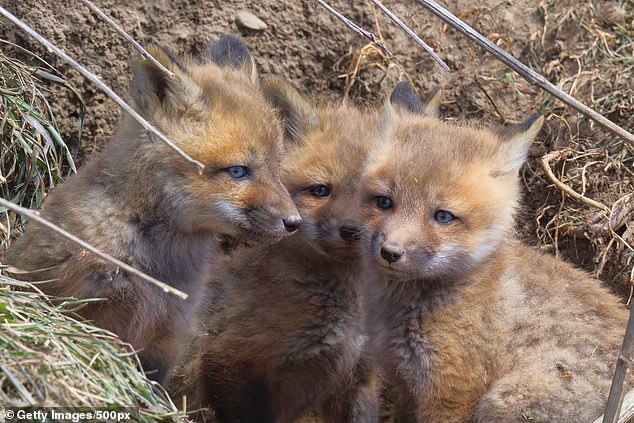
Three fox cubs died in Michigan after contracting bird flu. How they became infected with the virus cannot yet be officially confirmed (file photo)
The DNR received a report that a wildlife rehabilitation center in the southeastern region of this state had observed three fox cubs exhibiting neurological signs of HPAI.
Symptoms included shaking, circling, and seizures. Within hours of being admitted to the facility, two of the foxes had died. The third showed promising signs of recovery early in treatment but also succumbed.
All three foxes tested “non-negative” for the virus. This now marks four confirmed deaths from the avian virus in North America, joining the one death in Minnesota. Officials in Ontario, Canada, also previously reported the death of a fox from the virus.
A fox case was also identified in the Netherlands last year.
The virus has spread across the continent in recent months, leading to widespread bird culling and disrupting the poultry supply chain.
“Highly pathogenic avian influenza is a virus known to affect birds throughout North America, with detections in backyard and commercial poultry facilities in 34 states to date and detections in wild birds in 35 states,” Eric Hilliard of the DNR Wildlife Division, said in a statement.
"HPAI is highly contagious, and poultry are particularly susceptible. In addition, this strain of the virus also affects waterfowl, birds of prey and scavengers such as turkey vultures, eagles and crows."
Hilliard says he is currently unsure how these foxes became infected with the virus.
Officials in Minnesota speculate that the fox that died in their state likely contracted the virus if it was an infected wild bird.
A majority of detected cases of the virus have been found in wild birds, but it can also be easily transmitted to domestic poultry.
Transmission to humans is rare, but also possible. Last month, a Colorado prisoner tested positive for the virus, becoming the first infected person during that surge.

Bird flu has ravaged the global poultry population in recent months, causing the necessary culling of thousands of birds and disrupting global supply chains (photo).
A person can get the virus through contact with an infected bird. If the bird were to peck or scratch them, this could potentially lead to transmission.
The virus is killed when poultry is cooked properly, so humans don't have to worry about getting the virus from eating an infected bird, unlike foxes.
Human-to-human transmission of this version of the virus is not believed to be possible.
Still, officials warn people to remain vigilant as the virus's constant transmission across species opens the door for mutations that could eventually lead to a human outbreak.
“Highly pathogenic avian influenza primarily affects birds, but it is important to remember that it can be a zoonotic disease, meaning it can potentially be transmitted to humans from domestic or wild animals,” Hilliard said.
“According to the US Centers for Disease Control and Prevention, the public health risk associated with HPAI remains low, but they advise people to avoid handling sick or dead wild birds.”