

 Suche
Suche
 Mein Konto
The study concludes that monkeypox virus can be easily detected by qPCR using three clinically validated assays

In a recently published study on medRxiv*, researchers validated monkeypox virus (MPXV) quantitative polymerase chain reaction (qPCR) assays. Learning: Evaluation and clinical validation of monkeypox virus real-time PCR assays. Photo credit: Oscar Martinez Troncoso/Shutterstock Background Cases of human monkeypox (MPX) have rarely been detected outside MPXV-endemic countries since their discovery in the 1970s. This zoonotic disease was neglected until the ongoing outbreak, despite warnings of global spread and evidence of increasing human-to-human transmission. As part of the ongoing MPX outbreak, more than 77,000 MPX cases have been reported from over 100 countries. MPX cases may present with fever, lymphadenopathy, and a papillary rash. In immunocompromised people there is...

The study concludes that monkeypox virus can be easily detected by qPCR using three clinically validated assays
In a recently published study medRxiv *, Researchers validated monkeypox virus (MPXV) quantitative polymerase chain reaction (qPCR) assays.
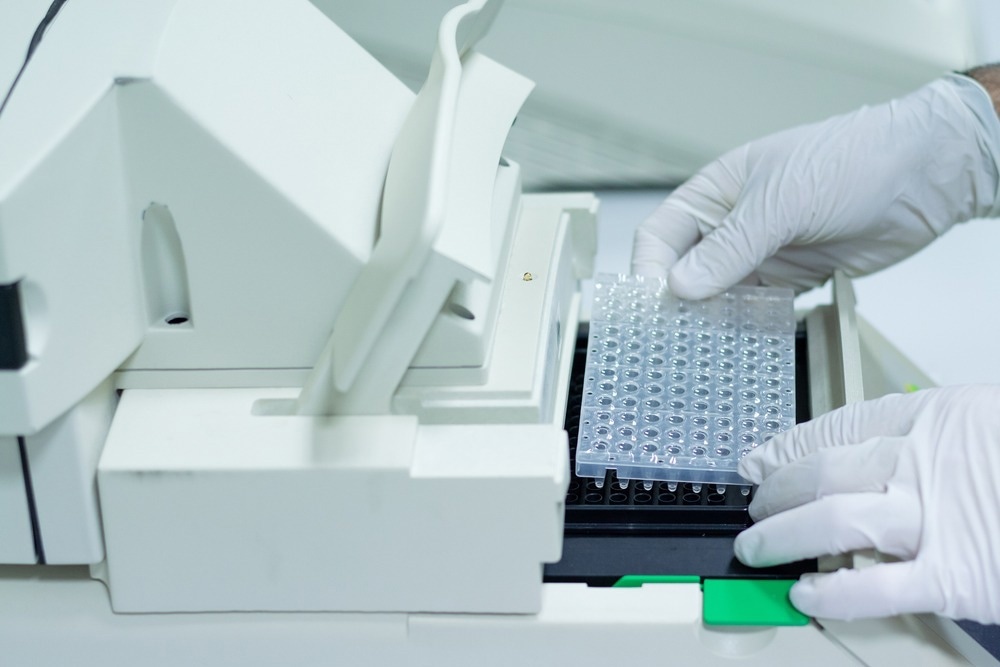
Lernen: Bewertung und klinische Validierung von Affenpockenvirus-Echtzeit-PCR-Assays. Bildnachweis: Oscar Martinez Troncoso/Shutterstock
background
Human monkeypox (MPX) cases have rarely been detected outside MPXV-endemic countries since its discovery in the 1970s. This zoonotic disease was neglected until the ongoing outbreak, despite warnings of global spread and evidence of increasing human-to-human transmission. As part of the ongoing MPX outbreak, more than 77,000 MPX cases have been reported from over 100 countries.
MPX cases may present with fever, lymphadenopathy, and a papillary rash. Immunocompromised individuals are at risk of severe MPX manifestations and even death. The antiviral drug Tecovirimat (Tpoxx) and the vaccine JYNNEOS, originally developed for smallpox, are the only countermeasures against MPX. Because early and rapid virus detection is required for MPX prevention and treatment, the development of qPCR assays is critical to disrupt transmission networks.
The study and results
In the present study, researchers evaluated two MPXV-specific qPCR assays targeting the G2R and F3L loci and compared their sensitivity, specificity, and accuracy to the Centers for Disease Control and Prevention (CDC) pan-orthopoxvirus assay (OPXV-E9L). The authors commercially purchased synthetic MPXV DNA (VR-3270SD) due to the limited supply of clinical MPXV samples and genomic DNA in spring 2022.
The purchased template (VR-3270SD) had binding sites for primers and probes for numerous previously developed assays. The researchers estimated the exact copy number of this standard by droplet digital PCR (ddPCR) to be 1.29 x 10⁸ copies/ml for the MPXV-F3L and OPXV-E9L loci and 1.3 x 10⁸ copies/ml for the MPXV-G2R locus.
The authors tested 15 herpes simplex virus (HSV)-positive, 17 varicella-zoster virus (VZV)-positive, and 52 HSV/VZV-negative skin swab samples using the OPXV-E9L assay and verified that they were negative for MPXV. The F3L assay did not detect MPXV DNA in these samples, while in the G2R assay, a VZV-positive sample was found positive for G2R but tested G2R negative when repeated.
The G2R and F3L assays showed a negative percent agreement of 98.8% and 100%, respectively, in 84 samples. Next, the team tested the cross-reactivity of the MPXV assays with camelpox (CMLV), cowpox (CPXV), and vaccinia (VACV) viruses, which are close phylogenetic relatives of MPXV. The MPXV-F3L and G2R assays did not detect the DNAs of CMLV, CPXV, and VACV, while the OPXV-E9L assay showed average cycle thresholds (Ct) of 19.8, 25.8, and 23.8, respectively.
Genetics & Genomics eBook
Compilation of the top interviews, articles and news from the last year. Download a free copy
The ability to detect MPXV DNA was assessed using artificial positive results. Positive percent agreement was 100% for the OPXV E9L assay and 99.1% for the MPXV G2R and F3L assays. In addition, they tested whether G2R and F3L assays would accurately detect MPXV in (clinical) samples and secured seven MPXV-positive skin swab samples from a public health laboratory (PHL).
The PHL samples were diluted 1:40 before extraction due to volume limitations. Twenty clinical MPXV samples that tested positive in the F3L assay were tested simultaneously with OPXV-E9L and MPXV-G2R assays. The MPXV-specific assays had, on average, lower Ct values than the OPXV-E9L assay for each sample. Furthermore, the G2R assay had a lower Ct value than the F3L assay in each sample, consistent with two G2R copies in the MPXV genome.
The researchers estimated the limit of detection (LoD) to be 330 copies/mL, which corresponds to 3.3 copies per (PCR) reaction using standard extraction methods for MPXV F3L and G2R assays. They also validated the MPXV-F3L assay using different sample types such as: B. CSF, urine, serum, plasma, whole blood and oral/rectal/nasopharyngeal/vaginal swabs.
Negative percent agreement was 100% for all sample types. The positive percent agreement was 100% for nasopharyngeal/rectal/vaginal swabs, plasma, CSF, whole blood and breast milk, 95.7% for urine samples and 95.5% for serum samples. The LoD for these samples was estimated to be 1000 copies/mL (10 copies/mL per reaction).
Using clinical MPXV samples, negative percent agreement was 100% for saliva, semen, and rectal/oral/dry swabs. Positive percent agreement was 100% for saliva, rectal swabs, and semen and 95% for oral/dry swabs. The LoD for the F3L assay was 260 copies/mL for semen, 780 copies/mL for saliva, rectal and oral swabs, and 810 copies/smear for dry swabs.
Conclusions
In summary, the present study evaluated the sensitivity and specificity of MPXV-specific primer and probe sets along with a pan-orthopoxvirus assay. The LoD for these assays was as low as 3.3 copies per (PCR) reaction by extraction from up to 250 μL of sample. None of the assays showed cross-reactivity with VZV or HSV, indicating high specificity.
Overall, the performance of the three assays for MPXV detection was comparable, with each being highly sensitive for MPXV DNA. The MPXV-F3L assay had high specificity for MPXV and showed no cross-reactivity with HSV or other orthopoxviruses and will be a critical tool in reducing MPXV transmission in the ongoing outbreak.
*Important NOTE
medRxiv publishes preliminary scientific reports that have not been peer-reviewed and therefore should not be considered conclusive, guide clinical practice/health-related behavior, or treated as established information.
Reference:
- Mills, M. et al. (2022) „Bewertung und klinische Validierung von Affenpockenvirus-Echtzeit-PCR-Assays“. medRxiv. doi: 10.1101/2022.11.12.22282254. https://www.medrxiv.org/content/10.1101/2022.11.12.22282254v1
.