

 Suche
Suche
 Mein Konto


Vegetarians and vegans may be missing key protein sources that can protect against high blood pressure, research suggests.
Chinese scientists analyzed the diets of 12,200 adults and looked at their consumption of eight different protein sources.
These were: poultry, fish, eggs, red meat, processed red meat, whole grains, refined grains and legumes (a class of vegetables including lentils and beans).
Researchers compared those who ate fewer than two of these protein-rich foods to those who had four or more.
The group that consumed more protein sources had a 66 percent lower risk of developing high blood pressure.
Since only three of the eight types of protein were plant-based, this suggests that a diet that also includes meat and fish could be beneficial for blood pressure.
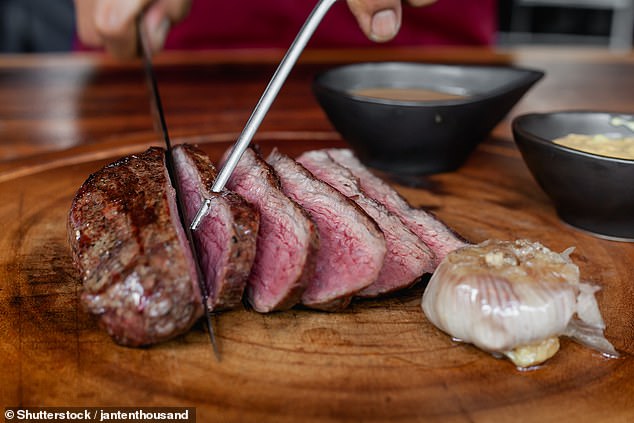
Chinese scientists found that people who ate a variety of proteins such as red meat, fish, eggs and beans had a lower risk of developing high blood pressure - a known factor in the development of heart disease
Vegetarians usually get their protein - which is essential for maintaining healthy muscles and bones - from beans or eggs.
Vegans have even more limited options and typically rely on lentils or tofu as sources of the macronutrient.
The researchers from Nanfang Hospital at Southern Medical University in Guangzhou said consuming proteins from different foods can provide different amino acids that are more nutritious.
However, previous studies on protein suggested that it had no effect on blood pressure, so the team admitted that further research was needed.
Tracy Parker, from the British Heart Foundation, said: "It's not about having a hard rule about no red meat or dairy, but about a balance."
Around 160,000 Brits die from strokes, heart attacks and heart failure every year - around one every three minutes.
In the United States alone, 660,000 Americans die from heart disease each year, accounting for a quarter of all deaths.
Protein is used by the body to grow and repair muscles and tissues and is found in greatest amounts in animal meat, fish and eggs.
For the study published in the journal hypertension Researchers analyzed nutritional and health data from 12,200 adults in China between 1997 and 2015.
The participants' daily diet was examined at least twice on three consecutive days over the 18 years.
Each received a score out of eight based on the variety of proteins they consumed, and received one point for each of the different groups.
The researchers then compared this data to new diagnoses of high blood pressure in the participants and tracked them for an average of six years.
At the end of the study, 35 percent of participants developed high blood pressure.
But those who scored four or more on protein diversity were 66 percent less likely to be diagnosed with high blood pressure compared to those who scored just two.
The researchers said a variety of both plant and animal proteins provide the lowest risk of developing high blood pressure.
Study author Dr. Xianhui Qin said the results suggested that focusing on a single protein source could harm heart health.
"The message for heart health is that a balanced diet with proteins from a variety of sources, rather than focusing on a single dietary protein source, can help prevent the development of high blood pressure," said Dr. Qin.
The study was only observational, meaning they couldn't definitively prove that protein diversity was associated with preventing high blood pressure.
NHS guidelines recommend adults consume 50g of protein per day.
WHAT SHOULD A BALANCED DIET LOOK LIKE?
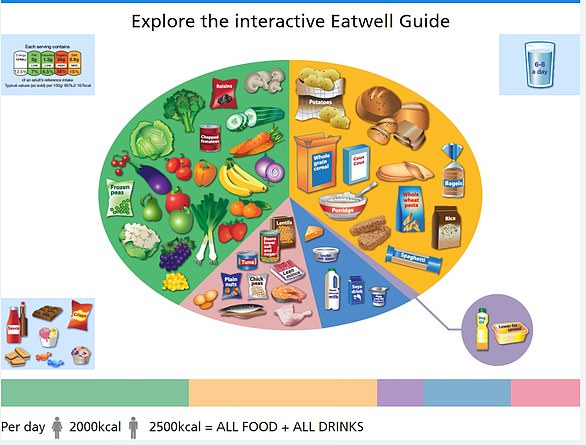
According to the NHS, meals should be based on potatoes, bread, rice, pasta or other starchy carbohydrates, ideally whole grains
• Eat at least 5 portions of a variety of fruits and vegetables every day. All fresh, frozen, dried and canned fruits and vegetables count
• Basic meals based on potatoes, bread, rice, pasta or other starchy carbohydrates, ideally whole grains
• 30 grams of fiber per day: This is equivalent to eating all of the following: 5 servings of fruits and vegetables, 2 whole-wheat biscuits, 2 thick slices of whole-wheat bread, and a large baked potato with skin on
• Have some dairy products or milk alternatives (like soy drinks) and choose options with less fat and less sugar
• Eat some beans, legumes, fish, eggs, meat and other proteins (including 2 servings of fish per week, one of which should be oily)
• Choose unsaturated oils and spreads and consume them in small quantities
• Drink 6-8 cups/glasses of water daily
• Adults should consume less than 6g of salt and 20g of saturated fat per day for women or 30g for men
Source: NHS Eatwell Guide