

 Suche
Suche
 Mein Konto
Case report of post-orgasmic illness treated with antihistamines

Post-orgasmic illness syndrome (POIS) is a very rare condition characterized by allergy or flu-like symptoms immediately after ejaculation. POIS can persist for seven days before spontaneously dissipating. In a recent Urology Case Reports journal study, scientists discuss a POIS patient's experience with treatment with an antihistamine. Learning: Post-Orgasmic Illness Syndrome Successfully Treated with Antihistamine: A Case Report. Photo credit: Sonis Photography / Shutterstock.com Background POIS patients most often show symptoms such as extreme fatigue, a flu-like feeling, fever or sweating, muscle weakness, memory problems, mood swings, incoherent speech, problems concentrating, itchy eyes and stuffy nose. POIS patients can experience symptoms within seconds, minutes, or several hours after...

Case report of post-orgasmic illness treated with antihistamines
Post-orgasmic illness syndrome (POIS) is a very rare condition characterized by allergy or flu-like symptoms immediately after ejaculation. POIS can persist for seven days before spontaneously dissipating.
In a recent Urological case reports In a journal study, scientists discuss a POIS patient's experience with treatment with an antihistamine.
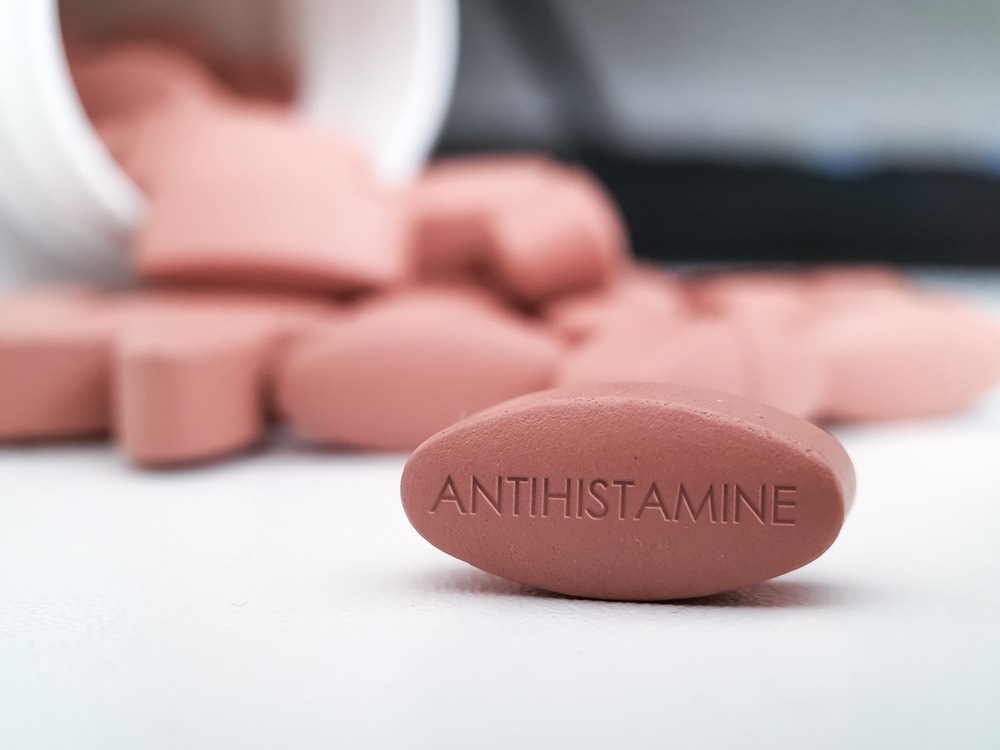
Learn: Post-orgasmic illness syndrome successfully treated with antihistamine: A case report.Photo credit: Sonis Photography / Shutterstock.com
background
POIS patients usually show symptoms such as extreme fatigue, a flu-like feeling, fever or sweating, muscle weakness, memory problems, mood swings, incoherent speech, problems concentrating, itchy eyes and stuffy nose.
POIS patients may experience ejaculation within seconds, minutes, or several hours after ejaculation, which occurs through masturbation, coitus, and/or spontaneously, e.g. B. triggered during sleep, show one or more of the symptoms mentioned above. Most symptoms last between two and seven days, after which they disappear spontaneously.
About the case study
A 27-year-old healthy male patient complained of flu-like symptoms including rhinorrhea, cough, sneezing, and a hives-like rash on his forearms after ejaculation. In addition, this patient complained of facial and cervical lymphadenopathy, which became severe with increased ejaculation frequency.
These symptoms manifested themselves regardless of ejaculation through sexual intercourse or masturbation. The patient was so disturbed by these symptoms that he actively avoided any sexual activity or romantic relationship.
The patient reported that the above symptoms began at approximately 18 years of age and that he suffered a suspected case of acute epididymitis, which was treated with trimethoprim-sulfamethoxazole. He also contracted a chlamydia infection, which was successfully treated with medication.
Previously, the patient consulted three urologists, an infectious disease specialist, an otolaryngologist and an allergist. He was diagnosed with hay fever, while an allergen test revealed he was sensitive to poison ivy and was diagnosed with a cantaloupe allergy.
Scrotal ultrasound, testosterone levels and semen analysis showed no abnormalities. The patient also underwent antibiotic treatment, which did not improve his condition.
Recently, the patient was advised to take over-the-counter diphenhydramine every day with a gradual increase in ejaculation frequency. The patient was also referred to an allergist specializing in immunology for an autologous prick test and treated with a daily dose of 180 mg of fexofenadine.
Interestingly, the patient's symptoms improved with a 90% decrease in POIS. This treatment allowed him to resume sexual activity.
Possible cause of POIS
Although the exact etiology of POIS is not clear, the generally accepted theory involves the manifestation of symptoms of type I and type IV allergic reactions to autologous seeds. This theory is supported by positive skin prick test results in 88% of men with a high probability of POIS.
POIS is also found in men who have undergone sterilization. Taking into account previous studies, it was found that if the immune response was the main cause of POIS and if the disease was also found in sterilized men, it is very likely that the antigen was present in the seminal fluid and not just the semen.
Because the POIS patient in the current case study developed symptoms after suspected epididymitis, there was a possibility that the epididymitis had induced the onset of an autoimmune process.
Current approaches to POIS management
To date, no single effective therapy for POIS is available. Nevertheless, several treatments are used to treat POIS patients, including immunotherapies and selective serotonin reuptake inhibitors.
Previously, a POIS patient showed 60% symptomatic improvement for 31 months when he underwent desensitization by injection of diluted autologous sperm. The concentration of autologous semen was gradually increased based on the patient's clinical response.
Another patient showed a 90% symptomatic improvement over 15 months after this treatment. Although this treatment holds promise for improving the quality of life of POIS patients, it is costly and requires frequent hospital visits for injections.
A clinical trial conducted in Brazil evaluated the effectiveness of immunotherapy in POIS patients. This study found that immunotherapy did not significantly relieve POIS symptoms.
Conclusions
The present study showed that the POIS patient treated with daily fexofenadine showed 90% improvement in symptoms. However, no symptomatic improvement was observed when treated with diphenhydramine.
Although both diphenhydramine and fexofenadine have similar mechanisms of action, fexofenadine was more effective and was more easily tolerated by the patient as a daily dosing regimen. This was due to the long-lasting and non-sedating nature of the drug. Another advantage of treatment with fexofenadine is that this drug is inexpensive and is associated with a good safety profile.
Future research with a larger study cohort is needed to determine the therapeutic benefit of fexofenadine in POIS treatment.
Reference:
- Shanholtzer, A., Stephens, JR, Lauter, C., & Peters, KM (2022) Postorgastisches Krankheitssyndrom erfolgreich mit Antihistamin behandelt: Ein Fallbericht. Urologische Fallberichte. doi:10.1016/j.eucr.2022.102189
.