

 Suche
Suche
 Mein Konto
Small antiviral molecules called assembly modulators show therapeutic activity against cancer

In a recent study published in the bioRxiv*Server, researchers examined the anticancer therapeutic efficacy of two structurally unrelated small molecules, PAV-617 and PAV-951. Learning: Modulators of small molecule assembly with therapeutic efficacy in cancer. Image credit: Fusebulb/Shutterstock *Important note: bioRxiv publishes preliminary scientific reports that are not peer-reviewed and therefore should not be considered conclusive, intended to guide clinical practice/health-related behavior, or treated as established information. Background In cell culture experiments, PAV-617 and PAV-951 demonstrated inhibitory activity against monkeypox virus (MPXV) and human immunodeficiency virus (HIV). Javier and Butel (2008) observed similarities...

Small antiviral molecules called assembly modulators show therapeutic activity against cancer
In a recent study published in bioRxiv *Server researchers examined the anticancer therapeutic efficacy of two structurally unrelated small molecules, PAV-617 and PAV-951.
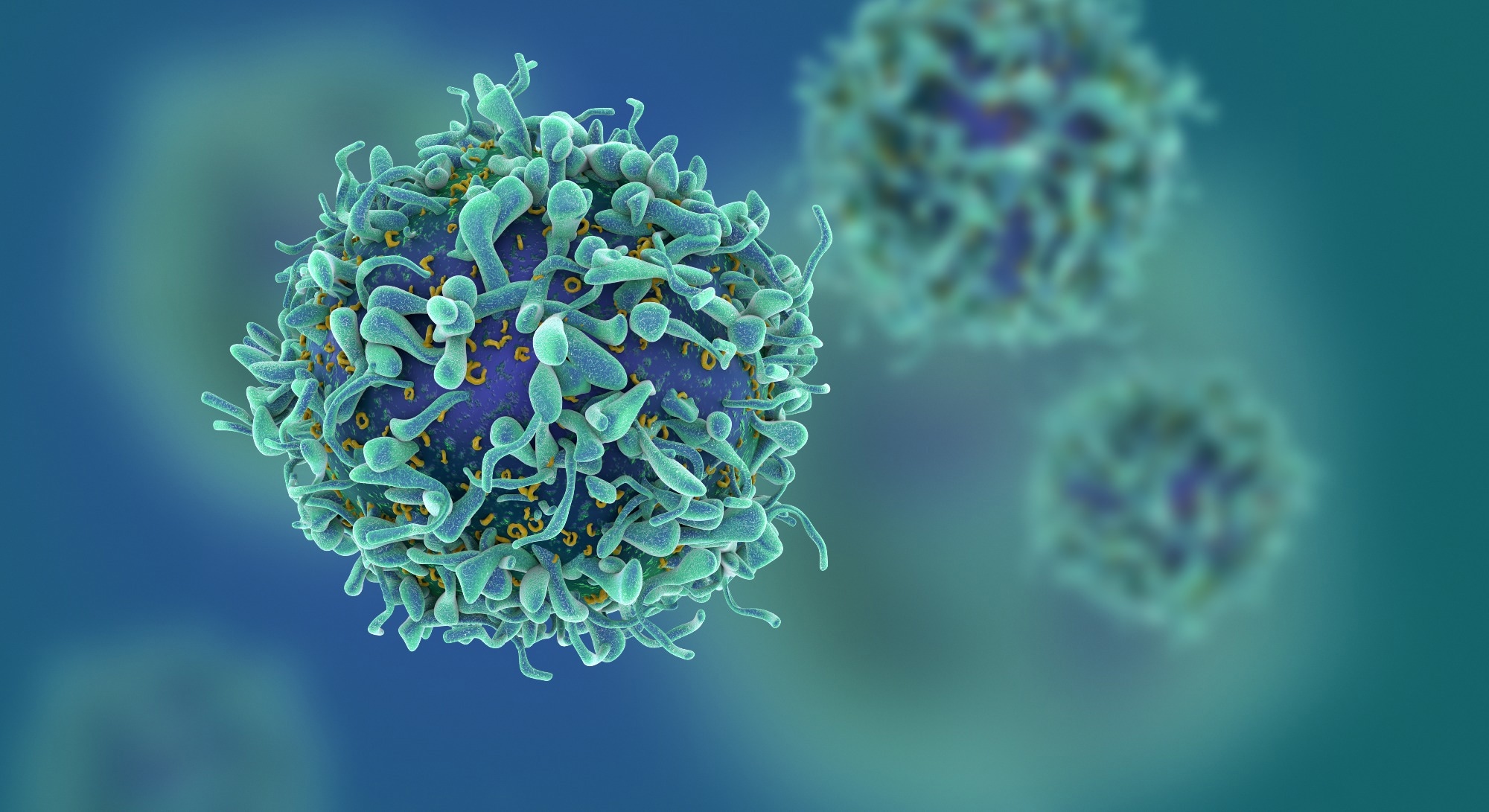
Lernen: Modulatoren der Assemblierung kleiner Moleküle mit therapeutischer Wirksamkeit bei Krebserkrankungen. Bildnachweis: Fusebulb/Shutterstock
*Important NOTE:bioRxiv publishes preliminary scientific reports that are not peer-reviewed and therefore should not be considered conclusive, intended to guide clinical practice/health-related behavior, or treated as established information.
background
In cell culture experiments, PAV-617 and PAV-951 showed inhibitory activity against monkeypox virus (MPXV) and human immunodeficiency virus (HIV). Javier and Butel (2008) observed similarities in the way viruses and cancer cells interact with a healthy host; For example, both use natural selection as a powerful weapon to overcome the host's defenses. The difference is that although viruses co-evolve with the host or develop resistance mutations, cancers only use the latter in response to the selection pressure of treatments.
In addition, the researchers showed that seven viruses were directly oncogenic. Examples include Epstein-Barr virus (EBV), hepatitis B and C virus (HBV/HCV), and human T-lymphotropic virus 1 (HTLV-1). O'Shea (2005) suggested that the study of viruses could facilitate the discovery of new cancer treatments by identifying cellular targets that drive tumorigenesis. Later, Müller-Schiffmann et al. developed a rather unconventional approach to antiviral drug discovery by identifying host allosteric sites important for homeostasis that were repurposed by viral infection. The hit compounds identified in this way were referred to as assembly modulators. They also validated these modulator compounds against the live virus in cell cultures of several virus families, Retroviridae, Orthomyxoviradae and Poxviridae, to name a few.
About the study
Since both viruses and cancer drive deviation from homeostasis, researchers in the present study sought to determine whether previously identified assembly modulators have anticancer therapeutic activity in order to propose a new method for the development of cancer therapeutics. They used a cell-free protein synthesis and assembly (CFPSA) system to screen a library of about 150,000 drug-like small molecules that blocked the assembly of viral capsids without inhibiting host protein synthesis. In addition, they established a cancer-relevant counterscreen and applied it to previously identified assembly-modulating compounds. They also conducted in vivo screening and in vitro validation studies.
Study results
PAV-617 and PAV-951, two antiviral assembly modulator compounds selected in a novel screen for their ability to significantly arrest proliferation, were found to be cytotoxic to a variety of neoplastic cell lines representing both rare and common cancers. Early in their drug optimization, these compounds showed the same effect as the commercial cancer drug gemcitabine, albeit at 10- and 60-fold lower doses, inhibiting the growth of an A549 tumor in immunodeficient mice.
Drug resin affinity chromatography (DRAC) and photocrosslinking experiments showed that PAV-617 and PAV-951 interacted with proteins that formed dynamic multiprotein complexes. These results suggest a disease model study of pathogenesis in which previously overlooked transient multiprotein complexes played an important role in the dynamics linking cell proliferation to apoptosis.
In particular, the authors identified KAP1/TRIM28 as a common target of PAV-617 and PAV-951 in mass spectrometry (MS) and Western blotting. Cross-linking experiments showed that KAP1 was present in a complex targeted by PAV-617 under native conditions but was lost upon denaturation. It may have been a distal component of the PAV-617 target multiprotein complex. For PAV-951, the data suggest that a portion of KAP1 may be directly bound to the compound, suggesting the presence of more than one copy of KAP1 per multiprotein complex.
Previous studies have demonstrated the involvement of KAP1 in a range of protein-protein interactions and functions. For example, it played a crucial role in HIV transcriptional activation and T cell development. Additional functions of KAP1 included deoxyribonucleic acid (DNA) damage repair, transcriptional co-repression of genes, and post-translational modifications.
The researchers found that PAV-617 and PAV-951 selectively target subfractions of cellular KAP1. Cross-depletion, in which the flowthrough of the PAV-617 resin was applied to a new PAV-951 resin, demonstrated that the PAV 617-binding subfraction of KAP1 must be distinguishable from the PAV-951-binding subfraction of KAP1, since depletion of one did not result in complete depletion of the other. These results for PAV-617 and PAV-951 mirrored those made for PAV-104, a structurally unrelated modulator with pan-respiratory antiviral activity.
Conclusions
The first screening of CFPSA capsid assembly identified novel targets relevant to viruses and cancer. Further development of the structure-activity relationship (SAR) of PAV-617 and PAV-951 could further help determine whether the antiviral and anticancer targets are identical or not.
Although assembly-modulating compounds are structurally distinct, they have shown few common properties, including targeting of multiprotein complexes, selectivity for a small fraction of the total amount of a given protein in a cell, and allosteric mechanisms of action. In addition, they showed remarkable activity against a broad category of pathogens (e.g., pan-virus family and pan-cancer), similar to existing drugs. Furthermore, these compounds appeared to resist the development of resistance. Further studies should clarify whether mutation resistance also applies to the anticancer subgroup of assembly modulators.
Effective anticancer drugs have been developed based on various mechanisms and molecular genetic tools; However, no one has attempted to treat cancer by modulating protein assembly. This makes working with PAV-617 and PAV-951 both risky and rewarding. The animal toxicity of PAV-617 and PAV-951 was higher than would be ideal for their clinical use; However, they were comparable to existing cancer drugs. Because PAV-617 and PAV-951 are early compounds, further optimization will likely result in chemical analogues with significantly reduced toxicity and higher potency.
*Important NOTE:bioRxiv publishes preliminary scientific reports that are not peer-reviewed and therefore should not be considered conclusive, intended to guide clinical practice/health-related behavior, or treated as established information.
Reference:
- Vorläufiger wissenschaftlicher Bericht.
Anuradha F. Lingappa, Olayemi Akintunde, Connie Ewald et al. (2022). Modulatoren der Assemblierung kleiner Moleküle mit therapeutischer Wirksamkeit bei Krebserkrankungen. bioRxiv. doi: https://doi.org/10.1101/2022.09.28.509937 https://www.biorxiv.org/content/10.1101/2022.09.28.509937v1
.