

 Suche
Suche
 Mein Konto


A popular NHS treatment for Britain's most common sleep disorder is not helping older patients, a new study has found.
Patients over 80 with sleep apnea, which causes people to breathe repeatedly throughout the night, saw no improvement after undergoing continuous positive airway pressure, also known as CPAP.
The technique uses a stream of air delivered through a mask to keep a person's airway open, allowing them to breathe continuously throughout the night.
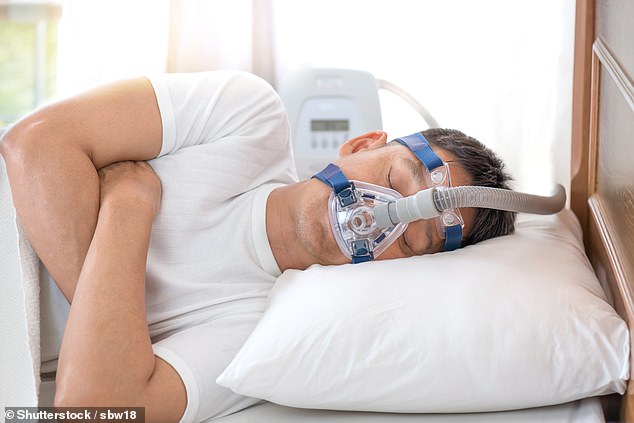
CPAP, a popular NHS treatment for sleep apnea, Britain's most common sleep disorder, is not helping older patients, a new study has found
Previous studies have shown that CPAP can significantly reduce sleepiness, depression, and high blood pressure, all of which are caused by sleep apnea.
It is commonly prescribed on the NHS for the more than 1.5 million Britons who suffer from the condition.
However, researchers at the University of Missouri in the US found that CPAP did not improve any of the above conditions in patients over 80.
The study authors, who followed more than 350 participants over the age of 70, said this is most likely because older adults have a combination of disorders affecting their sleep that CPAP cannot treat.
They also found that those over 80 were less likely to stick with therapy long-term.
Five prunes a day beats brittle bones

Eating plums could help prevent brittle bone disease in older women, new research suggests
Eating plums could help prevent brittle bone disease in older women, new research suggests.
Osteoporosis, as it is known, occurs when people lose bone density, increasing the risk of bone fractures.
It is more common in postmenopausal women than any other group. Previous studies suggest that low estrogen levels can lead to inflammation in the bones.
But scientists at Penn State University in the US found that eating about five prunes a day significantly reduced the risk of osteoporosis in women over 50.
While researchers are still unsure why this happens, one argument is that prunes affect bacteria in the gut, which in turn lowers levels of inflammation in the body.
Watching TV before bed can lead to better sleep.
Previous studies have shown that activities like scrolling on a phone before bed can disrupt sleep patterns.
But a study conducted by researchers at the University of Delaware in the US and published in the Journal Of Sleep Research found that people who looked at a screen less than an hour before bed were more likely to go to bed earlier than those who didn't, and also slept longer.
A simple eye test could diagnose Alzheimer's years before it develops.
Scientists at the University of Otago in New Zealand identified areas of the eye where early signs of damage indicate the onset of the degenerative brain disease.
The study, which analyzed the eyes of 865 participants aged 45, found that those with damaged retinal nerve fibers and ganglion cell layers were more likely to experience a decline in their ability to process information from childhood to adulthood, an early sign of Alzheimer's.