

 Suche
Suche
 Mein Konto
Research links long-term exposure to traffic noise and type 2 diabetes

According to the World Health Organization (WHO), the prevalence of people with diabetes worldwide has increased from 108 million in 1980 to 422 million in 2014. The main risk factors for diabetes are an unhealthy diet, lack of exercise and obesity. However, some recent studies have reported an association between traffic noise and a higher risk of type 2 diabetes (T2D). Learning: Long-term exposure to traffic noise and risk of type 2 diabetes: A cohort study. Image credit: TTstudio / Shutterstock.com Health effects of noise pollution Over 20% of the population in the European Union are exposed to residential noise levels above 55 dB. As a result, according to the WHO, between one and 1.6 million die each year otherwise...

Research links long-term exposure to traffic noise and type 2 diabetes
According to the World Health Organization (WHO), the prevalence of people with diabetes worldwide has increased from 108 million in 1980 to 422 million in 2014.
The main risk factors for diabetes are an unhealthy diet, lack of exercise and obesity. However, some recent studies have reported an association between traffic noise and a higher risk of type 2 diabetes (T2D).
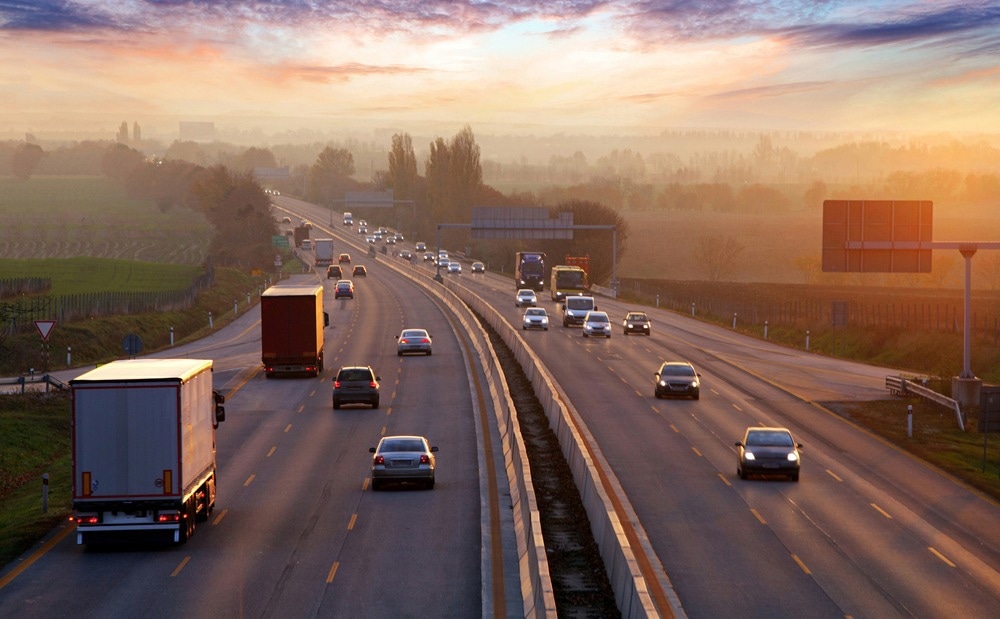
Learn: Long-term exposure to traffic noise and risk of type 2 diabetes: A cohort study.Photo credit: TTstudio / Shutterstock.com
Health effects of noise pollution
Over 20% of the population in the European Union is exposed to residential noise levels above 55 dB. As a result, according to the WHO, between one and 1.6 million otherwise healthy people in Europe die every year as a result of traffic noise.
Noise can be indirectly harmful by stimulating the hypothalamic-pituitary-adrenal axis and the autonomic nervous system, thereby leading to the release of stress hormones.
In addition, traffic noise during the night can affect the duration and quality of sleep. Poor sleep quality can lead to impaired glucose regulation, reduced insulin sensitivity, and low-grade inflammation, all of which are clinical features of T2D. Exposure to transportation noise has also been linked to physical inactivity and obesity, both risk factors for T2D.
Previous studies have reported an increased risk of diabetes associated with road traffic noise. However, most of these studies do not consider the influence of lifestyle characteristics on this risk.
Furthermore, noise exposure on the least exposed residential façade has an increased risk of T2D compared to the most exposed façade. This suggests that the harmful effects of noise on T2D are mainly due to sleep disturbances.
A new one Environmental research Study analyzes rail and road noise on the least and most exposed residential facades and the risk of T2D. The researchers in this study also evaluated confounding of the level of residual lifestyles in registry-based studies.
About studying
For the current study, individuals aged 16 years and older were recruited between February and April 2010 and February and April 2013. All study participants were asked to complete a questionnaire about diet, smoking status, alcohol consumption, body mass index (BMI), and physical activity.
Estimates of road and rail noise exposure were based on the address of each participant living on the most and least exposed residential facades, using address data from 10 years before baseline to the end of follow-up in December 2017.
Cohort participants with T2D were identified and registered as cases if they had two T2D-related contacts at a hospital and/or pharmacy. In addition, from 2010 to 2017, information on the participants' highest level of education, professional status, income, cohabitation and country of origin was collected.
Information on socioeconomic status (SES) at the area level was also collected. A Charlson comorbidity index was calculated for each cohort member as a time-dependent variable using ICD10 codes and diagnostic data from the Danish National Patient Register, updated for each cohort member upon a comorbidity diagnosis. This was based on the number of illnesses during the last five years, i.e. the previous one to six years. Because a one-year delay was allowed, the index was not affected by T2D diagnosis.
Study results
A total of 286,151 participants were enrolled in the study, of whom 7,574 developed T2D during the median follow-up of 6.2 years. People exposed to road traffic noise above 60 dB, called the LdenMax cohort, were more likely to be younger, live alone, work in white-collar jobs, have higher education, be physically active, consume less red meat, be smokers and have a normal weight.
Little or no correlation between road and railway noise has been reported. Both LdenMax and LdenMin residential facades were associated with a higher risk of T2D; However, the strongest association was with those in the LdenMin cohort.
After adjustment for the register-based covariates, no association between T2D and railway LdenMin was observed. Conversely, a higher risk of T2D was observed for railway LdenMax.
In street LdenMin, certain individual characteristics increased the influence of noise on their T2D risk. These included low or moderate education level, comorbidity index greater than or equal to two, current smokers, obesity, and physical inactivity or light activity.
For both street LdenMax and LdenMin, T2D risk was most significant for people living in suburbs. In addition, the risk of T2D for street LdenMax was highest in women and those aged 65 years and older, while the opposite was observed for street LdenMin.
Conclusions
The current study reported that road traffic noise was associated with a higher risk of T2D. Furthermore, the association for noise was strongest on the least exposed residential facade.
Notably, lifestyle factors did not significantly modify the effects of noise level on T2D risk, suggesting that future studies may provide accurate risk estimates without information on lifestyle habits.
restrictions
The current study involves some degree of exposure misclassification and is associated with the risk of participation bias. Another limitation is that the associations between SES, lifestyle and traffic noise may vary across regions. Additionally, the number of T2D developers was limited.
Reference:
- Sørensen, M., Hvidtfeldt, UA, Poulsen, AH, et al. (2022). Langzeitbelastung durch Verkehrslärm und Risiko für Typ-2-Diabetes: Eine Kohortenstudie. Umweltforschung. doi:10.1016/j.envres.2022.114795.
.