

 Suche
Suche
 Mein Konto


Eating spinach like Popeye won't just make you stronger - it may protect you from dementia, a study suggests.
Researchers found that people with high levels of three important antioxidants in their blood were less likely to develop the memory-robbing disorder.
Two of the compounds – lutein and zeaxanthin – are found in abundance in green leafy vegetables as well as peas.
Oranges and papaya are major sources of the other beta-cryptoxanthin.
The lead researcher Dr. May Beydoun, an aging expert from the US National Institutes of Health, said: “Enhancing people’s cognitive function is an important public health challenge.
“Antioxidants may help protect the brain from oxidative stress, which can cause cell damage.”
However, she added that more studies are needed to test whether the antioxidants can really "protect the brain from dementia."
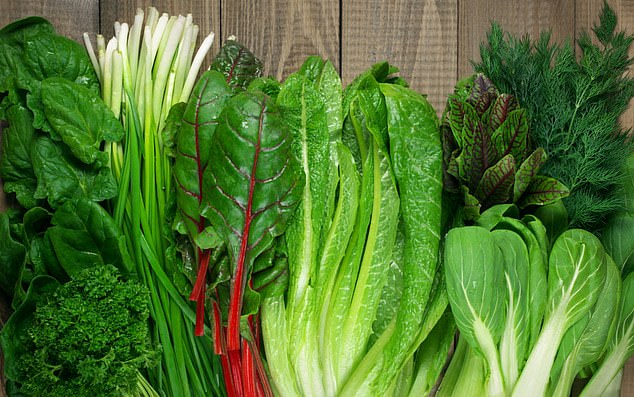
Researchers at the US National Institutes of Health found that for every increase in lutein, zeaxanthin and beta-cryptoxanthin levels, the risk of developing dementia decreases. Lutein and zeaxanthin are found in green leafy vegetables such as kale, spinach, broccoli and peas

Eating spinach like Popeye (pictured) doesn't just make you stronger - it can protect you from dementia. That is, if new research results are to be believed. Researchers have found that people with high levels of three antioxidants in their blood are less likely to develop the memory-robbing disorder
The study itself, published in the journal Neurology, didn't actually look at volunteers' diets.
But scientists have long advocated that a healthy diet can stave off dementia by promoting cardiovascular health - both of which are known to play a role in the disease.
In addition to diet, people can increase their blood levels of the three compounds by taking supplements.
Dr. Beydoun and colleagues analyzed blood samples from more than 7,000 Americans.
All participants were at least 45 years old and alsounderwent a physical examination and interview at the start of the study.
They were then monitored for an average of 16 years so experts could track dementia rates.
Participants were divided into three groups based on their levels of the antioxidants lutein and zeaxanthin and beta-cryptoxanthin in their blood.
Every 15.4 micromoles per liter increase in lutein and zeaxanthin levels was associated with a seven percent decrease in the risk of dementia, the researchers calculated.
Meanwhile, every 8.6 micromoles per liter increase in beta-cryptoxanthin reduced the chance of developing dementia by 14 percent.
The effect of antioxidants on dementia was reduced when other factors were taken into account, including education, income and physical activity.
"It is possible that these factors may help explain the relationship between antioxidant levels and dementia," added Dr. Beydoun added.
The team also acknowledged that the results are limited because they are based on a blood measurement at the start of the study, meaning they "may not reflect people's values over the course of their lives."
Dozens of studies have shown that a diet rich in fruit and vegetables can help reduce the risk of dementia, which affects 944,000 Brits and 6.5 million Americans.
Experts believe that a certain diet could influence biological mechanisms that later trigger dementia.
What a person eats could also be indirectly linked to dementia by increasing the risk of diabetes, obesity and heart disease, which are known to be linked to dementia.
Studies have previously shown that a Mediterranean diet rich in vegetables, fruits, legumes and fish lowers blood pressure, which is a risk factor for dementia.
Dr. James Connell, from Alzheimer's Research UK, said previous findings on the link between antioxidants and dementia risk had been "mixed".
When lifestyle, socioeconomic status and physical activity factors were taken into account, the reduced risk found in the new study was "less," he said.
“It is important that researchers continue to study the protective effects of antioxidants in the context of other risk factors and work to understand how they interact,” said Dr. Connell.
He said: “The diseases that cause dementia develop over many years, but this study only looked at antioxidant levels at one point in time.
“While this study highlights a potentially interesting finding, it is important that research takes a long-term look at factors that may influence risk.”
Dr. Connell added: “The only way to find out whether certain foods or supplements containing them can help reduce the risk of dementia is through future careful clinical trials.
“We know that the risk of dementia is complex and includes factors such as age and genetics, as well as lifestyle factors such as our diet.
“Positive lifestyle changes can reduce our risk of developing diseases that cause dementia.”