

 Suche
Suche
 Mein Konto


Walgreens, one of America's largest pharmacy chains, is accused in a civil lawsuit of "flooding" the state of Florida with opioids.
The company is being sued by the state of Florida for allegedly failing to exercise due diligence in filling opioid prescriptions from 1999 to 2020 and failing to divert medications from patients who were likely to either abuse or illegally consume the drugs.
A Sunshine State attorney even said the Deerfield, Illinois-based company allowed the highly addictive drugs to flow into the state.
The lawsuit comes as many high-profile players in the opioid crisis — which is responsible for tens of thousands of deaths in the U.S. each year — face civil lawsuits.

Pharmacy giant Walgreens is facing a civil lawsuit from the state of Florida over claims it helped "flood" the state with opioids by improperly restricting distribution to people who showed warning signs they were using them illegally

Walgreens is blaming doctors for the problem, accusing them of overprescribing the highly addictive drugs to vulnerable patients
“Walgreens was the last line of defense in preventing the improper distribution of opioids,” said Jim Webster, who serves as prosecutor.
“It was the entity that actually put the opioids into the hands of people addicted to opioids and into the hands of criminals.”

Walgreens lawyer Steven Derringer (pictured) said: "There are so many pills because doctors have written so many prescriptions for painkillers."
Walgreens filled one in four opioid prescriptions in Florida between 1999 and 2020 and failed to investigate warning signs that could prevent drugs from being diverted for illegal use, Webster said as jurors heard opening statements in the trial in New Port Richey, north of Tampa.
Many of the drugs sold illegally on black markets are legally available by prescription, and many people who abuse highly addictive opioids begin using the drugs as painkillers.
The company argues that the blame lies with the doctors who wrote so many prescriptions for the drugs.
Walgreens attorney Steven Derringer said in his opening statement that the pharmacy chain filled doctors' prescriptions and did not ignore warning signs that allowed opioids to flood Florida.
“There are so many pills because doctors have written so many prescriptions for painkillers,” Derringer said.
Doctors have come under scrutiny in recent years for the role they may have played in creating the opioid epidemic.
Multiple analyzes have found that doctors overprescribed the drugs, often giving them to patients who either didn't need them or offered them more than necessary.
This became a problem, especially afterwards Operations where many patients who needed the medication to treat pain took so much that they became addicted.
Walgreens is the latest defendant in a massive wave of lawsuits filed by the state against drug distributors and manufacturers over the role they allegedly played in increasing drug deaths in Florida and across America.
Florida has recovered more than $3 billion in opioid lawsuits against drug manufacturers, distributors and pharmacies, according to Attorney General Ashley Moody.

CVS was also sued by the state of Florida and paid a half-billion-dollar settlement for its role in the opioid crisis
Most of it will be spent on efforts to alleviate the state's opioid crisis.
“With the funds we're going to bring to Florida. These families will begin to heal,” Moody said Fox 13 in Tampa.
In March, Walgreens rival CVS Health Corp agreed to pay Florida $484 million.
Drugmaker Teva will pay $194.8 million, Allergan will pay $134.2 million and Endo will pay $65 million.
Moody says it's about more than just money, though, it's about stopping these harmful business practices.
“The marketing, the sales, the practices that led to where we are today must not be repeated in the future,” she said.
Walgreens previously argued that it was immune from a lawsuit because of a $3,000 settlement it reached with Florida in 2012 following an investigation into its record-keeping policies and efforts to prevent opioid drug diversion.
Judge Kimberly Sharpe Byrd, who is overseeing that lawsuit, ruled in March that the 2012 settlement covered only a single record-keeping violation and did not protect Walgreens from other claims.
The company has appealed the ruling.

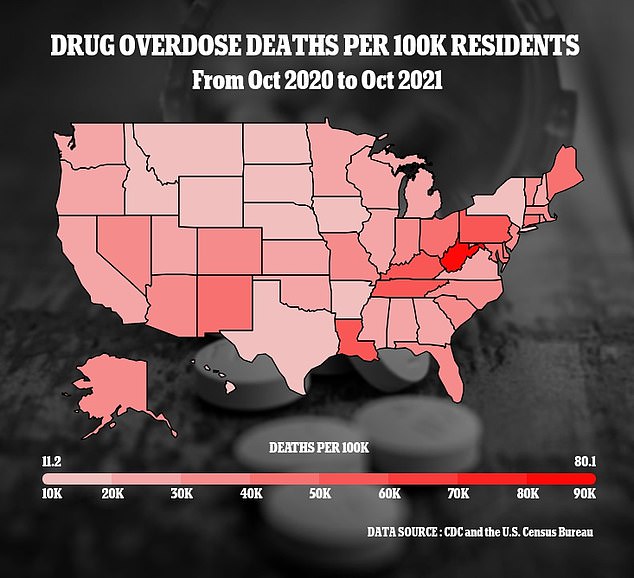
The U.S. recorded a record 105,000 drug overdose deaths from October 2020 to 2021, with 80 percent caused by opioids and synthetic versions of the drug such as fentanyl accounting for 70 percent of deaths, the Centers for Disease Control and Prevention (CDC) reports.
Many people who develop an opioid addiction will eventually turn to using illegal versions of the drug once their initial supply runs out.
Some of these illegal drug manufacturers use fentanyl as a cheaper alternative to opioid medications made by pharmaceutical companies.
However, the drug is highly potent, and only limited amounts of it can cause an overdose.
Florida recorded 8,000 overdose deaths from October 2020 to 2021, or 37.1 per 100,000 residents, the 18th highest rate in the state, according to the CDC report.