

 Suche
Suche
 Mein Konto
What influence does SARS-CoV-2 have on HIV-1 infectivity?

In a recently published study Research Place* Preprint Server: Researchers examined the effect of severe acute respiratory syndrome coronavirus 2 (SARS-CoV-2) and SARS-CoV envelope proteins (E) on the infectivity of human immunodeficiency virus type 1 (HIV-1). Study: The envelope proteins of SARS-CoV-2 and SARS-CoV effectively reduce the infectivity of human immunodeficiency virus type 1 (HIV-1). Photo credit: RAJ CREATIONZS/Shutterstock This news article was a review of a preliminary scientific report that had not been peer-reviewed at the time of publication. Since its initial publication, the scientific report has now been peer-reviewed and accepted for publication in an academic journal. Links to the preliminary and...

What influence does SARS-CoV-2 have on HIV-1 infectivity?
In a recently published study Research place * Preprint server: Researchers examined the effect of severe acute respiratory syndrome coronavirus 2 (SARS-CoV-2) and SARS-CoV envelope proteins (E) on the infectivity of human immunodeficiency virus type 1 (HIV-1).
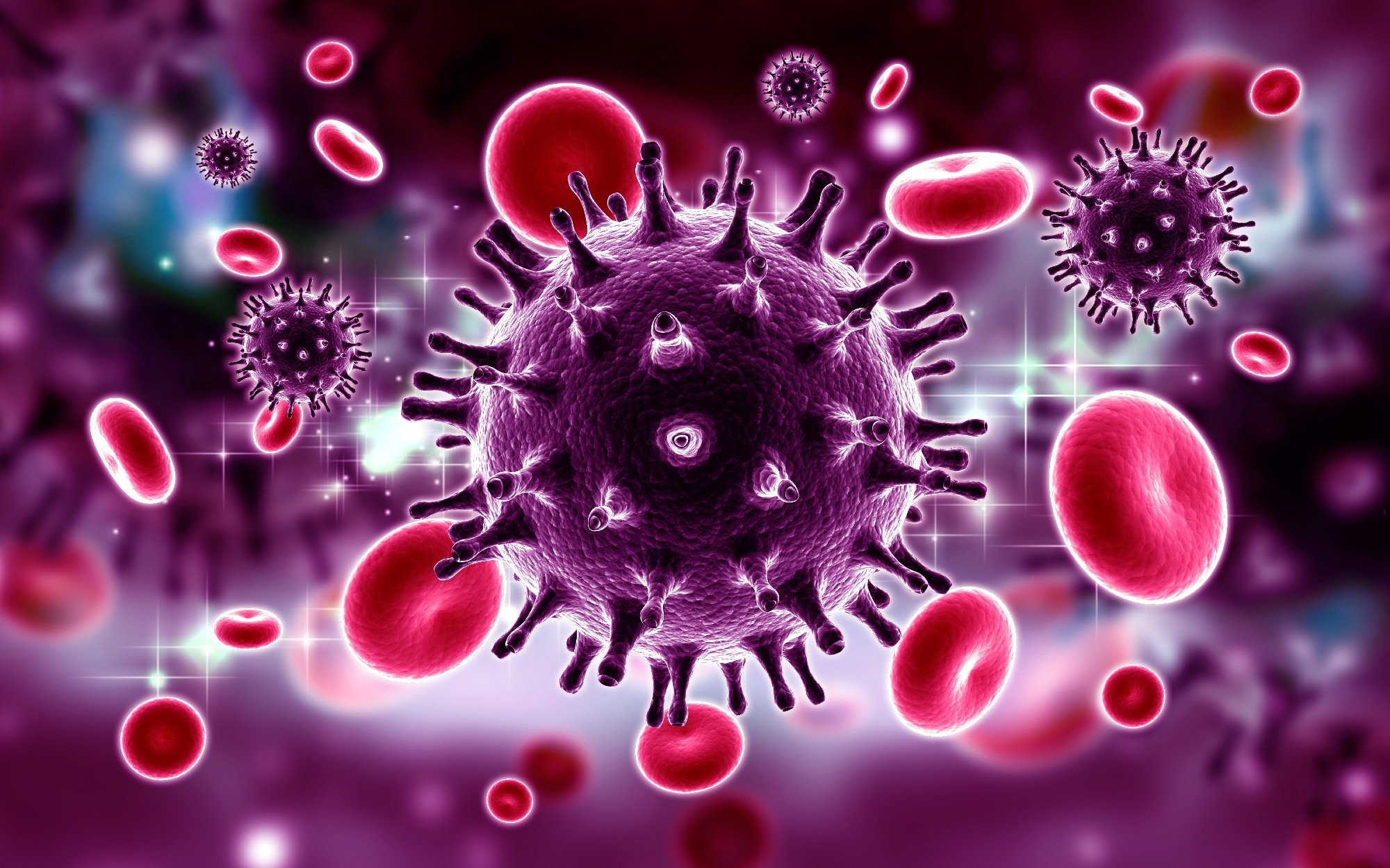
Studie: Die Hüllproteine von SARS-CoV-2 und SARS-CoV reduzieren wirksam die Infektiosität des Humanen Immundefizienzvirus Typ 1 (HIV-1). Bildnachweis: RAJ CREATIONZS/Shutterstock
This news article was a review of a preliminary scientific report that had not been peer-reviewed at the time of publication. Since its initial publication, the scientific report has now been peer-reviewed and accepted for publication in an academic journal. Links to the preliminary and peer-reviewed reports can be found in the Sources section at the end of this article. View sources
Virus-encoded ion channels are called viroporins and are involved in the formation and release of viruses. Both the influenza A virus and HIV-1 encode viroporins. SARS-CoV-2 encodes at least two viroporins: the envelope protein (E) and the open reading frame (ORF)-3a. In terms of size, position in the membrane, ion channel activity and role in promoting virus release, CoV-E proteins are similar to HIV-1 viral protein U (Vpu). Based on these similarities, the team determined the biological properties of the SARS-CoV-2 E protein in relation to HIV-1 to assess whether it could replace the HIV-1 Vpu.
About the study
In the present study, researchers examined HIV-1 replication in the presence of beta-coronavirus E proteins.
The team first examined the intracellular expression of the SARS-CoV-2 E protein. The SARS-CoV-2 E protein was expressed in COS-7 cells using a vector tagged at the C-terminus with a hemagglutinin (HA) tag. The E protein was then immunostained with anti-HA antibodies as well as antibodies against LAMP-1 (late endosomes/lysosomes), the endoplasmic reticulum (ER)-Golgi intermediate compartment (ERGIC53), and Golgin97 (trans-Golgi). The team then co-transfected cells with plasmids expressing the E-HA protein and vectors expressing ER-MoxGFP (RER), TGN38-GFP (TGN), or Giantin-GFP (cis/medial Golgi) to examine the co-localization of the E protein and the ER, TGN, and cis-medial Golgi. In these cotransfections, cells were fixed that were permeabilized and immunostained with an anti-HA antibody to detect the E protein.
In addition, the team compared the intracellular localization of SARS-CoV-2 E with the SARS-CoV, Middle East Respiratory Syndrome (MERS)-CoV and HCoV-OC43 E proteins. They then tested the amount of infectious HIV-1 or vpuHIV-1 produced to determine whether the SARS-CoV-2 E protein would increase or decrease the amount. The empty pcDNA3.1(+) vector, which encoded the E protein of SARS-CoV-2, the glycoprotein D (gD) of herpes simplex virus type 1 (HSV-1), which was a positive control for restriction, or gD[TMCT] which was secreted by cells and did not restrict HIV-1, and pNL4-3 were all in HEK293 cells were cotransfected.
Results
The study results showed that the ER, ERGIC, TGN, trans-Golgi and cis-medial Golgi markers were co-localized with the E protein. However, neither the cell plasma membrane nor the lysosomes had the E protein. This suggested that the three E proteins were localized within the cell, similar to the E protein of SARS-CoV-2. The presence of the SARS-CoV-2 E protein dramatically reduced the amount of infectious HIV-1 released. The SARS-CoV-2 E and gD proteins present in the cell lysates were well expressed during the co-transfections, as evidenced by the immunoblots. In addition, the team found that in the absence of the Vpu protein, the Bone Marrow Stroma Cell Antigen 2 (BST-2) protein reduced the amount of HIV-1.
The team observed that co-transfection with vectors encoding the vpu HIV-1 genome, BST-2 and the SARS-CoV-2 E protein reduced production of the infectious virus, although not as significantly as the HSV-1 gD protein. Immunoblots of the cell lysates for gD, BST-2 and the SARS-CoV-2 E protein showed that these proteins showed significant expression during the co-transfections. Overall, the team found that the E protein of SARS-CoV-2 prevented the growth of both viruses and could not replace the function of the Vpu protein.
Examination of the intracellular expression of these E proteins revealed that, similar to the E protein of SARS-CoV-2, they were localized exclusively in the ER and Golgi portions of the cell, without showing any expression on the cell surface. Although gD was present, it had no effect on the amount of infectious HIV-1 released. Instead, publication was restricted. The SARS-CoV-2-related and SARS-CoV-related E proteins significantly reduced the amount of infectious HIV-1 released by 1.3% and 1.4%, respectively. Less restriction was observed for the MERS-CoV and HCoV-OC43 E proteins in almost 37% and 16% of the pcDNA3.1(+) control, respectively.
The SARS-CoV-2 and MERS-CoV-E proteins shared about 37% of their amino acid sequences, while the SARS-CoV-2 and HCoV-OC43-E proteins shared about 26%. The expression of the gD and E proteins was verified by immunoprecipitation from cell lysates from the restriction assays. These results provide further information about the specificity of HIV-1 restriction.
Overall, the study results demonstrated the ability of the SARS-CoV-2 and SARS-CoV-E proteins to significantly prevent the development of an infectious HIV-1 infection. The study found that protein synthesis was most likely inhibited and apoptosis was triggered by the expression of the SARS-CoV-2 E protein. These results provided evidence that a viroporin from one virus can prevent another virus from infecting cells.
This news article was a review of a preliminary scientific report that had not been peer-reviewed at the time of publication. Since its initial publication, the scientific report has now been peer-reviewed and accepted for publication in an academic journal. Links to the preliminary and peer-reviewed reports can be found in the Sources section at the end of this article. View sources
References:
- Vorläufiger wissenschaftlicher Bericht.
Wyatt Henke, Hope Waisner, Sachith Polpitiya Arachchige, Maria Kalamvoki, Edward Stephens. (2022). Die Hüllproteine von SARS-CoV-2 und SARS-CoV reduzieren wirksam die Infektiosität des Humanen Immundefizienzvirus Typ 1 (HIV-1). Forschungsplatz. doi: https://doi.org/10.21203/rs.3.rs-2175808/v1 https://www.researchsquare.com/article/rs-2175808/v1 - Von Experten begutachteter und veröffentlichter wissenschaftlicher Bericht.
Henke, Wyatt, Hope Waisner, Sachith Polpitiya Arachchige, Maria Kalamvoki und Edward Stephens. 2022. „Die Hüllproteine von SARS-CoV-2 und SARS-CoV reduzieren wirksam die Infektiosität des Humanen Immundefizienzvirus Typ 1 (HIV-1).“ Retrovirologie 19 (1). https://doi.org/10.1186/s12977-022-00611-6. https://retrovirology.biomedcentral.com/articles/10.1186/s12977-022-00611-6.
Article revisions
- 16. Mai 2023 – Das vorab gedruckte vorläufige Forschungspapier, auf dem dieser Artikel basiert, wurde zur Veröffentlichung in einer von Experten begutachteten wissenschaftlichen Zeitschrift angenommen. Dieser Artikel wurde entsprechend bearbeitet und enthält nun einen Link zum endgültigen, von Experten begutachteten Artikel, der jetzt im Abschnitt „Quellen“ angezeigt wird.