

 Suche
Suche
 Mein Konto
How does the ISG15/ISGylation system modulate vaccinia virus infection?

In a recent study published in the bioRxiv* server, researchers showed how interferon-stimulated gene 15 (ISG15) is involved in the spread of vaccinia virus (VACV). Study: ISG15 is required for the spread of vaccinia virus extracellular virions. Photo credit: Kateryna Kon/Shutterstock This news article was a review of a preliminary scientific report that had not been peer-reviewed at the time of publication. Since its initial publication, the scientific report has now been peer-reviewed and accepted for publication in an academic journal. Links to the preliminary and peer-reviewed reports can be found in the Sources section at the end of this...

How does the ISG15/ISGylation system modulate vaccinia virus infection?
In a recent study published in bioRxiv * Server showed researchers how interferon-stimulated gene 15 (ISG15) is involved in the spread of vaccinia virus (VACV).
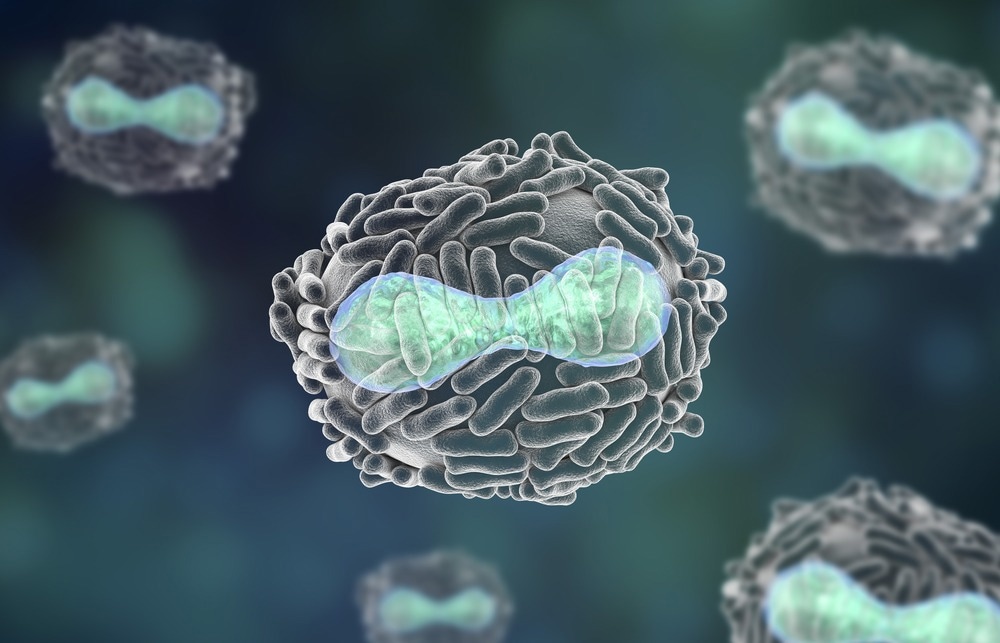
Studie: ISG15 ist für die Verbreitung extrazellulärer Virionen des Vaccinia-Virus erforderlich. Bildnachweis: Kateryna Kon/Shutterstock
This news article was a review of a preliminary scientific report that had not been peer-reviewed at the time of publication. Since its initial publication, the scientific report has now been peer-reviewed and accepted for publication in an academic journal. Links to the preliminary and peer-reviewed reports can be found in the Sources section at the end of this article. View sources
background
ISG15 modulates a viral proteome by encoding a small ubiquitin-like post-translational modifier that regulates multiple cellular pathways within the host. Thus, it exerts antiviral activities against several viruses that cause fatal diseases in humans [e.g., human immunodeficiency virus (HIV)].
Poxviruses, including VACV, are enveloped, linear double-stranded deoxyribonucleic acid (DNA) viruses that replicate entirely in the cytoplasm of infected cells. They have evolved two unique, specialized forces - intracellular mature virions (MVs) and extracellular virions (EVs) - to spread and conquer new territories at the expense of host resources. EVs derived from MVs transmit within the host and cause systemic infections. On the other hand, MVs wrapped in the trans-Golgi network (TGN) or host endosomal membranes support the transmission of VACV between two hosts.
The former spreads after cell lysis, while the latter spreads from living cells via actin tails. In addition, the two virus forms have different protein compositions and differ between the different VACV strains. It is not yet fully understood what role viral shedding plays in the transmission of smallpox viruses. Because humans have faced multiple attacks from viruses over the last million years, a better understanding of the mechanisms viruses use to infect is critical to winning the next big battle against them. Severe acute respiratory syndrome coronavirus-2 (SARS-CoV-2) is a good example of how some viruses can cause pandemics with high mortality rates.
About the study
In the present study, researchers used mouse embryonic fibroblasts (MEF) to demonstrate how the ISG15/ISGylation system modulates VACV infection. They infected immortalized ISG15+/+ or ISG15-/- MEFs with the VACV International Health Department-J (IHD-J) strain. They purified intracellular virions by ultracentrifugation through a 20% sucrose cushion, which they prepared for liquid chromatography with tandem mass spectrometry analysis (LC-MS/MS).
At the indicated times after infection, the team separated proteins by sodium dodecyl sulfate-polyacrylamide gel electrophoresis (SDS-PAGE). Finally, they analyzed the expression of viral early (E3) and late (A27, A4) proteins by Western blot and used specific antibodies to identify VACV proteins that interact with ISG15.
Study results
The absence of ISG15 in MEF (ISG15-/-MEF) infected with VACV IHD-J showed reduced EV production. Furthermore, these cells showed IHD-J accumulation in the cytoplasm and clearance of comet-shaped plaques compared to Isg15+/+ MEF.
Quantitative proteomic analysis of purified virions from Isg15-/- MEF showed that these cells were enriched in proteins from both MVs and enveloped virions, further confirming the accumulation of different virus forms in these cells. Furthermore, the authors found that ring finger protein 213 (RNF213), a sensor for ISGylated proteins, was among the less abundant cellular proteins in Isg15 −/− samples. Therefore, the interaction of RNF213 with ISG15 could also be relevant to the antiviral response against VACV.
Experiments with a recombinant virus expressing V5-tagged ISG15 showed that a protein A36 is essential for actin tail formation and may interact with ISG15. The researchers also observed upregulation of a protein B5 in virions purified from Isg15-/- cells. It is involved in IEV formation and actin tail polymerization. Overall, the study results suggested that in the absence of ISG15, EV release and actin tail formation were impaired.
Transmission electron microscopy (TEM) analysis revealed that intracellular virus particles were increased in IHD-J-infected Isg15 −/− cells. Surprisingly, quantification of intracellular infectious virions using plaque assay showed no difference between genotypes, suggesting that many of the accumulated particles in Isg15 −/− cells may be defective and noninfectious.
Conclusions
Poxviruses have received renewed attention due to the recent emergence of monkeypox virus (MPXV), a zoonotic orthopoxvirus that infects humans. Fortunately, MPXV has resulted in significantly lower mortality compared to VARV, the etiologic agent of smallpox. However, there is growing concern that in the future it could conquer the ecological niche once occupied by VARV. Therefore, the current study examined evidence on how host restriction factors control the mechanisms of poxvirus spread.
In one of their previous papers, the authors found that ISGylation inhibits the production of exosomes, which are vesicles secreted into the extracellular environment, much like EVs. Therefore, they hypothesized that EVs use a mechanism similar to exosomes and that ISG15 could sense which of the infectious forms of VACV are being produced for virus spread.
Although the study results indicated ISG15 interactions with several VACV proteins, the outcome of these interactions remains to be elucidated. A deeper understanding of ISG15-mediated antiviral responses could pave the way for the development of effective drugs against multiple viruses that infect humans.
This news article was a review of a preliminary scientific report that had not been peer-reviewed at the time of publication. Since its initial publication, the scientific report has now been peer-reviewed and accepted for publication in an academic journal. Links to the preliminary and peer-reviewed reports can be found in the Sources section at the end of this article. View sources
References:
- Vorläufiger wissenschaftlicher Bericht.
Bécares, M. et al. (2022) „ISG15 ist für die Verbreitung extrazellulärer Virionen des Vaccinia-Virus erforderlich.“ bioRxiv. doi: 10.1101/2022.10.27.514002. https://www.biorxiv.org/content/10.1101/2022.10.27.514002v1 - Von Experten begutachteter und veröffentlichter wissenschaftlicher Bericht.
Bécares, Martina, Manuel Albert, Céline Tárrega, Rocío Coloma, Michela Falqui, Emma K. Luhmann, Lilliana Radoshevich und Susana Guerra. 2023. „ISG15 ist für die Verbreitung extrazellulärer Vaccinia-Virus-Virionen erforderlich.“ Virologie, April. https://doi.org/10.1128/spectrum.04508-22. https://journals.asm.org/doi/10.1128/spectrum.04508-22.
Article revisions
- 17. Mai 2023 – Das vorab gedruckte vorläufige Forschungspapier, auf dem dieser Artikel basiert, wurde zur Veröffentlichung in einer von Experten begutachteten wissenschaftlichen Zeitschrift angenommen. Dieser Artikel wurde entsprechend bearbeitet und enthält nun einen Link zum endgültigen, von Experten begutachteten Artikel, der jetzt im Abschnitt „Quellen“ angezeigt wird.