

 Suche
Suche
 Mein Konto
Scientists are developing human salivary gland organoids to test the infectivity of SARS-CoV-2

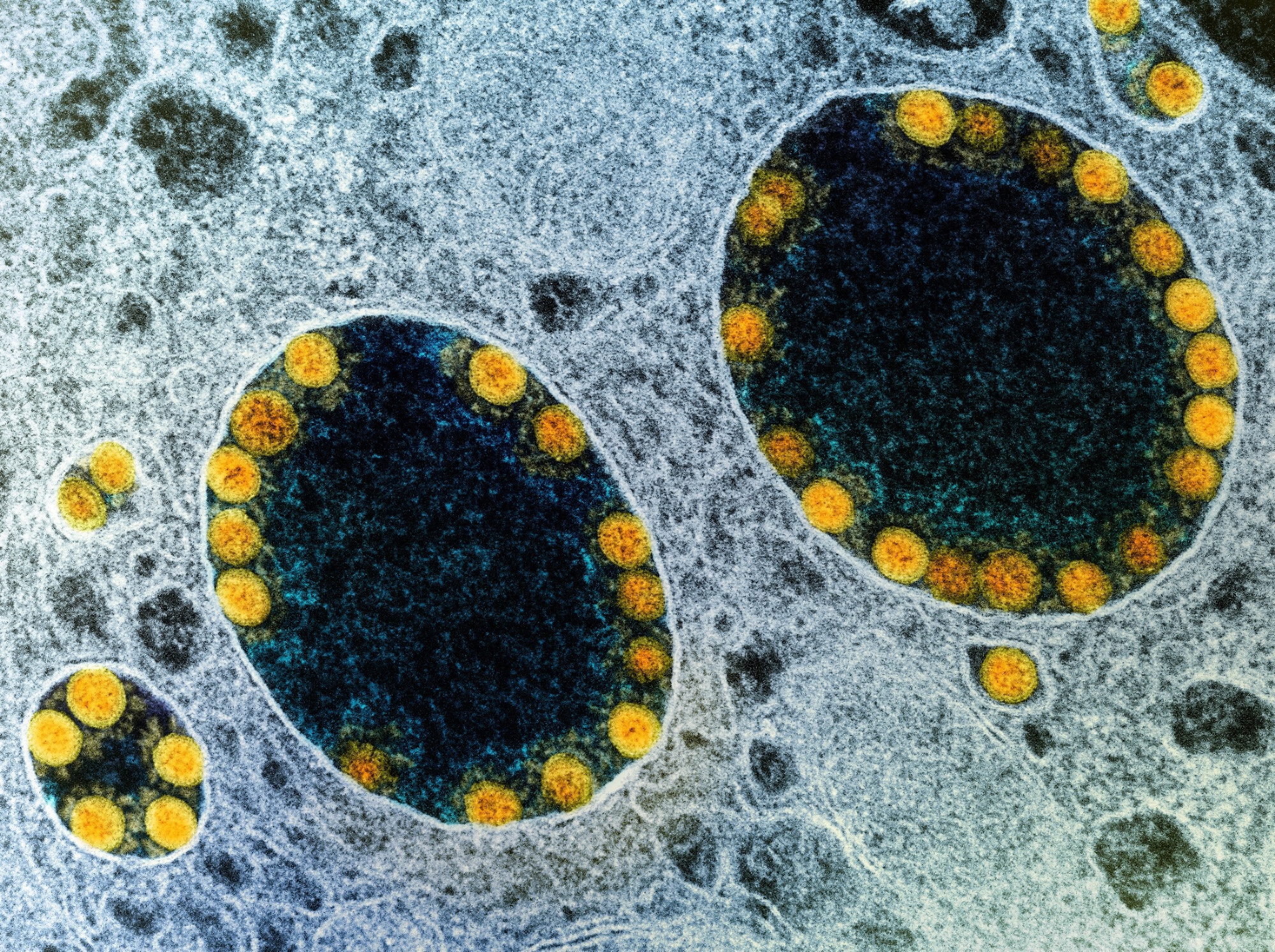
In a recent study published in the journal Nature Cell Biology, researchers demonstrated the susceptibility of salivary glands to severe infection with acute respiratory syndrome coronavirus-2 (SARS-CoV-2) in vitro using an organoid culture model. Study: Human-induced pluripotent stem cell-derived salivary gland organoids model SARS-CoV-2 infection and replication. Image credit: NIAID Background Although the respiratory system, including the upper respiratory tract (URT) and lungs, are the primary targets of SARS-CoV-2, there is increasing evidence that it affects multiple organs. For example, oral mucosa and salivary glands widely express two SARS-CoV-2 entry factors, angiotensin-converting enzyme 2 (ACE2) and transmembrane serine protease 2 (TMPRSS2). They also serve as a reservoir for SARS-CoV-2. …

Scientists are developing human salivary gland organoids to test the infectivity of SARS-CoV-2
In a study recently published in the journal Natural cell biology Researchers demonstrated in vitro the susceptibility of salivary glands to severe acute respiratory syndrome coronavirus-2 (SARS-CoV-2) infection using an organoid culture model.
background
Although the respiratory system, including the upper respiratory tract (URT) and lungs, are the main targets of SARS-CoV-2, there is increasing evidence that it affects multiple organs. For example, oral mucosa and salivary glands widely express two SARS-CoV-2 entry factors, angiotensin-converting enzyme 2 (ACE2) and transmembrane serine protease 2 (TMPRSS2). They also serve as a reservoir for SARS-CoV-2.
Interestingly, 80% of SARS-CoV-2 infections are asymptomatic. In addition, studies have reported that SARS-CoV-2 targets human salivary glands and infectious virions from the saliva of asymptomatic individuals contribute to further virus transmission.
Due to the ability of SARS-CoV-2 to infect multiple types of organoids, an organoid culture model may prove suitable to detect infection by SARS-CoV-2 in salivary glands (in vitro). However, due to the lack of suitable in vitro models, studies have failed to elucidate the mechanisms underlying the infection and replication of SARS-CoV-2 in the salivary glands and subsequent secretion into saliva.
About the study
In the present study, researchers generated functional salivary gland organoids from human induced pluripotent stem cells (hiPSCs) with similar morphological features and physiological functions (in vivo) to human salivary glands. Furthermore, these organoids had salivary gland-specific cell lines.
The team performed single-cell ribonucleic acid sequencing (scRNA-seq) of hiSG cells on day 80 using the 10X Genomics platform. In addition, they isolated the organoids on day 60 and cultured them with fibroblast growth factor (FGF) 7 and 10 until day 80 to characterize the branching structures observed.
The SRY-box transcription factor 9 (SOX9) gene regulates salivary gland development in mice and humans. In its absence, the salivary glands cannot undergo branching morphogenesis. Therefore, the researchers suppressed SOX9 during hiSG induction to find out whether hiSGs recapitulated the SOX9-mediated development process.
Study results
The human-induced salivary glands (hiSGs) had similar properties to embryonic salivary glands, including morphological characteristics, protein marker expression, and gene expression characteristics. Consistent with in vivo studies conducted in mice, SOX9 knockdown inhibited branch formation in hiPSCs, suggesting that this gene is critical for human salivary gland development. Thus, this study model could replace animal models used to study human salivary gland development.
The hiSGs morphologically and functionally mimicked natural salivary glands. Unbiased scRNA-seq clustering identified six major cell groups that are further divisible into cellular subtypes. The small mesenchymal population in the HiSGs did not show features of salivary gland mesenchyme. In contrast, the epithelial cell group consisted of five cell groups: acinar, basal, ductal, myoepithelial, and actively cycling cells. The hiSGs comprised independent lineages of basal myoepithelial cells from the ductal-acinar lineage, and pseudotime analysis demonstrated the differences between these two cell lineages.
The basic function of the salivary glands is to secrete acetylcholine-induced fluid via muscarinic acetylcholine receptor pathways. In hiSGs, treatment with carbachol, a muscarinic acetylcholine receptor agonist, resulted in a transient and dose-dependent increase in intracellular calcium levels. Furthermore, orthotopically transplanted hiSGs exhibited the phenotype of mature salivary glands transplanted to a recipient site in mice over time.
The scRNA-seq and immunofluorescence analyzes also showed that the ductal cells within the hiSGs abundantly expressed ACE2 and TMPRSS2, similar to normal salivary glands. The immunostaining method revealed that although ductal cells on the apical side of hiSGs strongly expressed ACE2, ductal cells and acinar cells expressed TMPRSS2. Upon contact with SARS-CoV-2, hiSGs became infected and showed SARS-CoV-2 replication within 24 hours of infection. The authors also discovered the SARS-CoV-2 nucleoprotein in infected ductal cells. Accordingly, the medium infectious tissue culture assay (TCID50) showed infectious viruses in hiSGs that peaked at 24 hours but decreased later.
Conclusions
In fact, the hiSGs developed in the current study could serve as a valuable model for the reproduction of heterogeneous cell populations in human salivary glands. Furthermore, hiSGs could support the functional analysis of genes during development and serve as a promising tool to study SARS-CoV-2 infections in salivary glands at the molecular level. In addition, the researchers showed that hiSGs had several advantages compared to organoids derived from tissue stem progenitor cells from adult human salivary glands. For example, they could be easily genetically modified using the gene editing tool CRISPR (clustered regularly interspaced short palindromic repeats) and CRISPR-associated protein 9 (Cas9) and were relatively easy to cultivate.
Reference:
- Tanaka, J., Senpuku, H., Ogawa, M. et al. Vom Menschen induzierte pluripotente, aus Stammzellen gewonnene Speicheldrüsenorganoide modellieren die SARS-CoV-2-Infektion und -Replikation. Nat Cell Biol (2022). https://doi.org/10.1038/s41556-022-01007-6, https://www.nature.com/articles/s41556-022-01007-6#Sec7