

 Suche
Suche
 Mein Konto


One person has died and an expectant mother has lost her baby after contracting listeria in Florida, the CDC announced Thursday.
A total of 23 patients have been hospitalized so far in a total of ten states, including four additional pregnant women.
The Centers for Disease Control and Prevention (CDC) said all cases are linked to people who either live in Florida or have recently traveled there. The death occurred in an Illinois resident.
It's not clear what triggered the outbreak or whether it was linked to a "specific" food.
The cases come just a week after Florida also reported a "historic" outbreak of meningococcal disease among gay and bisexual men, in which a type of bacteria that spreads through salivary secretions infects a person's brain or spinal cord.
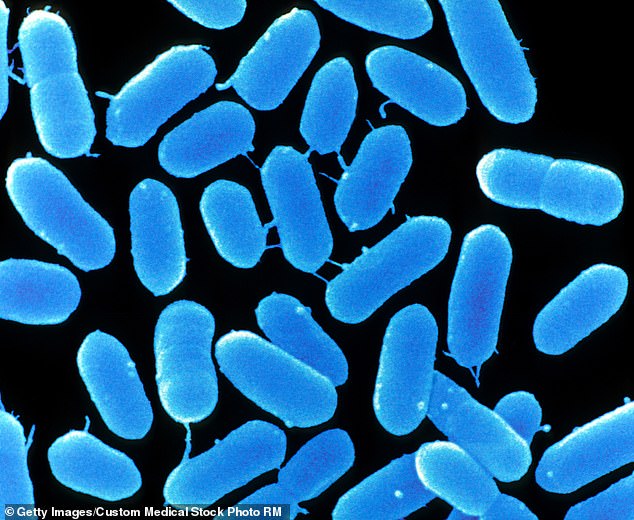
Almost all of the 23 patients have been hospitalized in a total of ten states so far, including four other expectant mothers (file photo).
Listeria is a bacteria that can cause serious illness, particularly in pregnant women, who are up to ten times more at risk than the general population.
The disease is usually spread by eating foods contaminated with the microbes - such as raw vegetables, meat and unpasteurized milk.
In rare cases, it can also be acquired through close contact with farm animals.
Patients who have listeria in their intestines may experience diarrhea and vomiting, with symptoms beginning within 24 hours of infection.
But in cases where the bacteria spreads to the rest of the body, it can cause fever, muscle aches, fatigue and headaches.
According to the CDC, up to a third of those infected die from the disease, with older people and those with weakened immune systems also at higher risk.
About 1,600 Americans are diagnosed with the disease each year, and of that number, 260 die from the disease.
The CDC disclosed the outbreak and said it advised people at high risk and experiencing symptoms of Listeria infection to contact their doctor.
This is particularly true for anyone who has “recently traveled to Florida.”
The agency did not say when the cases were discovered or name the 10 states where the patients live.
They also did not say where in Florida the patients had traveled.
Florida is also facing a “historic” outbreak of meningococcal disease – caused by a bacterium – with 24 people infected so far.
The CDC has described it as “one of the worst outbreaks of the disease among gay and bisexual men in U.S. history.”
It has caused concern in medical circles because about one in seven people who contract the disease will die from it.
One in five could be left with permanent disabilities such as deafness, brain damage, loss of limbs or seizures.
Experts said the outbreak was triggered by people being in close contact with each other and sharing saliva.
Florida is currently rolling out vaccines against the disease for gay and bisexual men to stem the tide of cases.
It also did not disclose where in the state they were discovered.
Dr. Jose Romero, director of the National Center for Immunization and Respiratory Diseases, said: “Vaccination against meningococcal disease is the best way to prevent this serious disease that can quickly become fatal.
“Due to the outbreak in Florida and the number of Pride events taking place across the state in the coming weeks, it is important that gay and bisexual men living in Florida get vaccinated and those traveling to Florida talk to their healthcare provider about getting a vaccine.”