

 Suche
Suche
 Mein Konto
Ultrapotent IgM antibodies isolated from a pregnant woman with Zika virus show promise as immunotherapy

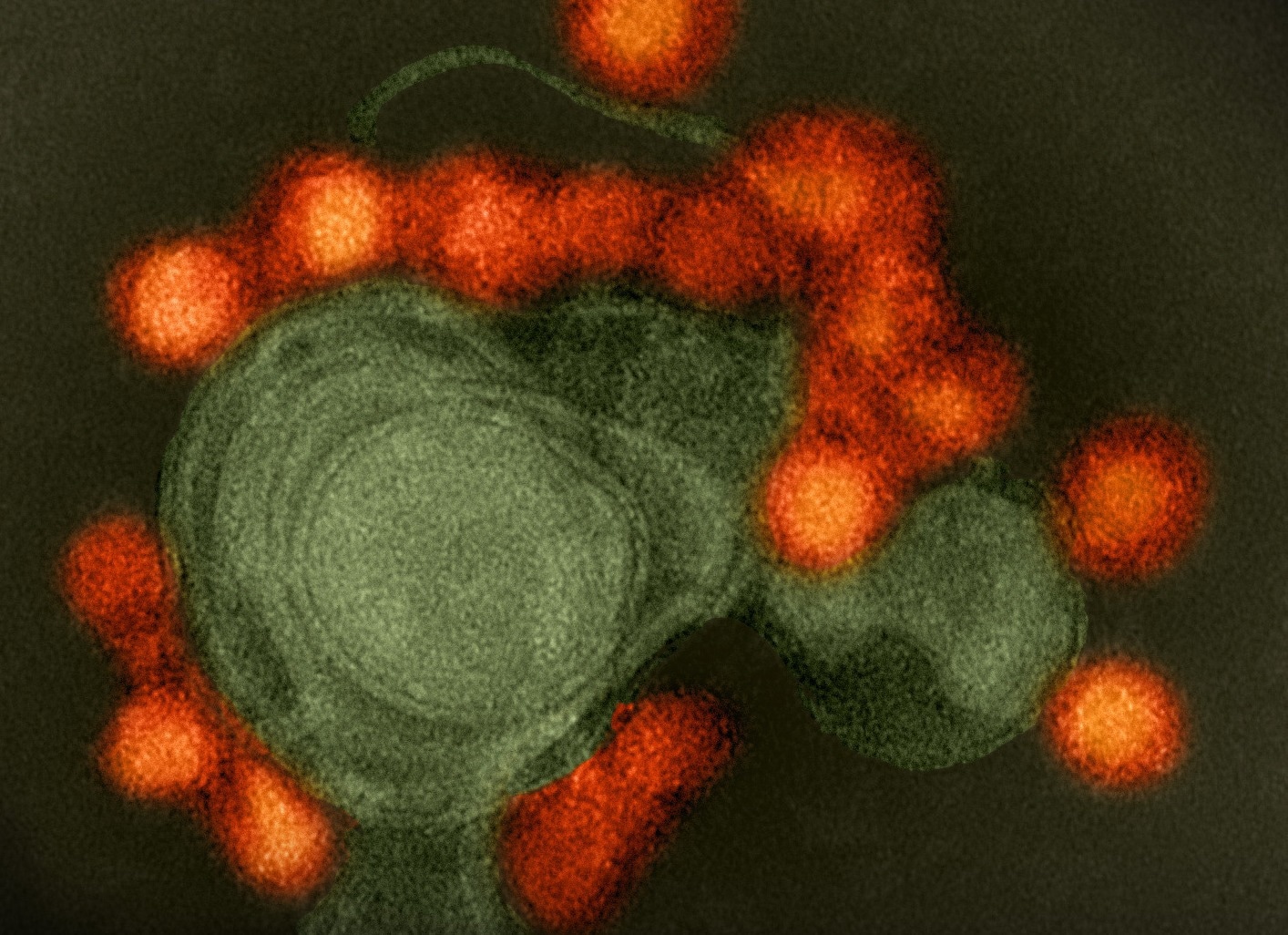
Zika virus (ZIKV) infection is a potentially teratogenic disease that causes up to one in seven infants born to infected mothers to suffer neurodevelopmental deficits. A new study published in the journal Cell shows that some mothers escape injury to their babies because they develop a highly effective neutralizing antibody. This demonstrates the importance of such antibodies in protecting the fetus from Zika virus while also providing a potentially useful antibody to prevent fetal infection. Learn: Zika virus-specific IgM elicited in pregnancy demonstrates ultrapotent neutralization. Photo credit: NIAID Introduction ZIKV appeared in America...

Ultrapotent IgM antibodies isolated from a pregnant woman with Zika virus show promise as immunotherapy
Zika virus (ZIKV) infection is a potentially teratogenic disease that causes up to one in seven infants born to infected mothers to suffer neurodevelopmental deficits. A new study published in the journal cell shows that some mothers avoid injury to their babies because they develop a highly effective neutralizing antibody. This demonstrates the importance of such antibodies in protecting the fetus from Zika virus while also representing a potentially useful antibody in preventing fetal infection.
introduction
ZIKV emerged in the Americas and soon proved to be vertically transmitted, resulting in a significant minority of affected infants being born with microcephaly and other congenital anomalies. Meanwhile, even in normal-appearing infants, there was a significant rate of neurodevelopmental disorders after maternal ZIKV infection during pregnancy several years earlier.
Interestingly, ZIKV does not typically cause disease in adults; it is mainly responsible for teratogenic consequences during pregnancy. For example, in Brazil there were 11,000 cases of microcephaly stemming from a single outbreak in 2015-16. Therefore, protective immunity involving neutralizing antibodies (nAbs) is required during pregnancy.
Previous studies reported primarily on nAbs of the immunoglobulin G (IgG) class, although IgM antibodies have a surprisingly long-standing role in flavivirus infections such as yellow fever virus and West Nile virus infections. This is based on the conventional concept that IgM antibodies are temporarily formed during the acute phase of infection, which consist of low-affinity antibodies without neutralizing capacity. However, this belies the early neutralizing IgM antibodies in such infections.
IgM antibodies are pentameric and bind to five times as many epitopes as IgG antibodies. The densely packed repeating structures of these viruses are exploited, allowing B cell receptors to be bound by the IgM antibodies in multivalent ratios. This in turn favors B cell stimulation and clonal selection of antibodies.
The result is specific IgM antibodies against ZIKV after several years, in contrast to the five-day half-life of IgM in normal cases. This suggests selection of B cells expressing ZIKV-specific IgM followed by expansion during such infection.
“Although the neutralizing activity is primarily attributed to IgG isotype antibodies, IgM may play an underappreciated role in ZIKV immunity…particularly in pregnancy.”
B cells are first stimulated to release interleukin (IL-10), then their production is suppressed, allowing mature B cells to survive but reducing the number of naive B cells during pregnancy. Since the latter produce IgM antibodies, this shift toward memory and antibody-secreting cells shapes the profile of IgG and IgM nAbs during pregnancy.
The current study, to be published in Cell, examined the neutralizing effects of IgM antibodies in pregnant women. The cohort included ten women, eight with acute and the others with secondary ZIKV infection, that is, after previous exposure to dengue virus (DENV).
What did the study show?
The results show that all infected women had high levels of anti-ZIKV antibodies throughout pregnancy from the time of infection. Anti-ZIKV IgM was found in all subjects, with one subject showing persistent IgM after 406 days
The researchers also found that ZIKV is partially neutralized by IgM antibodies, with the highest percentage at ~80% found in a subject who also showed the longest persistence of ZIKV-neutralizing IgM at 100 days after symptom onset. Therefore, neutralization of IgM is most important in the first trimester of pregnancy with primary or secondary ZIKV infection.
However, four of the seven women with late IgM antibodies showed neutralizing capacity up to 210 days after symptom onset, all of which were secondary cases. Interestingly, the majority of ZIKV-reactive IgM was not ZIKV-neutralizing IgM.
The researchers examined B cell repertoires from the blood samples of infected mothers.
This led to the identification of nine separate B cell lines that produced ZIKV-binding antibodies in the peripheral blood of ZIKV-infected mothers. Additionally, these B-lymphoblastoid cell lines (B-LCL) were found to contain one that produced the IgM antibody DH1017.IgM in a pentameric form.
E-Book Antibodies
Compilation of the top interviews, articles and news from the last year. Download a free copy
This nAb had matured, as shown by the fact that it had undergone a somatic mutation. It was highly specific for ZIKV, unreactive to other flaviviruses, and showed ultrapotent neutralization of ZIKV. In direct comparison with known ZIKV-neutralizing IgG monoclonal antibodies (mAbs), its neutralization range exceeded the latter by 8- to over 10,000-fold. Any neutralizing antibody with a half-maximal inhibitory concentration (IC50) of less than 10 ng/ml can be described as ultrapotent.
This ultrapotency was directly related to its IgM isotype and recombinant DH1017. IgG antibodies showed much weaker interactions with ZIKV. Notably, DH1017.IgM did not show antibody-dependent enhancement (ADE) of infection in vitro, nor did the B cell clone react with human autoantigens to cause autoimmune disease.
When given to mice before exposure to lethal doses of the virus, it prevented viremia better than IgG antibodies. While all exposed control mice died from the infection, those treated with DH1017.IgM survived and showed a reduction in viremia to the limit of detection. Even at half the dosage, all animals survived, but viremia was prevented less effectively. The antibody was detectable up to four days after exposure to the virus.
Again, “the decavalent DH1017.IgM pentamer protects against ZIKV disease in mice and controls viremia more efficiently than the bivalent DH1017.IgG monomer.”
These results indicate that the multivalent isotype of IgM is responsible for the superior neutralization capacity.
The virus has fivefold symmetry with multiple ectodomain (E) glycoprotein units on the surface. Further study of the antibody structure revealed that “the arms of the DH1017.IgM pentamer can bend toward the surface of the virus and that each arm can contact the epitopes of neighboring asymmetric units.” This decavalent mode of antigen recognition gives the IgM antibody an advantage over the bivalent contact possible with IgG antibodies.
IgM antibodies can also bind to epitope pairs on different virions and cross-link them to form aggregates. Both modes of antigen recognition can work simultaneously.
What are the effects?
Based on mouse findings, DH1017.IgM appears to be a good candidate for immunotherapy against ZIKV. Like other flaviviruses, ZIKV induces persistent IgM antibodies that could help neutralize the virus within the first three months of pregnancy.
This is supported by the previous observation that in most cases ZIKV infection cleared within two weeks of infection, probably due to early peak production of IgM antibodies that control the virus. The current study shows that this is also the case during pregnancy.
Future studies should examine how IgM levels relate to persistent viremia. In the woman with the longest period of viremia, after the first peak of IgM neutralizing activity 14 days after symptom onset, a second peak occurred at ~70 days, during which time DH1017.IgM appeared. The somatic mutation of this cell line suggests that it is a memory B cell expressing IgM, perhaps from a pool of IgM+ memory B cells and plasma cells that can give rise to isotype-specific neutralizing IgM antibodies.
The mode of neutralization could be via binding to a quaternary epitope not previously known to be recognized by a strong neutralizing antibody. However, this epitope type marks a class of potently neutralizing IgG mAbs. Its use by this IgM antibody could prevent fusogenic conformational change of E protein and inhibit infection.
The ultrapotency of DH1017.IgM is primarily due to its multivalent binding, suggesting that IgM antibodies may “occupy a functional niche reserved for IgM in the context of pathogens with repetitive proximal structures.” Furthermore, the activity of DH1017.IgM is enhanced in the presence of complement, further reducing the risk of ADE.
“Importantly, DH1017.IgM-mediated protection from lethal ZIKV challenge in mice recapitulates the protection and viral control conferred by potent IgG-neutralizing antibodies.”
In the current scenario with no ongoing ZIKV vaccine trials due to the relative rarity of this infection, pregnancy-safe interventions are urgently needed to reduce the risk of congenital ZIKV. DH1017.IgM may be a measure to bridge this gap, especially since IgM, unlike IgG, is not transmitted across the placenta, reducing the risk of fetal injury or ADE in infancy.
Reference:
- Singh, T. et al. (2022). Ein in der Schwangerschaft hervorgerufenes Zika-Virus-spezifisches IgM zeigt eine ultrapotente Neutralisation. Zelle. https://doi.org/10.1016/j.cell.2022.10.023. https://www.cell.com/cell/fulltext/S0092-8674(22)01369-1
.