

 Suche
Suche
 Mein Konto
Mechanically active adhesive prevents and supports recovery from muscle atrophy

Muscle wasting from too little exercise, as occurs quickly in a broken limb immobilized in a cast, and more slowly in people of advanced age. Muscular atrophy, as clinicians refer to the phenomenon, is also a debilitating symptom in patients suffering from neurological diseases such as amyotrophic lateral sclerosis (ALS) and multiple sclerosis (MS), and may be a systemic response to various other diseases, including cancer and diabetes. This image shows examples of MAGENTA prototypes made with a spring made from a “shape memory alloy” and an elastomer, and how their size compares to that of a one cent coin. Photo credit: Wyss Institute at Harvard...

Mechanically active adhesive prevents and supports recovery from muscle atrophy
Muscle wasting from too little exercise, as occurs quickly in a broken limb immobilized in a cast, and more slowly in people of advanced age. Muscular atrophy, as clinicians refer to the phenomenon, is also a debilitating symptom in patients suffering from neurological diseases such as amyotrophic lateral sclerosis (ALS) and multiple sclerosis (MS), and may be a systemic response to various other diseases, including cancer and diabetes.
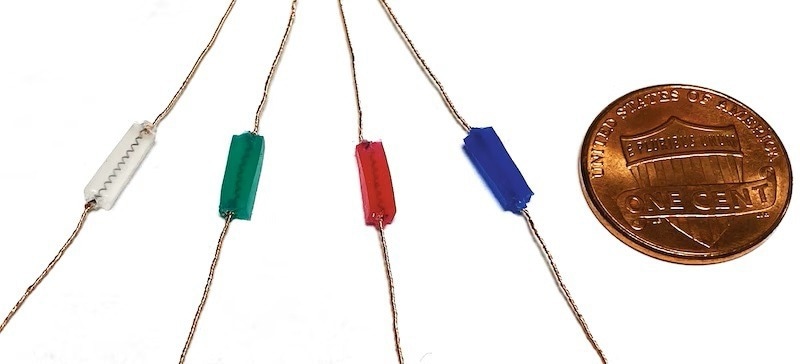
Dieses Bild zeigt Beispiele von MAGENTA-Prototypen, die mit einer Feder aus einer „Formgedächtnislegierung“ und einem Elastomer hergestellt wurden, und wie ihre Größe mit der einer Ein-Cent-Münze verglichen wird. Bildnachweis: Wyss Institute an der Harvard University
Mechanotherapy, a manual or mechanical form of therapy, is considered to have broad potential for tissue repair. The best-known example is massage, in which the muscles are relaxed through pressure stimulation. However, it is far less clear whether stretching and contracting muscles by external means can also be a treatment. To date, two major challenges have prevented such studies: limited mechanical systems capable of generating stretch and contraction forces uniformly along the length of muscles, and inefficient delivery of these mechanical stimuli to the surface and deeper layers of muscle tissue.
Now, bioengineers at the Wyss Institute for Biologically Inspired Engineering at Harvard University and the Harvard John A. Paulson School of Engineering and Applied Sciences (SEAS) have developed a mechanically active adhesive called MAGENTA that acts as a soft robotic device and solves both of these problems - folding problem. In an animal model, MAGENTA successfully prevented and promoted recovery from muscle atrophy. The team's results are published in Nature Materials.
With MAGENTA, we have developed a new integrated multi-component system for muscle mechanostimulation that can be applied directly to muscle tissue to trigger key molecular signaling pathways for growth. While the study provides the first proof of concept that externally delivered stretch and contraction movements can prevent atrophy in an animal model, we believe the core design of the device can be broadly adapted to various disease settings where atrophy is a major problem.”
David Mooney, Ph.D., senior author and member of the Wyss Founding Core Faculty
Mooney leads the Wyss Institute's Immuno-Materials Platform and is also the Robert P. Pinkas Family Professor of Bioengineering at SEAS.
An adhesive that can move muscles
One of MAGENTA's main components is an engineered spring made from Nitinol, a type of metal known as "shape memory alloy" (SMA), which allows MAGENTA to be activated quickly when heated to a certain temperature. The researchers activated the spring by electrically wiring it to a microprocessor unit that can program the frequency and duration of the expansion and contraction cycles. MAGENTA's other components are an elastomeric matrix that forms the body of the device and insulates the heated SMA, and a "tough adhesive" that allows the device to be firmly attached to muscle tissue. In this way, the device is aligned with the natural axis of muscle movement and transmits the mechanical force generated by SMA deep into the muscle. Mooney's group is developing MAGENTA, which stands for "mechanically active gel elastomer nitinol tissue adhesive," as one of several tough gel adhesives with functionalities tailored to various regenerative applications in multiple tissues.
After developing and assembling the MAGENTA device, the team tested its muscle-deforming potential, first in isolated muscles ex vivo and then by implantation into one of the major calf muscles of mice. The device did not cause serious signs of tissue inflammation and damage and demonstrated mechanical stress on the muscles of approximately 15%, consistent with their natural deformation during exercise.
Omics eBook
Compilation of the top interviews, articles and news from the last year. Download a free copy
To evaluate therapeutic effectiveness, the researchers next used an in vivo model of muscle atrophy by immobilizing a mouse's hind limb in a tiny, plaster-like enclosure for up to two weeks after implantation of the MAGENTA device. “While untreated muscles and muscles that were treated with the device but not stimulated significantly disappeared during this period, the actively stimulated muscles showed less muscle loss,” said lead author and Wyss Technology Development Fellow Sungmin Nam, Ph.D. “Our approach could also promote the recovery of muscle mass that had already been lost over a three-week period of immobilization and induce activation of key biochemical mechanotransduction pathways known to induce protein synthesis and muscle growth.
Facets of mechanotherapy
In a previous study, Mooney's group, in collaboration with the group of Conor Walsh, a Wyss Associate Faculty member, found that regulated cyclic compression (as opposed to stretch and contraction) of acutely injured muscles using another soft robotic device reduced inflammation and enabled repair of muscle fibers in the acutely injured muscle. In their new study, Mooney's team asked whether these compressive forces could also protect against muscle loss. However, when they directly compared muscle compression via the previous device with muscle stretching and contraction via the MAGENTA device, only the latter had clear therapeutic effects in the mouse atrophy model. “There is a good chance that different soft robotic approaches, with their unique effects on muscle tissue, could open up disease- or injury-specific mechanotherapeutic pathways,” Mooney said.
To further expand MAGENTA's capabilities, the team investigated whether the SMA spring could also be activated by laser light, which had not been shown before and would essentially make the approach wireless and expand its therapeutic utility. In fact, they showed that an implanted MAGENTA device without electrical wires could act as a light-sensitive actuator and deform muscle tissue when irradiated with laser light through the overlying skin layer. While laser activation did not reach the same frequencies as electrical activation, and fatty tissue in particular appeared to absorb some laser light, the researchers believe the device's demonstrated light sensitivity and performance could be further improved. "MAGENTA's general capabilities and the fact that its assembly can be easily scaled from millimeters to several centimeters could make it interesting as a central element of future mechanotherapy, not only for treating atrophy but perhaps also for accelerating regeneration in skin, heart and other sites that could benefit from this form of mechanotransduction," Nam said.
“The growing recognition that mechanotherapies can address critical unmet needs in regenerative medicine in ways that drug-based therapies simply cannot has stimulated a new area of research that connects robotic innovations to human physiology down to the level of molecular signaling pathways that transmit other mechanical stimuli,” said Wyss Founding Director Donald Ingber, MD, Ph.D. “This study by Dave Mooney and his group is a very elegant and pioneering example of how this type of mechanotherapy could be used clinically in the future.” Ingber is also the Judah Folkman Professor of Vascular Biology at Harvard Medical School and Boston Children's Hospital and the Hansjörg Wyss Professor of Bioinspired Engineering at SEAS.
Other authors of the study include Bo Ri Seo, Alexander Najibi and Stephanie McNamara from Mooney's group at the Wyss Institute and SEAS. The study was funded by the National Institute of Dental and Craniofacial Research (award number R01DE013349), the Eunice Kennedy Shriver National Institute of Child Health and Human Development (award number P2CHD086843), and the Materials Research Science and Engineering Center of the National Science Foundation at Harvard University (award number DMR14-20570).
Source:
Wyss Institute for Biologically Inspired Engineering at Harvard
Reference:
Nam, S., et al. (2022) Active tissue adhesive activates mechanosensors and prevents muscle loss. Natural materials. doi.org/10.1038/s41563-022-01396-x.
.