

 Suche
Suche
 Mein Konto
Genomic rearrangements in monkeypox virus could be a sign of adaptation to the human host

In a study recently published on bioRxiv* preprint server, researchers examined genomic rearrangements in the monkeypox virus (MPXV) genome and examined whether such rearrangements represented a viral adaptation to humans (host). Learning: Possible adaptation of monkeypox virus 2022 to the human host through gene duplication and loss. Image credit: Kateryna Kon/Shutterstock *Important note: bioRxiv publishes preliminary scientific reports that have not been peer-reviewed and therefore should not be considered conclusive, guide clinical practice/health behavior, or be treated as established information. Background Studies have reported that poxviruses evolve more slowly compared to ribonucleic acid (RNA) viruses, with genomic rearrangements such as gene loss...

Genomic rearrangements in monkeypox virus could be a sign of adaptation to the human host
In a recently published study bioRxiv * Preprint Server, researchers examined genomic rearrangements in the monkeypox virus (MPXV) genome and examined whether such rearrangements represented a viral adaptation to humans (host).
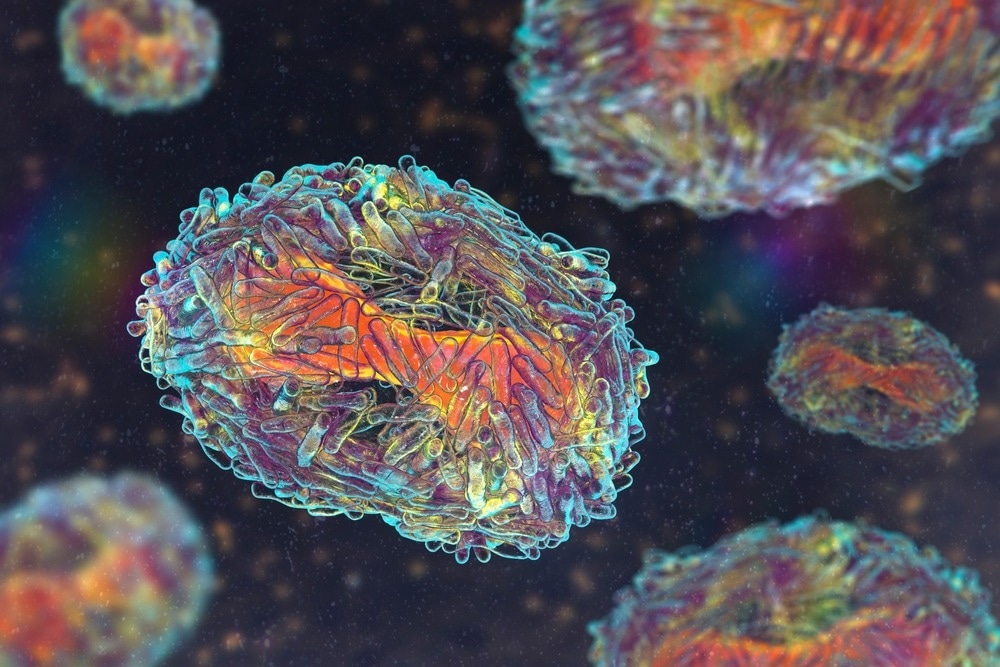
Lernen: Mögliche Anpassung des Affenpockenvirus 2022 an den menschlichen Wirt durch Genduplikation und -verlust. Bildnachweis: Kateryna Kon/Shutterstock
*Important NOTE:bioRxiv publishes preliminary scientific reports that have not been peer-reviewed and therefore should not be considered conclusive, guide clinical practice/health behavior, or be treated as established information.
background
Studies have reported that poxviruses evolve more slowly compared to ribonucleic acid (RNA) viruses, with genomic rearrangements such as gene loss or gain being the main drivers of adaptation to hosts. In 2022, the MPXV outbreak has affected most parts of the world, and MPX appears to have become established in human communities.
About studying
In the present study, researchers assessed the genomic losses and gains of MPXV and examined whether they are representative of MPXV adaptation to human hosts.
A total of 339 samples confirmed to be MPXV positive by polymerase chain reaction (PCR) were sequenced by whole genome analysis (WGS). The team extracted deoxyribonucleic acid (DNA) from the samples and prepared shotgun libraries. They constructed MPXV genomes by de novo assembly and mapped them to a reference protein sequence. The sequences were aligned and all genomes were submitted to the NCBI (National Center for Biotechnology Information) GenBank database.
Results
The team reported five MPXV outbreak genomes in 2022 with extensive gene duplications and losses, including duplications of up to 18,000 base pairs (bp) to the opposite genomic end from the left (L) to right (R) terminal inverted repeats (ITR) region and insertion site deletions of up to 16,000 bp as a likely adaptation to the human host.
The L-to-R duplications were also found in a clade I MPXV genome from 2005 and in a genome from the current multinational MPXV outbreak in 2022. In addition, the R-to-L end duplications were detected with the MPXV/Germany/2022/RKI339 genome. The MPXV/Germany/2022/RKI338 genome showed a 2,309 bp deletion at the same location downstream of the L ITR but without an insertion.
Identical duplications were observed in 20 MPXV genomes of clade II between 1958 and 2018. The MPXV/Germany/2022/RKI335 genome showed duplications from the region downstream of the L ITR, including the MPXVgp-005 and -007 genes, to the localized region above the R ITR between the MPXVgp-182 and -188 genes, resulting in MPXVgp-184 and -187 truncation and complete MPXVgp185 and MPXVgp186 deletion.
The duplication size (2921 base pairs) to the R-terminal region and the 8893 bp deletion resulted in the formation of a 191176 bp long total genome with an ITR region extension between 6400 bp and 9398 bp. Identical deletion and duplications were observed in the MPXV/Germany/2022/RKI336 genome with MPXVgp-005 to -008 gene duplication and insertion between MPXVgp-177 and -188 at the R end, with MPXVgp187 truncation and complete MPXVgp-178 to -186 Gene deletion.
A 4040 bp duplication and 15303 bp deletion resulted in the formation of a 185852 bp long genome with 10460 bp ITRs. The MPXV/Germany/2022/RKI337 genome showed an identical deletion and duplication pattern with the largest 5282 bp long duplications [MPXVgp-005 to -010 (shortened)] towards the R-terminal region with the largest deletion of 16926 bp [MPXVgp-176 to -187 (shortened)]. The length of the MPXV/Germany/2022/RKI337 genome was 185251 bp with 11641 base pair ITRs.
The MPXV Sudan 2005 genome showed a 10550 base pair duplication in the same region after the L-to-R ITR and a 2108 bp deletion. The duplication in the E-ChVir28389 genome showed an 858-bp duplication from the L-to-R ITR and a 2048-bp deletion. In addition, R-to-L end duplications were observed for the MPXV/Germany/2022/RKI339 genome, which had a duplication of 18214 bp [genes MPXVgp174 (shortened) to 187 (shortened)] to the L-terminal region, resulting in MPXVgp-005 to -010 gene deletions of 6701 Base pairs leads.
The length of the genome increased to 208804 bp with 24695 bp expanded ITRs. All L-to-R duplications contained ≥1 of the MPXVgp-005 to -014 genes with deletion of ≥1 MPXVgp-175 to -187 genes or vice versa for R-to-L duplications. Deleted genes correlated with loss of antigenic signaling or continued evolutionary persistence through disease attenuation.
In contrast, acquired genes can promote immune evasion of host defense responses. MPXVgp-006 is an epidermal growth factor-like protein with homology to the vaccinia virus C11R gene, and cell culture experiments have shown that C11R decreases nuclear factor kappa B (NF-κB) activation. Other duplicated genes were MPXVgp-008 (zinc finger protein, apoptosis inhibition), MPXVgp-009 [interleukin (IL)-18 functional inhibitor], and MPXVgp010 (abbreviated ankyrin or host range protein).
Furthermore, all L to R duplications caused deletions of at least MPXVgp-184 (truncated) to -187 (truncated), and MPXVgp-184,186 showed no orthopoxvirus homology. MPXVgp-185 showed homology to the vaccinia B22R gene, which is homologous to serine protease inhibitors. The B22R deletion has been documented to reduce vaccinia virus virulence and replication.
For the MPXV/Germany/2022/RKI337 and MPXV/Germany/2022/RKI336 genes, MPXVgp180 (B19R) and MPXV182 (B21R) were further deleted and identified as candidates for potentially important MPXV virulence genes. The third candidate D10L (MPXVgp013) and genes B19R and B21R were duplicated in the MPXV/Germany/2022/RKI339 genome, and the fourth was duplicated in the Sudan KC257459 MPXV genome.
Diploma
Overall, the study results highlighted gene duplications and losses as likely mechanisms of the current 2022 MPXV outbreak for host adaptation and underscored the need for continued MPXV genome end surveillance efforts instead of or in conjunction with ongoing non-synonymous MPXV mutation surveillance.
*Important NOTE:bioRxiv publishes preliminary scientific reports that have not been peer-reviewed and therefore should not be considered conclusive, guide clinical practice/health behavior, or be treated as established information.
Reference:
- Vorläufiger wissenschaftlicher Bericht.
Mögliche Anpassung des Affenpockenvirus 2022 an den menschlichen Wirt durch Genduplikation und -verlust. Annika Brinkmannet al. bioRxiv. doi: https://doi.org/10.1101/2022.10.21.512875 https://www.biorxiv.org/content/10.1101/2022.10.21.512875v1
.