

 Suche
Suche
 Mein Konto
In our rapidly changing world, parasites and vectors thrive

Political, climatic and socioeconomic changes related to technology, transportation and food security have had positive and negative impacts on society. They have influenced the distribution patterns of parasites and arthropod vectors and led to the introduction of foreign pathogens into new geographical areas. This incident could ultimately pose a serious threat to public health. Globalization has also facilitated the emergence and spread of infectious diseases. Recently, researchers reviewed the occurrence and management of emerging parasites and vectors associated with human and veterinary organisms. This review is available in a special issue of the magazine Acta Tropica. Learn: Emerging parasites and...

In our rapidly changing world, parasites and vectors thrive
Political, climatic and socioeconomic changes related to technology, transportation and food security have had positive and negative impacts on society. They have influenced the distribution patterns of parasites and arthropod vectors and led to the introduction of foreign pathogens into new geographical areas. This incident could ultimately pose a serious threat to public health. Globalization has also facilitated the emergence and spread of infectious diseases. Recently, researchers reviewed the occurrence and management of emerging parasites and vectors associated with human and veterinary organisms. This review is available in a special issue of the journal Acta Tropica.
Various aspects of emerging parasites and vectors
Due to climatic changes, parasites can now thrive in a variety of environments. In addition, they influence the distribution and occurrence patterns of other different parasites. For example, research has shown that soft and hard ticks infect people in Brazil. It is hypothesized that environmental changes caused by deforestation will lead to geographic spread of some tick species and their associated pathogens.
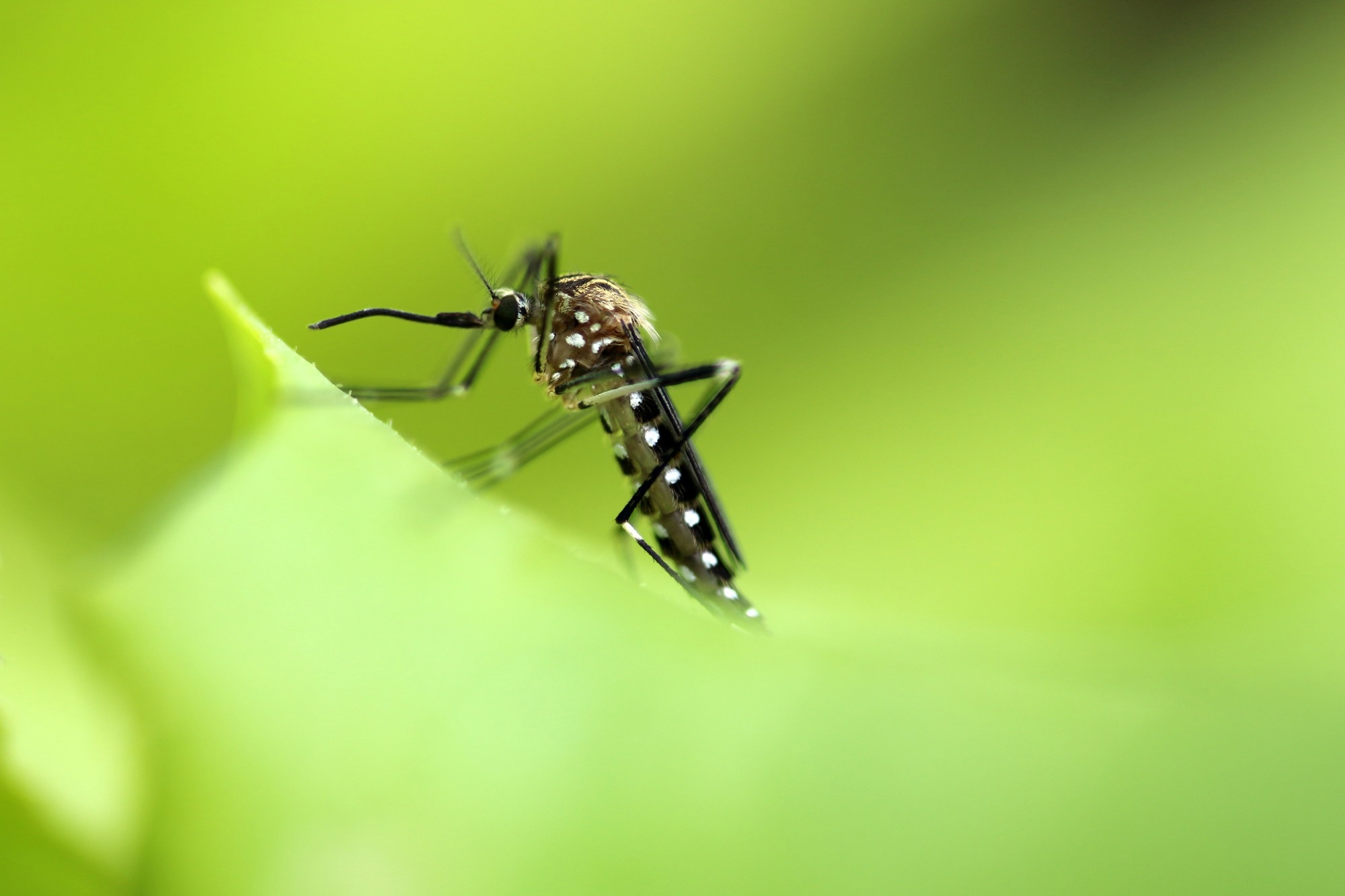
In addition, researchers are actively studying invasive mosquito species of public health and veterinary importance. The presence of Aedes koreicus and Aedes japonicus has already been reported in northern Italy and will almost certainly soon spread to European countries. Other insects of veterinary importance (e.g. mosquitoes) have been studied in some parts of Algeria, which are vectors of several pathogens. Assessing their distribution and composition could be crucial for planning control strategies.
The influence of wild animals on the occurrence of parasites has been analyzed in several studies. Ixodes ricinus ticks on roe deer are known to transmit a variety of arthropod-borne bacteria. In addition, a wide variety of ticks are present in birds along with Rickettsia spp. was reported in a study conducted in the Brazilian Atlantic rainforest. Soft ticks were found in a house in Brazil and were found to be molecularly positive for human blood. This finding is cause for concern because it shows how close these ectoparasites, primarily from wild animals, and their pathogens are to humans.
It has been shown that replacing native forests with monocultures, such as pine plantations, could influence the spread of orally transmitted parasites (e.g. Giardia spp.). A number of dermatological conditions in humans are associated with zoonotic parasites. Protozoa, helminths and arthropods are the main parasites that cause these diseases. Researchers have analyzed these parasites that cause skin wounds and suggested the most appropriate treatment options.
Management strategies for parasitic diseases
Scientists worldwide have developed strategies to prevent and control the transmission of parasitic diseases. This is extremely important because parasites influence multiple mechanisms that hinder the effectiveness of many drug classes.
Biological tools, such as mushrooms, have been popularly used to treat parasitic diseases; however, this approach is extremely expensive. Recently, another method, the assisted autodissemination technique, has been developed, which requires further improvements before implementation. This technique introduces target arthropod vectors containing entomopathogenic fungi that act directly or indirectly as propagators of other pests.
Extensive research has been conducted to treat endoparasites associated with veterinary medicine and humans. For example, strategies have been formulated to eliminate Trypanosoma evansi, the causative agent of Surra in camels from Africa. Surra is a disease caused by the blood-borne parasite T evansi, which is transmitted by biting flies.
Improvements in the capacity of national veterinary services, such as: Other methods, such as disease diagnosis and control methods, have contributed to the control of T. evansi. Furthermore, the application of integrated management and increased host resistance through its improved immunological status has helped control T evansi.
Doxycycline has been used for the slow-kill treatment strategy for Dirofilaria immitis infections in dogs. This treatment focused on eliminating the Wolbachia endosymbiont and reducing microfilariae in the blood.
Highly reliable and sensitive diagnostic tools are crucial for the treatment of parasitic diseases. It is important to control the disease not only in the vertebrate hosts to treat parasitic diseases. Instead, it could be beneficial to control the vector population. Interestingly, Germany-based Flinders Technology Associates (FTA) formulated a strategy using honey baits to detect the spread of Usutu virus in mosquito populations. This technique could be used in large-scale surveillance programs for early detection of parasites.
Conclusions
The current study highlights the importance of monitoring invasive arthropod vectors as they can introduce foreign pathogens into geographical regions and harm animals and human populations. Furthermore, global warming and globalization have played a key role in supporting the change in global distribution patterns of pathogens. Therefore, it is high time to invest in developing alternative management strategies to alleviate the socio-economic impact of infestations.
Reference:
- Bezerra-Santos, AM et al. (2022) Neu auftretende Parasiten und Vektoren in einer sich schnell verändernden Welt: von der Ökologie zum Management. Acta Tropica. doi: https://doi.org/10.1016/j.actatropica.2022.106746, https://www.sciencedirect.com/science/article/pii/S0001706X22004387
.