

 Suche
Suche
 Mein Konto
Study examines the stability of monkeypox virus DNA in various body fluid samples

In a recent study published in the Journal of Infections, researchers used laboratory diagnostic test data from monkeypox cases. They ran mathematical models to predict how long monkeypox viral deoxyribonucleic acid (DNA) would remain detectable in different body fluid samples. Learning: Persistence of monkeypox virus DNA in clinical samples. Image source: MIA Studio/Shutterstock Background The monkeypox virus, which belongs to the genus Orthopoxvirus, was until recently endemic to West and Central African countries. As of August 2022, monkeypox outbreaks have occurred in 99 countries. Monkeypox manifests itself through mucosal and skin lesions, particularly in the genital, perianal and oropharyngeal areas, with a high prevalence in men who have sex with men. Monkeypox confirmations…

Study examines the stability of monkeypox virus DNA in various body fluid samples
In a recently published study in the Journal of Infections, the researchers used laboratory diagnostic test data from monkeypox cases. They ran mathematical models to predict how long monkeypox viral deoxyribonucleic acid (DNA) would remain detectable in different body fluid samples.
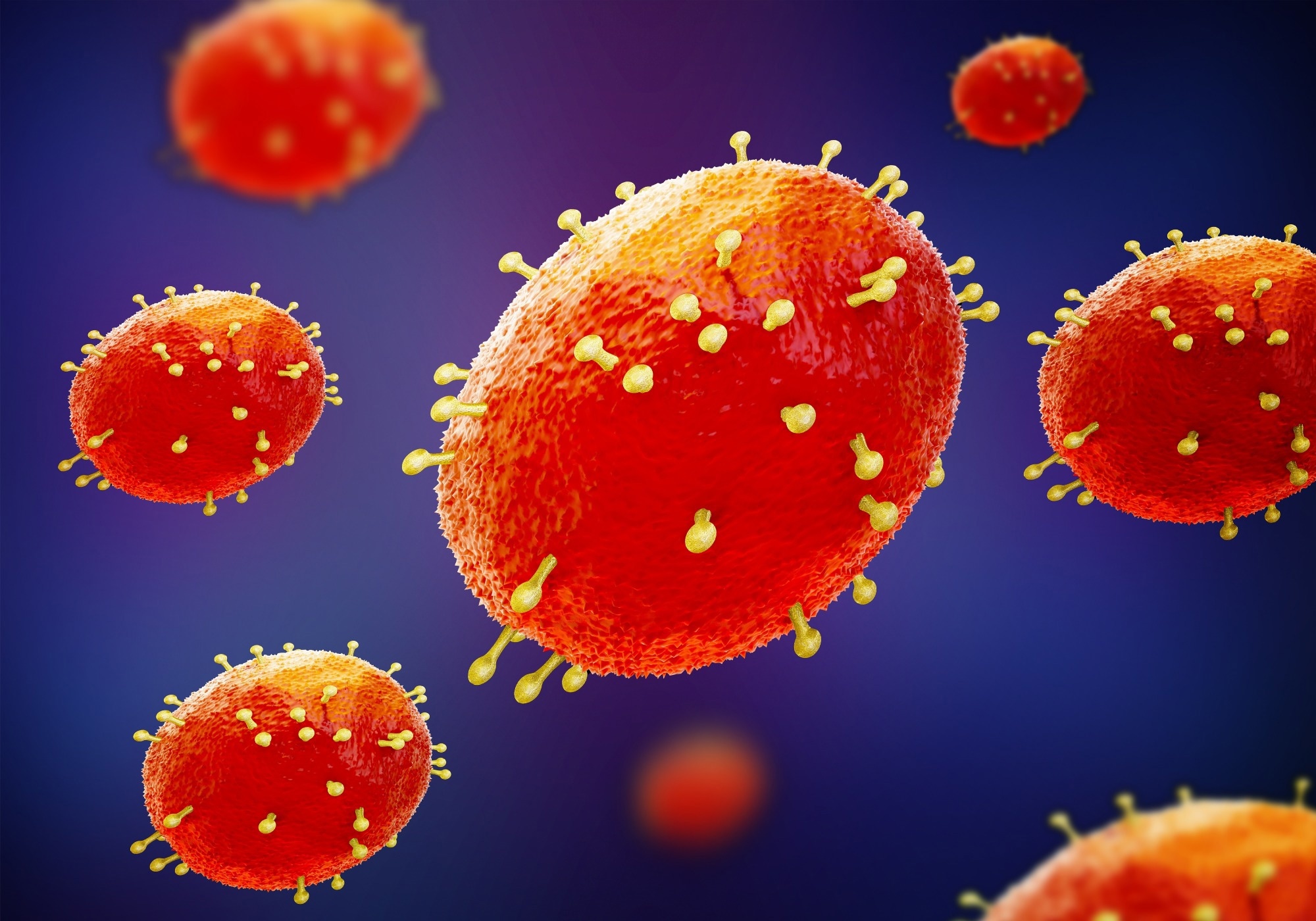
Lernen: Persistenz der Affenpockenvirus-DNA in klinischen Proben. Bildquelle: MIA Studio/Shutterstock
background
The monkeypox virus, which belongs to the genus Orthopoxvirus, was until recently endemic in West and Central African countries. As of August 2022, monkeypox outbreaks have occurred in 99 countries.
Monkeypox manifests itself through mucosal and skin lesions, particularly in the genital, perianal and oropharyngeal areas, with a high prevalence in men who have sex with men.
Monkeypox confirmations are based on positive polymerase chain reaction (PCR) tests that detect monkeypox viral DNA in the fluid sample. While various body fluid samples have been used to test for monkeypox, there is a lack of information about how stable the viral DNA remains in these samples. This information could significantly improve the accuracy of clinical diagnostic methods for monkeypox.
About the study
In the present study, researchers used archived laboratory test results to collect molecular evidence data, which were further grouped by patient age and gender, human immunodeficiency virus (HIV) status, and clinical manifestations of monkeypox.
They used mathematical models such as Weibull parametric regression, log-normal and gamma models to estimate the length of time monkeypox virus DNA could be detected in different types of body fluids. Time to loss of DNA detection was estimated based on the number of days between onset of symptoms and the first negative PCR test. For samples with unclear results, the time between the last positive result and the first negative result was taken into account.
The study included 62 monkeypox cases, including 23 urine samples, 19 lesion swabs, and 17 each of nasopharyngeal and rectal swab samples. 16, 15, 14 and 14 samples of semen, blood, stool and saliva. or The sample included 49 men and 13 women, including 51 HIV-negative people.
The clinical manifestations were skin rashes and lesions, fever, lymphadenopathy, myalgia, headache, chills, and fatigue in descending order of reported frequency.
Results
The results of mathematical modeling showed that the persistence of monkeypox virus DNA in body fluids ranged from 5.7 to 13.5 days. The median time was highest for urine samples (13.5 days), followed by semen and blood samples (11.4 and 10.5 days, respectively). Viral DNA was least persistent in skin lesion samples (average 5.7 days).
The authors discussed some of the limitations of the study. The study did not examine the infectivity of the virus particles, only the persistence of the DNA in the fluids. In addition, the date of sample collection could differ from the date of onset of symptoms. Finally, the authors believe that the duration of viral DNA persistence in body fluids estimated in this study may not be generalizable to all monkeypox infections, especially asymptomatic ones.
Conclusions
Finally, the study examined the stability of monkeypox virus DNA in different types of body fluid samples from monkeypox patients. The researchers used mathematical models to estimate the time to loss of DNA recognition. They found that monkeypox viral DNA was most stable in urine samples, followed by semen and blood samples, and was least stable in skin lesion samples.
The results of the study can be used to make clinical testing recommendations for efficient sampling and detection of monkeypox cases. Fast and accurate testing can improve the initiation of preventive measures such as isolation and medication, thereby limiting further transmission of the disease.
Reference:
- Li, Z., Li, XX, Chen, Y., Ruan, Q., Huang, X., Zhu, G. & Sun, J. (2022). Persistenz der Monkeypox-Virus-DNA in klinischen Proben. Zeitschrift für Infektionen. doi: https://doi.org/10.1016/j.jinf.2022.10.013 https://www.journalofinfection.com/article/S0163-4453(22)00611-9/fulltext
.