

 Suche
Suche
 Mein Konto
Survey assesses prevalence of H5N8 influenza in birds

A recent Travel Medicine and Infectious Diseases journal study evaluated the prevalence of the H5N8 avian influenza virus among birds to determine its spread based on geographic locations and timing. This reported a combined prevalence of 1.6% with an upper limit of 1.9%, with incidences varying at different time points. Despite the availability of avian influenza virus vaccines that protect against certain clades of H5N8, other clades that escape vaccine-induced immunity are likely to continue to emerge. Learning: Prevalence of H5N8 influenza virus in birds: Systematic review with meta-analysis. Photo credit: Mark Agnor / Shutterstock.com Background Bird flu is an extremely contagious virus that primarily affects poultry. …

Survey assesses prevalence of H5N8 influenza in birds
A recent one Travel medicine and infectious diseases Journal study assessed the prevalence of the H5N8 avian influenza virus among birds to determine its distribution based on geographic locations and timing.
This reported a combined prevalence of 1.6% with an upper limit of 1.9%, with incidences varying at different time points. Despite the availability of avian influenza virus vaccines that protect against certain clades of H5N8, other clades that escape vaccine-induced immunity are likely to continue to emerge.
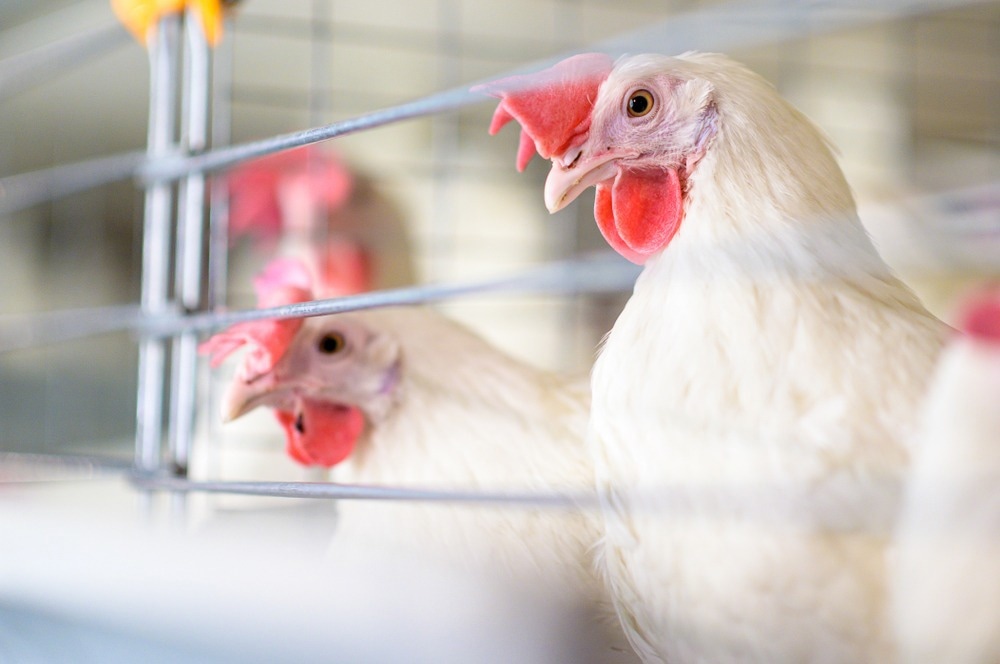
Learn: Prevalence of H5N8 influenza virus in birds: Systematic review with meta-analysis.Photo credit: Mark Agnor / Shutterstock.com
background
Bird flu is an extremely contagious virus that primarily affects poultry. The highly pathogenic form of the avian influenza virus (HPAIV) can be transmitted from poultry to humans.
In 2010, the H5N8 strain of HPAIV, belonging to clade 2.3.4.4, was detected for the first time in Asian wild birds. The infection later spread among domestic birds in South Korea, Japan and China.
Recently, H5N8 has been reported in many countries in Europe, the Middle East and Asia. The spread of the virus has been attributed to migratory wild birds, causing concern worldwide.
The highly pathogenic avian influenza virus, which belongs to the Orthomyxoviridae family, contains genetic variants of less virulent precursors. Different viral variants result from different subtypes of neuraminidase (N1-N9) and hemagglutinin (H1-H16) in birds. The avian influenza virus changes its epidemiology due to its interaction with its hosts and the environment.
This virus is most common in places that are natural habitats of waterfowl and in places where live bird markets are held. In addition, this virus is also frequently detected in poultry farms, slaughterhouses and intensive livestock farming.
The avian virus can mutate and undergo genetic recombination to quickly adapt to new hosts. H5N8 in particular has a high potential for interspecies transmission and is therefore of significant health concern worldwide.
Study results
The current analysis included 20 studies published between 2014 and 2021. Most studies were conducted in the Netherlands; However, other regions included Saudi Arabia, China, Egypt and Switzerland. The most commonly infected bird species were Anas crecca, Gallus gallus domesticus, Anas acuta, Cygnus olor and Anas platyrhynchos.
Drug Discovery E-Book
Compilation of the top interviews, articles and news from the last year. Download a free copy
In these studies, stool, oropharynx, cloaca, trachea, and tissue samples were collected. Nineteen of the 20 selected studies used a reverse transcription-polymerase chain reaction (RT-PCR) assay for viral confirmation, while one used an enzyme-linked immunosorbent assay (ELISA).
Of the 161,804 birds examined across all studies, 1,133 were positive for H5N8. The prevalence of H5N8 varied by geographic location, with 96.9% of cases reported in the United States, 94.4% in Uganda, and 0.2% in South Korea. Timing also contributed to the prevalence of H5N8, with 0.2% reported in 2014, 96.9% in 2015, and 52.6% in 2020.
A cohort of 27 birds showed a seroprevalence of 66.7%, confirmed by ELISA. For this purpose, antibodies in cloacal, blood and oropharynx samples were evaluated.
discussion
The highly contagious H5N8 bird flu virus has proven fatal to millions of birds. Transmission of the virus between species, including humans, and across countries represents a global threat. Furthermore, the H5N8 infection has increased in pathogenicity over time.
Rampant bird deaths may indicate a viral outbreak. H5N8 has infected millions of birds of many species that migrate to different countries, where they stay for extended periods of seven to eight months.
Birds often migrate from more heavily infected countries that have greater viral genetic variability. Waterfowl in particular act as reservoirs of the virus, which can infect poultry worldwide.
H5N8 has also affected the global economy. Millions of people depend on agriculture for their livelihoods; Therefore, such outbreaks have resulted in significant agricultural losses.
For example, the winter outbreak of H5N8 in 2020-2021 had a significant impact on poultry in regions of Africa, the Middle East, Europe and Central Asia. Vietnam also suffered heavy economic losses due to bird flu. Due to the mass deaths and slaughter of nearly 45 million animals, countries such as Japan and Indonesia also suffered significant losses.
Due to the increased risks of viral infection, control plans and surveillance are constantly being developed. Continued monitoring and evaluation of new approaches to animal and human protection is warranted.
Conclusions
The presence of the same birds in poultry systems, different environments and migration routes make potent sources of H5N8 transmission. This viral infection should not be neglected as the virus can undergo rapid genetic mutations and is capable of transmission between species.
The OneHealth approach, which assesses both animal and human infections, should be adopted. Additional surveillance is also warranted to prevent and control H5N8 infections in the future.
Reference:
- Calle-Hernández, DM, Hoyos-Salazar, V., & Bonilla-Aldana, DK (2022). Prävalenz des H5N8-Influenzavirus bei Vögeln: Systematische Überprüfung mit Metaanalyse. Reisemedizin und Infektionskrankheiten. doi:10.1016/j.tmaid.2022.102490
.