

 Suche
Suche
 Mein Konto
What eye complications are associated with monkeypox infection?

A study published in The Ocular Surface describes the connection between monkeypox infection and eye complications in humans. Learn: Monkeypox and effects on the eyes in humans. Image credit: Domaskina/Shutterstock Background Monkeypox is a DNA virus that belongs to the same Orthopox genus as the smallpox virus Variola. It is a zoonotic virus that jumps from animals to humans to transmit infections. The virus was originally endemic in Central and West Africa, and the first human monkeypox infection was detected in the Democratic Republic of Congo in 1970. In 2022, new outbreaks of monkeypox infections have been documented in many non-endemic countries around the world. This sudden increase in cases...

What eye complications are associated with monkeypox infection?
A study published in The surface of the eye describes the connection between monkeypox infection and eye complications in humans.
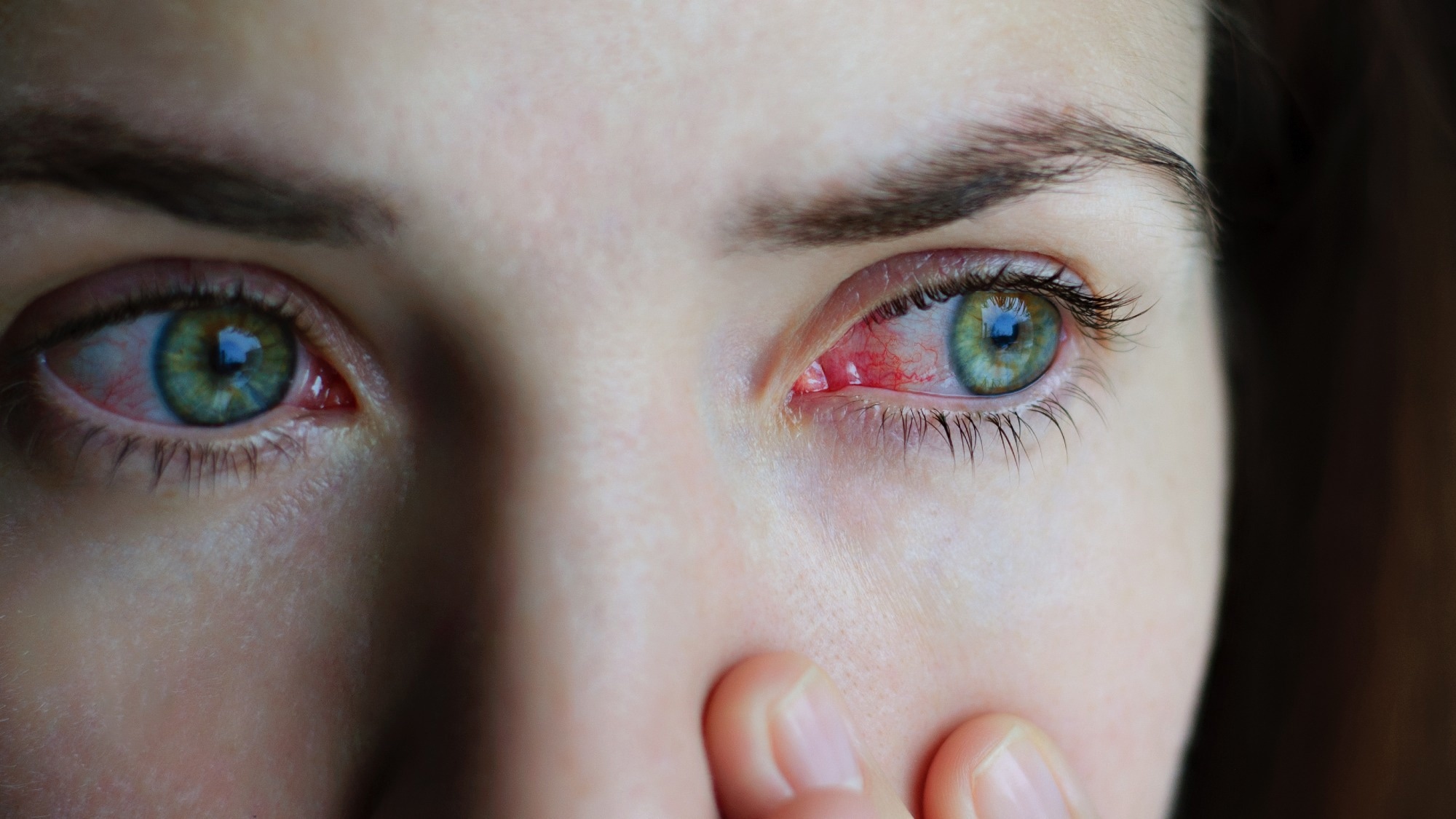
Lernen: Affenpocken und Auswirkungen auf die Augen beim Menschen. Bildnachweis: Domaskina/Shutterstock
background
Monkeypox is a DNA virus that belongs to the same Orthopox genus as the poxvirus Variola. It is a zoonotic virus that jumps from animals to humans to transmit infections. The virus was originally endemic in Central and West Africa, and the first human monkeypox infection was detected in the Democratic Republic of Congo in 1970.
In 2022, new outbreaks of monkeypox infections have been documented in many non-endemic countries around the world. This sudden increase in cases could be due to the loss of population-level cross-protection that smallpox vaccines provide against the monkeypox virus. The World Health Organization (WHO) declared the monkeypox outbreak a global health emergency on July 23, 2022.
The monkeypox virus has two different genetic variants: Clade 1 (Central African origin) and Clade 2 (West African origin). The causative virus of the recent outbreaks belongs to group 2. In terms of transmission mode, the monkeypox virus can be transmitted from animal to person and from person to person. Although there is not enough evidence of virus-harboring animal species, it is widely believed that rodents could serve as a potential reservoir for the virus.
Clinical manifestations of monkeypox infection
In most cases, monkeypox infection is self-limiting and resolves within 2-4 weeks. Fever, chills and myalgia are the most common symptoms, lasting up to 5 days after the onset of infection. Initial symptoms may also include severe headaches, lymphadenopathy and fatigue.
The main feature of a monkeypox infection is severe skin rashes or lesions that last up to 2-3 weeks. In severe cases, the virus can cause secondary skin infections, bronchopneumonia, gastroenteritis, sepsis and encephalitis. A growing body of evidence has also shown that the virus could cause eye complications.
Monkeypox infection and eye-related complications
Studies examining clinical manifestations of monkeypox infection indicate that conjunctivitis and eyelid edema are common ocular complications observed in infected individuals. Some patients develop focal lesions on the conjunctiva and over the eyelid margin. Eyelid inflammation has also been identified as a possible complication.
Genetics & Genomics eBook
Compilation of the top interviews, articles and news from the last year. Download a free copy
Regarding sources of eye infections, studies have documented that conjunctivitis is more common in monkeypox infections that originate from animal sources. Infected patients with conjunctivitis are more likely to experience other symptoms, including nausea, chills, mouth ulcers, sore throat, malaise, lymphadenopathy, and photophobia. You may also have a headache in the eye socket area.
In extreme cases, monkeypox infection can cause corneal inflammation (keratitis), corneal scarring, and even vision loss.
Preventive measures against eye complications
Certain preventative measures can be taken to avoid serious eye complications in at-risk patients with monkeypox infection. Topical lubricants may be applied to prevent superficial injuries to the surface of the eye. Vitamin supplementation could also be useful to boost overall immunity.
Trifluridine and vidarabine eye drops are known to provide protection against corneal lesions associated with orthopoxviruses. Off-level use of these eye drops every 4 hours for 7-10 days may be effective against ocular complications caused by monkeypox.
The most important preventative measure would be large-scale worldwide vaccination against the smallpox virus. Many studies have shown that people without a smallpox vaccination have a significantly higher risk of developing eye complications.
Treating monkeypox infection
There is currently no clinically approved treatment available for monkeypox infection in humans. The US Food and Drug Administration (FDA) previously approved two oral drugs, brincidofovir and tecovirimat, for the treatment of smallpox infections in humans. These drugs have demonstrated therapeutic efficacy against monkeypox infection in animals. However, no human clinical trials have been conducted to date to study these drugs.
Diploma
A significant association between monkeypox infection and ocular complications has made it necessary to increase surveillance and detection of monkeypox infections with ocular manifestations. When treating patients with ocular symptoms, ophthalmologists should consider monkeypox infection as part of their differential diagnosis.
Further studies are needed to identify the causal relationship between infections and ocular complications. This would help develop possible therapeutic interventions. A multidisciplinary team of veterinarians, doctors, virologists and public health experts should be formed to better manage the ongoing monkeypox outbreaks.
Reference:
- Faye YuCi Ng. (2022). Affenpocken und Auswirkungen auf die Augen beim Menschen. Die Augenoberfläche. doi: https://doi.org/10.1016/j.jtos.2022.10.005 https://www.sciencedirect.com/science/article/pii/S154201242200091X
.