

 Suche
Suche
 Mein Konto


Slimmers have emptied pharmacy shelves of a little-known vitamin supplement after a video claiming it helped a woman lose a staggering seven stone in six months went viral on social media.
In the TikTok clip, which has been viewed nearly four million times, personal assistant Aida Azizii reveals dramatic before-and-after images of her transformation and explains that it's thanks to inositol, a type of carbohydrate found in rice.
Since then, hundreds of copycat videos have emerged, and others claim it worked for them too.
Speaking to The Mail on Sunday, Aida, 25, from London, said: "Inositol has changed my life. I've tried everything from prescription drugs to every diet you can imagine and nothing has worked."
Unsurprisingly, their revelation was followed by a rush to business.
Natural health store Holland & Barrett says sales of inositol supplements doubled in the week following the video, which went live March 1, and it is still the most searched product on its website.
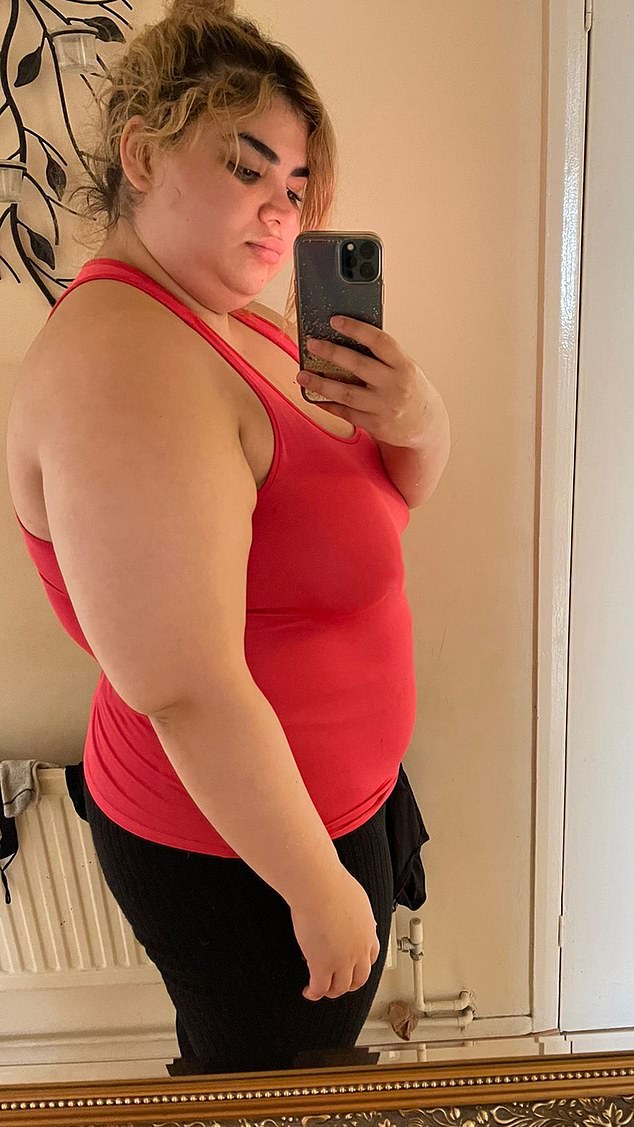
BEFORE: Personal assistant Aida Azizii, 25, reveals dramatic before and after pictures of her transformation and explains it's thanks to inositol, a type of carbohydrate found in rice

AFTER: She lost a staggering seven stone in six months and went viral on social media
Independent pharmacy Landys says it received more than 700 orders in a single day on March 3.
So could inositol really be the Holy Grail that slimming artists have long been looking for? Interestingly, the answer is yes.
Also known as vitamin B8, inositol, which we naturally consume in small amounts in a normal diet, is thought to regulate hormone levels.
Capsules containing concentrated doses have long been touted by natural health enthusiasts as helping to suppress appetite and curb cravings. Others say it can increase fertility and ease pain problems.
Medical researchers began studying inositol about a decade ago because they believed it might have a similar effect to the prescription drug metformin, which lowers blood sugar levels and is given to type 2 diabetics.
“Inositol and metformin both have an impact on insulin levels, the hormone that controls blood sugar levels,” says Dr. Channa Jayasena, reproductive endocrinologist at Imperial College London.
“There is growing acceptance in the medical community that inositol has some real weight loss effects, so it is not surprising that it is gaining traction.”
![Auch bekannt als Vitamin B8, Inositol, das wir natürlicherweise in kleinen Mengen in einer normalen Ernährung zu uns nehmen, soll den Hormonspiegel regulieren. [File image]](https://redaktion.institut-der-gesundheit.com/wp-content/uploads/2024/05/1647846716_55_Nachdem-dieser-25-jaehrige-TikTok-Star-ihren-dramatischen-Gewichtsverlust-Hack-mit-sieben-Steinen.jpg)
Also known as vitamin B8, inositol, which we naturally consume in small amounts in a normal diet, is thought to regulate hormone levels. [File image]
Recent studies have shown promise in patients with weight gain due to polycystic ovary syndrome. The condition, which affects one in ten women, occurs when fluid-filled sacs appear on the ovaries.
This distorts hormone levels and triggers symptoms ranging from irregular periods and excessive hair growth to infertility.
It also increases the amount of insulin the body produces - excess amounts in the blood promote fat storage and increase hunger, leading to weight gain.
Patients with polycystic ovary syndrome are given metformin to balance insulin levels and control weight, and experts have been intrigued by the idea of inositol as a possible natural alternative.
A study published in 2017 found that patients with the syndrome who were given inositol experienced weight loss similar to those given metformin.
And an analysis of nine studies, also published in 2017, concluded that women with the condition who took inositol for more than 24 weeks were more likely to see metabolic improvements — such as weight loss and reduced blood sugar — than those who didn't.

Unsurprisingly, a rush to business followed her revelation after Aida posted the clip to TikTok, where it received 4 million views
Many NHS hospitals now recommend inositol for patients with polycystic ovary syndrome. “I advised two to start taking myo-inositol [a common form of the supplement] this week,” says Dr. Jayasena.
Aida was diagnosed with the disease at 16 and suffered from the classic symptoms, including weight gain.
Doctors prescribed metformin, but although it helped Aida lose some weight, she suffered debilitating side effects, including nausea, and was forced to stop the drug.
She says: "After that, my weight spiraled. I ate more and gained more weight. I always felt hungry."
Aida says she read about inositol six months ago: "I had tried everything else and found this was a natural supplement and had helped many other women. So I asked my GP and she said I should give it a try.
Initially she took a single capsule containing 1g of inositol. Within weeks, she noticed a change.
“I stopped getting the urge to eat sugary foods,” she says.

Natural health store Holland & Barrett says sales of inositol supplements doubled in the week following the video, which went live March 1, and it is still the most searched product on its website
As the weight came off, she found the confidence to go to the gym and gradually increased her dosage to four capsules a day - the amount shown in studies to help with weight loss.
Six months later, she had lost just over seven stone - and decided to share her story on TikTok. So could inositol help anyone who wants to become slimmer?
Private nutritional therapist Jackie Lynch from West London urges caution.
She says she would recommend inositol to anyone with polycystic ovary syndrome who hasn't taken metformin: "If you're someone who's struggled with the side effects, then inositol might work for you."
However, she also believes that people who do not suffer from this disease should not take it, especially in doses above 4g.
Studies show that regularly taking high doses of inositol can cause nausea, indigestion, and even hypoglycemia, where blood sugar levels drop too low.
She adds: "These compounds can be harsh on the gut and can lead to really quite unpleasant problems if used in excess."
And not all doctors are convinced of inositol. “The research only really took off about a decade ago and I still don’t think there is enough to say anything definitive,” says Professor Naveed Sattar, a metabolism expert at the University of Glasgow.
He adds: "It's possible that people who take inositol and think they're losing weight are actually just dieting and exercising more, but attribute the changes to the pill."