
There are no growing pains”! Scientists say the centuries-old childhood condition may just be a misnomer

Transparenz: Redaktionell erstellt und geprüft.
Veröffentlicht am und aktualisiert am

Nearly 150 studies have found that doctors don't agree on the definition of growing pains 95 percent of papers didn't mention growth when defining the condition Researchers say doctors should stop diagnosing children with growing pains Hearing your child complain about growing pains can feel like an essential part of parenting. But a study now suggests there is no such thing. Although a child's discomfort will likely be real, the centuries-old phrase appears to be nothing more than a misnomer. Experts from the University of Sydney reviewed the existing literature...

Fast 150 Studien haben ergeben, dass Ärzte sich nicht über die Definition von Wachstumsschmerzen einig sind 95 Prozent der Arbeiten erwähnten das Wachstum bei der Definition der Erkrankung nicht Forscher sagen, dass Ärzte aufhören sollten, Kinder mit Wachstumsschmerzen zu diagnostizieren Zu hören, wie sich Ihr Kind über Wachstumsschmerzen beklagt, kann sich wie ein wesentlicher Bestandteil der Elternschaft anfühlen. Aber eine Studie legt jetzt nahe, dass es so etwas nicht gibt. Obwohl das Unbehagen eines Kindes wahrscheinlich real sein wird, scheint der jahrhundertealte Ausdruck nichts weiter als eine falsche Bezeichnung zu sein. Experten der University of Sydney überprüften die vorhandene Literatur …
Nearly 150 studies have found that doctors don't agree on the definition of growing pains 95 percent of papers didn't mention growth when defining the condition Researchers say doctors should stop diagnosing children with growing pains Hearing your child complain about growing pains can feel like an essential part of parenting. But a study now suggests there is no such thing. Although a child's discomfort will likely be real, the centuries-old phrase appears to be nothing more than a misnomer. Experts from the University of Sydney reviewed the existing literature...

There are no growing pains”! Scientists say the centuries-old childhood condition may just be a misnomer

  • Fast 150 Studien haben ergeben, dass Ärzte sich nicht über die Definition von Wachstumsschmerzen einig sind
  • 95 Prozent der Arbeiten erwähnten das Wachstum bei der Definition der Erkrankung nicht
  • Forscher sagen, dass Ärzte aufhören sollten, Kinder mit Wachstumsschmerzen zu diagnostizieren

Hearing your child complain about growing pains can feel like an essential part of parenting.

But a study now suggests there is no such thing.

Although a child's discomfort will likely be real, the centuries-old phrase appears to be nothing more than a misnomer.

Experts from the University of Sydney reviewed the existing literature behind the condition.

95% of the 150 papers analyzed did not mention growth when defining the disease.

The "worrying" results mean doctors should stop diagnosing children with growing pains for now until more is known about the condition, the team said.

Pain in the muscles and bones in children could have a number of other causes, they suggested.

Studies show that around a third of children suffer from growing pains at some point in their lives - first mentioned in an 1823 medical book.

The NHS describes it as “a pain or throbbing in both legs” which usually stops around the age of 12. They are harmless but can be very painful.
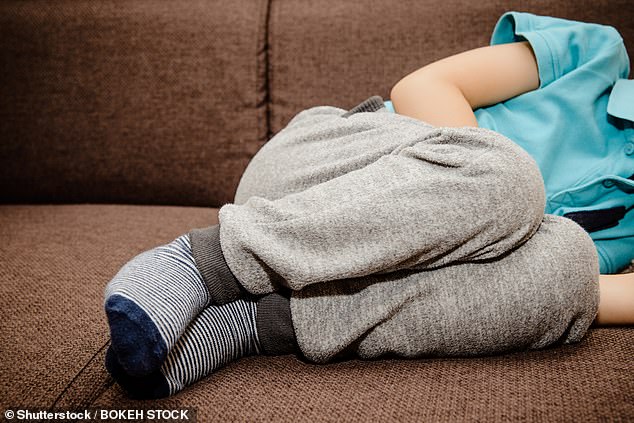
Eine Studie der University of Sydney legt nahe, dass Wachstumsschmerzen möglicherweise nicht wirklich existieren und eine Vielzahl anderer Probleme sein könnten

A University of Sydney study suggests that growing pains may not actually exist and could be a variety of other problems

What are growing pains?

Growing pains are common in children, mainly in the legs. They are harmless but can be very painful. They usually come around around the age of 12.

Growing pains can come and go over months or even years.

The pain is usually:

  • Ein schmerzendes oder pochendes Gefühl in beiden Beinen
  • In den Muskeln, nicht in den Gelenken
  • Abends oder nachts (und verschwindet morgens)

Growing pains are more common in active children and can occur after a lot of exercise.

They are also more common in children with flexible joints (double-jointed).

It's not clear what causes growing pains. They can run in families.

They are not caused by growth and are not a sign of anything serious.

Source: NHS

Anzeige

Experts are not sure what causes them but know they can run in families, but the NHS already recognizes they are not really due to growth.

In extremely rare cases, pain that doctors dismiss as growing pains is actually caused by serious illnesses, including cancer.

The lead author Dr. Mary O'Keeffe, a musculoskeletal health expert, said: "Thousands of children are diagnosed with growing pains by their doctor, but we were curious - what does this diagnosis really mean?"

The review, published in the medical journal Pediatrics analyzed 147 studies that mentioned growing pains.

Only seven mentioned pain related to growth.

More than 80 percent of studies did not mention an adolescent's age at the onset of “growing pains.”

There was also no widespread agreement or lack of detail about where the pain was located or when the pain occurred.

Half referred to “growing pains” in the lower limbs, while just over a quarter reported them specifically in the knees.

Forty-eight percent of studies reported that “growing pains” occurred in the evening or at night, and 42 percent reported that they recurred.

The researchers said the range of definitions found in the literature suggests that “growing pains” may actually be a medical misnomer.

Co-author Professor Steven Kamper, an expert in back pain, said: “What we found was a little worrying.

“There is no consensus in the literature about what “growing pains” means.

"Definitions varied widely, were vague and often contradictory. Some studies suggested growing pains in the arms or lower body.

“Some said it was about muscles, while other studies said joints.”

.

Source: Dailymail UK
