

 Suche
Suche
 Mein Konto
Greenstick fractures
Greenstick fractures
overview
Greenwood breakage
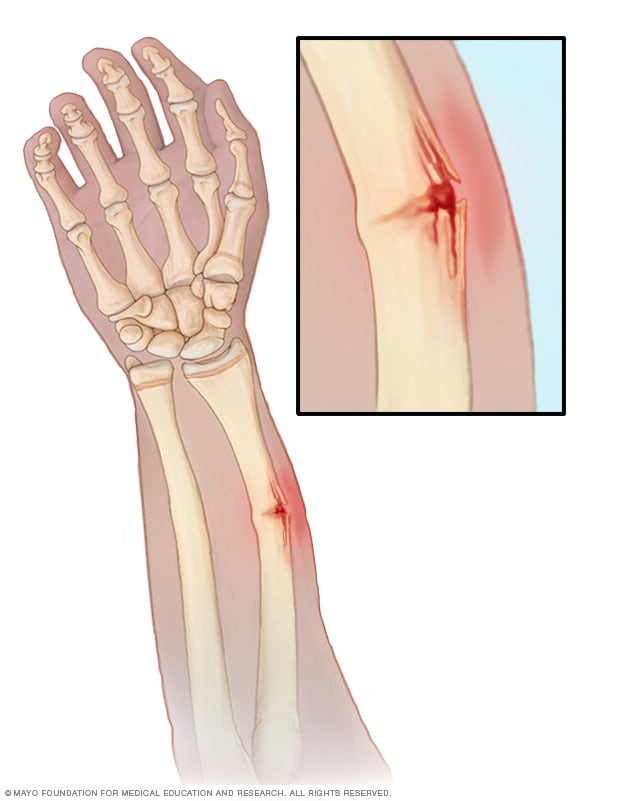
Greenwood breakage
A greenstick fracture occurs when a bone bends and breaks rather than breaking completely into individual pieces. The break is similar to what happens when you try to break a small, “green” branch on a tree.
A greenstick fracture occurs when a bone bends and breaks rather than breaking completely into individual pieces. The break is similar to what happens when you try to break a small, “green” branch on a tree.
Most greenstick fractures occur in children under 10 years of age. This type of bone fracture is most common in children because their bones are softer and more flexible than adult bones.
Even minor greenstick fractures are usually immobilized in a plaster cast. A cast not only holds the broken pieces of bone together so they can heal, but it can also prevent the bone from completely breaking through if the child falls on it again.
Symptoms
Signs and symptoms vary depending on the severity of the greenstick fracture. Minor fractures can be mistaken for sprains or bruises. More severe greenstick fractures may cause obvious deformity accompanied by significant pain and swelling.
When to go to the doctor?
Contact your doctor if your child has persistent pain in an injured limb. Seek immediate medical attention if a child is unable to bear weight or if there is obvious pain, deformity, and swelling.
Causes
Fractures in childhood most often occur as a result of a fall. Arm fractures are more common than leg fractures because the usual reaction is to extend your arms to catch yourself in a fall.
Risk factors
The risk of greenstick fractures is higher in young children because their bones are softer and more flexible than adult bones. In a greenstick fracture, the bone bends and breaks instead of breaking into individual pieces. Most greenstick fractures occur in children under 10 years of age.
Sources:
- Marx JA, et al., Hrsg. Allgemeine Grundsätze orthopädischer Verletzungen. In: Rosens Notfallmedizin: Konzepte und klinische Praxis. 8. Aufl. Philadelphia, Pennsylvania: Saunders Elsevier; 2014. http://www.clinicalkey.com. Abgerufen am 21. März 2016.
- Kliegman RM, et al. Häufige Frakturen. In: Nelson Lehrbuch der Kinderheilkunde. 20. Aufl. Philadelphia, Pennsylvania: Elsevier; 2016. http://www.clinicalkey.com. Abgerufen am 21. März 2016.
- Schweich P. Distale Unterarmfrakturen bei Kindern: Diagnose und Beurteilung. http://www.uptodate.com/home. Abgerufen am 21. März 2016.
- Mencio GA. Frakturen und Luxationen des Unterarms, Handgelenks und der Hand. In: Greens Skeletttrauma bei Kindern. 5. Aufl. Philadelphia, Pennsylvania: Saunders Elsevier; 2015. http://www.clinicalkey.com. Abgerufen am 21. März 2016.
- Mathison DJ, et al. Allgemeine Prinzipien des Frakturmanagements: Frakturmuster und -beschreibung bei Kindern. http://www.uptodate.com/home. 21. März 2016.
- Schweich P. Distale Unterarmfrakturen bei Kindern: Erste Behandlung. http://www.uptodate.com/home. Abgerufen am 21. März 2016.
- Schweich P. Geschlossene Reposition und Guss von distalen Unterarmfrakturen bei Kindern. http://www.uptodate.com/home. Abgerufen am 21. März 2016.
- Hering JA. Verletzungen der oberen Extremitäten. In: Tachdjians Kinderorthopädie. 5. Aufl. Philadelphia, Pennsylvania: Saunders Elsevier; 2014. http://www.clinicalkey.com. Abgerufen am 21. März 2016.