

 Suche
Suche
 Mein Konto
Varicocele
Varicocele
overview
Varicocele
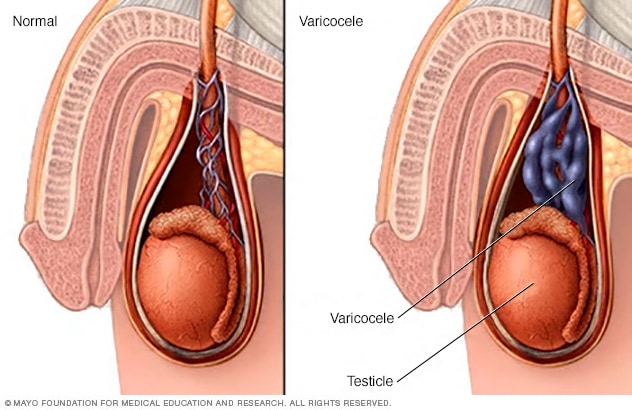
Varicocele
A varicocele is an enlargement of the veins that carry deoxygenated blood away from the testicle.
A varicocele (VAR-ih-koe-seel) is an enlargement of the veins within the loose sac of skin that holds the testicles (scrotum). These veins carry deoxygenated blood from the testicles. A varicocele occurs when blood collects in the veins instead of circulating efficiently from the scrotum.
Varicoceles usually form during puberty and develop over time. They can cause discomfort or pain, but often do not result in any symptoms or complications.
A varicocele can cause poor development of a testicle, low sperm production, or other problems that can lead to infertility. Surgery to treat varicocele may be recommended to address these complications.
Symptoms
A varicocele usually occurs on the left side of the scrotum and often causes no signs or symptoms. Possible signs and symptoms can include:
- Schmerzen. Ein dumpfer, schmerzender Schmerz oder Unbehagen ist wahrscheinlicher, wenn Sie stehen oder spät am Tag. Hinlegen lindert oft Schmerzen.
- Eine Masse im Hodensack. Wenn eine Varikozele groß genug ist, kann eine Masse wie ein „Wurmsack“ über dem Hoden sichtbar sein. Eine kleinere Varikozele kann zu klein sein, um sie zu sehen, aber durch Berührung wahrnehmbar sein.
- Unterschiedlich große Hoden. Der betroffene Hoden kann deutlich kleiner sein als der andere Hoden.
- Unfruchtbarkeit. Eine Varikozele kann zu Schwierigkeiten beim Zeugen eines Kindes führen, aber nicht alle Varikozelen verursachen Unfruchtbarkeit.
When to go to the doctor?
Annual wellness visits for boys are important to monitor testicular development and health. It is important to plan and keep these appointments.
A number of conditions can contribute to pain, swelling, or a mass in the scrotum. If you have any of these problems, contact your doctor for a timely and accurate diagnosis.
Causes
Male reproductive system
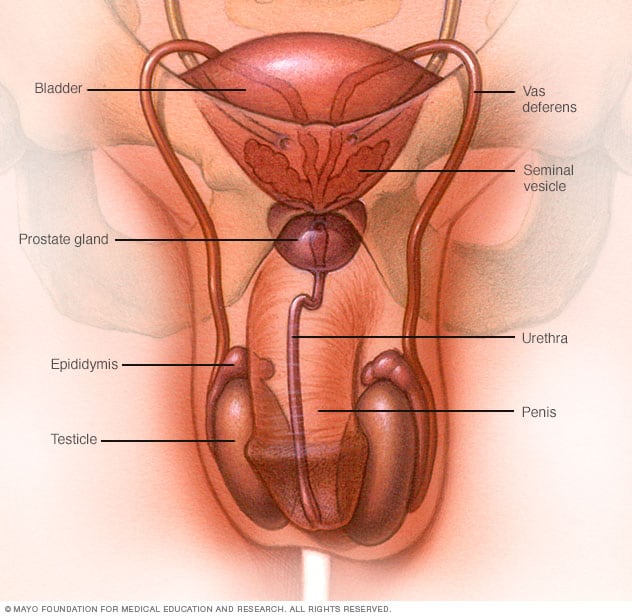
Male reproductive system
The male reproductive system produces, stores and moves sperm. Testicles produce sperm. Fluid from the seminal vesicles and prostate gland combines with sperm to form semen. The penis ejaculates semen during sexual intercourse.
The testicles receive oxygen-rich blood from two testicular arteries - one artery for each side of the scrotum. There are also two testicular veins that carry deoxygenated blood back to the heart. On each side of the scrotum, a network of small veins (pampiniform plexus) transports deoxygenated blood from the testicle to the main testicular vein. A varicocele is the enlargement of the pampiniform plexus.
The exact cause of a varicocele is unknown. A contributing factor may be the malfunction of valves in the veins that are supposed to keep blood flowing in the right direction. Additionally, the left testicular vein follows a slightly different path than the right vein - a path that makes a problem with blood flow on the left side more likely.
When the oxygen-poor blood backs up in the venous network, they expand (dilate) and form the varicocele.
Risk factors
There appear to be no significant risk factors for developing a varicocele.
Complications
A varicocele can make it difficult for your body to regulate the temperature of the testicles. Oxidative stress and the accumulation of toxins can result. These factors can contribute to the following complications:
- Schlechte Hodengesundheit. Bei Jungen in der Pubertät kann eine Varikozele das Hodenwachstum, die Hormonproduktion und andere Faktoren im Zusammenhang mit der Gesundheit und Funktion des Hodens hemmen. Bei Männern kann eine Varikozele aufgrund von Gewebeverlust zu einer allmählichen Schrumpfung führen.
- Unfruchtbarkeit. Eine Varikozele verursacht nicht unbedingt Unfruchtbarkeit. Schätzungsweise 10 % bis 20 % der Männer, bei denen eine Varikozele diagnostiziert wurde, haben Schwierigkeiten, ein Kind zu zeugen. Unter Männern mit Fruchtbarkeitsproblemen haben etwa 40 % eine Varikozele.
Varicocele treatment
Sources:
- Ferri FF. Varikozele. In: Ferri’s Clinical Advisor 2022. Elsevier; 2022. https://www.clinicalkey.com. Abgerufen am 16. November 2021.
- Varikozele. Urologische Pflegestiftung. https://www.urologyhealth.org/urology-az/v/varicoceles. Abgerufen am 16. November 2021.
- Fragen Sie MayoExpert. Varikozele. Mayo-Klinik; 2021.
- Eyre RC. Nicht akute Skrotalerkrankungen bei Erwachsenen. https://www.uptodate.com/contents/search. Abgerufen am 16. November 2021.
- Zundel S. et al. Management der jugendlichen Varikozele. Seminare in Kinderchirurgie. 2021; doi:10.1016/j.sempedsurg.2021.151084.
- Brenner JS. Ursachen einer schmerzlosen Hodensackschwellung bei Kindern und Jugendlichen. https://www.uptodate.com/contents/search. Abgerufen am 16. November 2021.
- Partin AW, et al., Hrsg. Campbell-Walsh-Wein-Urologie. 12. Aufl. Elsevier; 2021. https://www.clinicalkey.com. Abgerufen am 16. November 2021.
- Varikozele-Embolisation. Radiologische Gesellschaft von Nordamerika. https://www.radiologyinfo.org/en/info/varicocele. Abgerufen am 30. November 2021.
- Jensen NA. Allscripts EPSi. Mayo-Klinik. 1. November 2021.
- Sevann H (Gutachten). Mayo-Klinik. 12. Dezember 2021.