

 Suche
Suche
 Mein Konto


For the first time, a woman was cured of HIV.
A woman dubbed the "New York Patient" by scientists at NewYork-Presbyterian Weill Cornell Medical Center in New York City has beaten the virus after receiving a rare but dangerous stem cell treatment.
She is the fourth person ever to be cured of HIV - the previous three are all men - and experts have found two cases in which women somehow beat the virus naturally.
The woman was also a cancer patient and was receiving a treatment that was intended to combat both diseases at the same time - but is also so risky that it was considered "unethical" to use it on people who do not have a late-stage cancer diagnosis.
To carry out this treatment, doctors must first find a donor who has a rare mutation that makes them resistant to the virus.
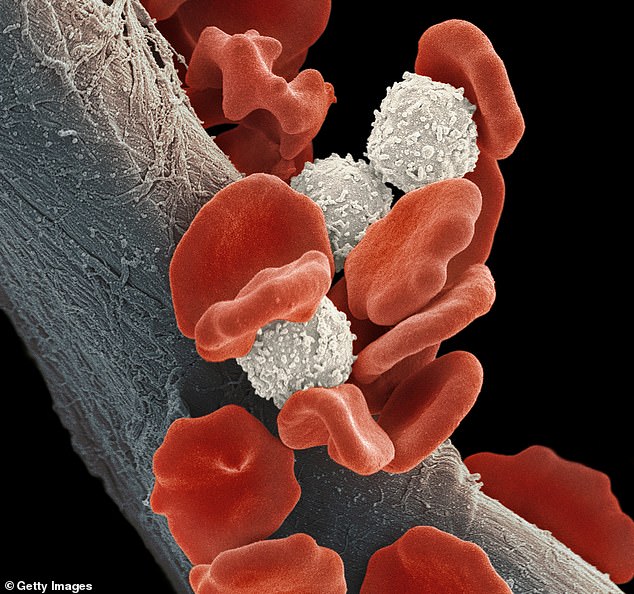
A woman dubbed the "New York patient" has become the first woman to be functionally cured of HIV after receiving a rare HIV infection. but dangerous, stem cell treatment four years ago (file photo)
Experts say ABC that people who have this mutation are usually northern Europeans, and even then only one percent of that population has it.
Doctors then perform a “haploidentical umbilical cord transplant,” using the donor’s umbilical cord blood and bone marrow.
The umbilical cord blood helps fight blood-based cancers - like the leukemia the woman suffered from, while the bone marrow supplies the body with stem cells.
Because cord blood is typically not as effective in adults as it is in children, stem cell transplantation can help increase its effectiveness.
“The role of adult donor cells is to speed up the early transplantation process and make transplantation easier and safer,” said Dr. Koen van Besien, one of the senior doctors who examined the New York patient, told NBC.
Because this stem cell treatment can often result in death for the patient, experts will not use it on a healthy person who can treat their HIV using normal methods.
Instead, they focus this treatment on people in the final stages of a cancer diagnosis who are likely to die anyway unless major medical intervention occurs.
Researchers say there are up to 50 patients who could receive the procedure each year out of the more than one million Americans battling HIV.
The woman in question was diagnosed with HIV in 2013 and leukemia in 2017, making her a potential candidate.
She received the treatment four years ago and in the time since her cancer went into remission and her HIV treatment was stopped last winter.
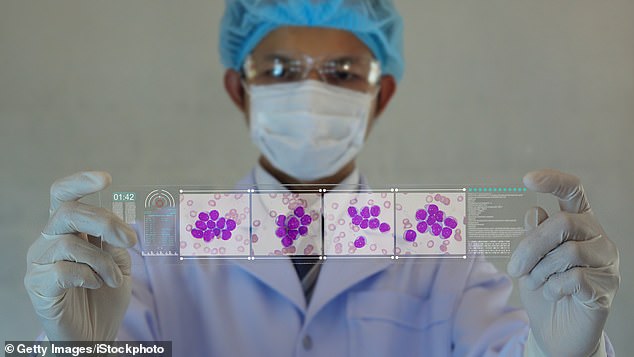
The treatment is only recommended for people who already have terminal cancer, which will likely kill them anyway, because it is so risky. It also requires stem cells from northern European people with a very specific mutation that makes them resistant to HIV (file photo)
Her body responded well to the treatment, doctors report, and she quickly saw positive results.
Although HIV treatment was stopped over a year ago, the virus has not resurfaced in her. Repeated scans of her body show no HIV cells with the potential to replicate.
They also took cells from her body and tried to infect them in a laboratory, but failed.
If a few more years pass and doctors still don't find HIV in her body and infect her cells, then they will easily declare her "cured" of the virus.
“I’m thrilled that it turned out so well for her,” said Dr. Yvonne Bryson told NBC.
She added that the New York patient's case has brought "more hope and more options for the future" of HIV treatment.