

 Suche
Suche
 Mein Konto


Thanks to hours spent in the library, I once knew the name of every one of the body's 206 bones, including my favorite bone: the innominated bone, meaning "the bone without a name." You would know it as your hip bone.
Lately my interest in bones has evolved from theoretical to very personal.
I recently had a DEXA scan (a type of X-ray that measures bone density) and discovered that although I have the spine of a 30-year-old, my hips are starting to show signs of bone loss, a precursor to osteoporosis.
I shouldn't have been shocked (although I was), because osteoporosis runs in families - and my mother, who is 93, has it, which mainly affects her spine and often causes her great pain.
As you get older, the risk of developing osteoporosis increases. Osteoporosis causes your bones to become thin and brittle and then break.
Thanks to hours spent in the library, I once knew the name of every one of the body's 206 bones, including my favorite bone: the innominated bone, meaning "the bone without a name." You would know it as your hip bone
The charity Age UK says around three million people in the country suffer from the condition, but "worryingly few" know they have it until they break a bone.
It is so common that half of all women and one in five men over 50 will suffer a broken bone due to osteoporosis.
Women are particularly vulnerable, in part because their bones are initially thinner and they go through menopause, when levels of the female sex hormone estrogen, which plays an important role in bone health, decline.
Middle-aged women, especially those with a family history of osteoporosis, may want to consider HRT (hormone replacement therapy), as it is a proven method of preventing osteoporosis. If you have osteopenia (weak bones) or full-blown osteoporosis, you may be offered a range of treatments, including bisphosphonates such as alendronic acid, which slow bone loss.
But prevention is better than cure. So what can you do to keep your bones in good shape?
The first and best thing you can do is emphasize them. Your bones respond well to movement, especially anything that involves a lot of impact and compression.
Jumping, soccer or tennis are particularly beneficial for the bones. So if you've been inspired by Wimbledon, get on your seats. Strength training (building muscle) is also good.
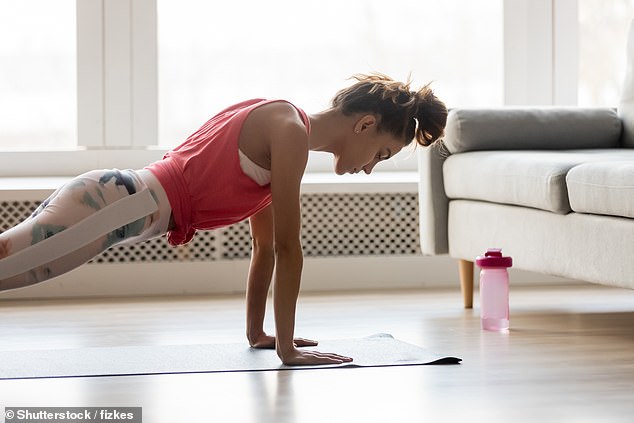
One reason I have the spine of a 30-year-old is because I do quite a lot of push-ups. Not only do they help build muscle, but they are also great for the bones in your spine. I do between 35 and 40 push-ups every morning (I never do that otherwise).
The secret to push-ups is to start gradually and build up slowly. To make sure you have the right technique, google “NHS push-ups”.
The reason the bones in my hips, unlike my spine, are showing signs of thinning is because I don't do enough impact exercises. I ride my bike a lot and walk briskly, which is good for the heart and lungs but doesn't build bones.
A few years ago I made a film in which we compared the bone strength of fast bowlers, gymnasts and Olympic cyclists. Although the cyclists were incredibly fit, their bones were surprisingly thin.
So I need to start doing a bit more impact exercises, like running. I really don't enjoy it, but because of my hips I have to grit my teeth and carry on. But it's not just exercise, diet is also crucial for strong bones.
It is important to get plenty of calcium in your diet as it combines with other minerals to give bones their strength. The best sources are dairy products, sardines, almonds, green leafy vegetables and tofu. The problem with so many people giving up cow's milk in favor of substitutes like oat milk is that if it's not fortified, it probably doesn't have as much or any calcium.
It's also important to replenish your vitamin D levels as this helps your body absorb calcium. To do this, go out in the sun without sunscreen for between 20 and 40 minutes, depending on how dark your skin is (but don't burn it).
Plums can also be a good option. A recent review of clinical trials found that asking people to eat 100g a day - about ten prunes - resulted in improved bone density.
The researchers at Penn State University in the US said that prunes trigger changes in the gut microbiome that appear to be good for your bones. Of course, also to keep you regular.
We know that listening to music can relieve pain. For example, research in 2015 at Children's Hospital of Chicago assigned a group of children who had just undergone surgery to listen to either songs by Rihanna and other singers of their choice, or audio books, or silence for an hour. Those who got the music or audio books reported less pain. So how does music help? A new report in the journal Science shows that listening to music in mice reduces the intensity of pain signals reaching the brain. The research could lead to more effective ways to treat pain. In the meantime, you can always listen to more Rihanna songs.
The nutritional secret that is the key to a longer life
I'm currently in Okinawa, a small island off the coast of Japan, filming a series about longevity. Their people are famous for long, exceptionally healthy lives, largely thanks to their lifestyle and a strong sense of “ikigai,” a Japanese concept that emphasizes the importance of focusing on things that give meaning and purpose to your life.
But although Okinawa still has the highest percentage of centenarians in the world, the island is rapidly falling in life expectancy rankings.
The average life expectancy in Okinawa is now 80 years for men and 87 years for women. That's very close to us: 80 for men and 84 for women.
Why has there been such a shift? When researchers collected data on centenarians in Okinawa in the 1960s, they found that most were slim and energetic, and few had chronic illnesses such as heart disease and cancer.
They ate a traditional diet high in vegetables and soy products and small amounts of noodles, rice, pork and fish, while sweet potatoes made up 65 percent or more of their diet.
Sweet potatoes are rich in fiber, antioxidants, minerals and vitamins.
But the real secret of the Okinawa diet is that it's low in calories; Before the Second World War (when the current generation of centenarians were growing up), the typical Okinawan consumed around 1,700 calories a day, while in the UK we are recommended to eat 2,000 (for women) and 2,500 (for men) a day.
Studies show that a low-calorie diet, as long as it is rich in nutrients, is the best way to prolong a healthy life.
After World War II, the new generation adopted a more Western lifestyle and began packing on the pounds.
The older Okinawans who clung to a more traditional way of life continued to thrive, but for their children and grandchildren the fountain of youth dried up. I prefer a Mediterranean diet to an Okinawan diet, but I will take a closer look at the health benefits of Ikigai.
Why head lice are so hard to get rid of
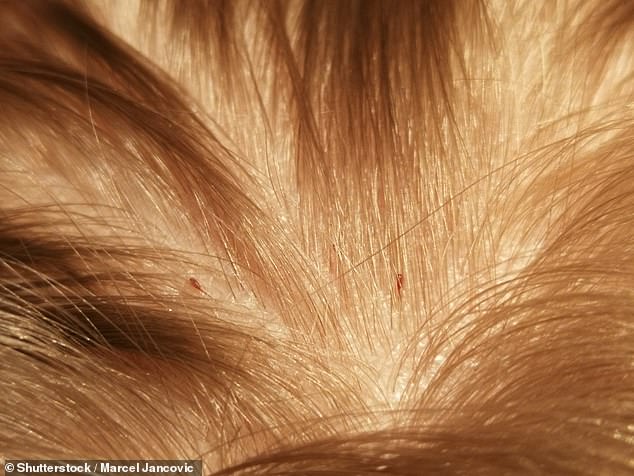
Most parents are familiar with head lice and the many hours you have to spend combing them out of your children's hair.
Head lice are one of three types of bloodsuckers that infect humans.
A few years ago, when I was making a documentary called Infested, the producer suggested I get infected with all three - head, body and pubic lice - and see what happens.
My wife wasn't happy, so I limited myself to the head lice, which were surprisingly difficult to get rid of.
But when did lice first decide to choose humans as their home?
A new study suggests this started around 90 million years ago, and as our ancestors evolved, so did lice.
For millennia, lice have demonstrated an extraordinary ability to switch hosts when the opportunity arises, which may explain why the lice that infect seals, skunks and elephants are all descended from the lice that now infest us.
The fact that we have this long history together may be a comfort when the kids come home from school in September, scratching their heads and screaming, 'They're back.'
Most parents are familiar with head lice and the many hours you have to spend combing them out of your children's hair. Head lice are one of three types of bloodsuckers that infect humans