

 Suche
Suche
 Mein Konto
More babies, lower risk of endometrial cancer

While many highly industrialized and developed countries report declining or negative population growth rates due to a rapid decline in the number of babies born each year, a new report strengthens evidence that carrying a baby has a protective effect on the endometrial lining of the uterus, thereby reducing the risk of endometrial cancer. These results were published in the journal BMC Medicine by researchers from the University of Bristol, the University of Oslo and the University of Queensland. Learning: Mendelian randomization analysis of factors associated with ovulation and reproductive function and endometrial cancer risk. Photo credit: Crystal Light / Shutterstock Introduction Endometrial cancer (EC) is a deadly disease affecting worldwide...

More babies, lower risk of endometrial cancer
While many highly industrialized and developed countries report declining or negative population growth rates due to a rapid decline in the number of babies born each year, a new report strengthens evidence that carrying a baby has a protective effect on the endometrial lining of the uterus, thereby reducing the risk of endometrial cancer. These results were published in the journal BMC Medicine by researchers at the University of Bristol, the University of Oslo and the University of Queensland.
introduction
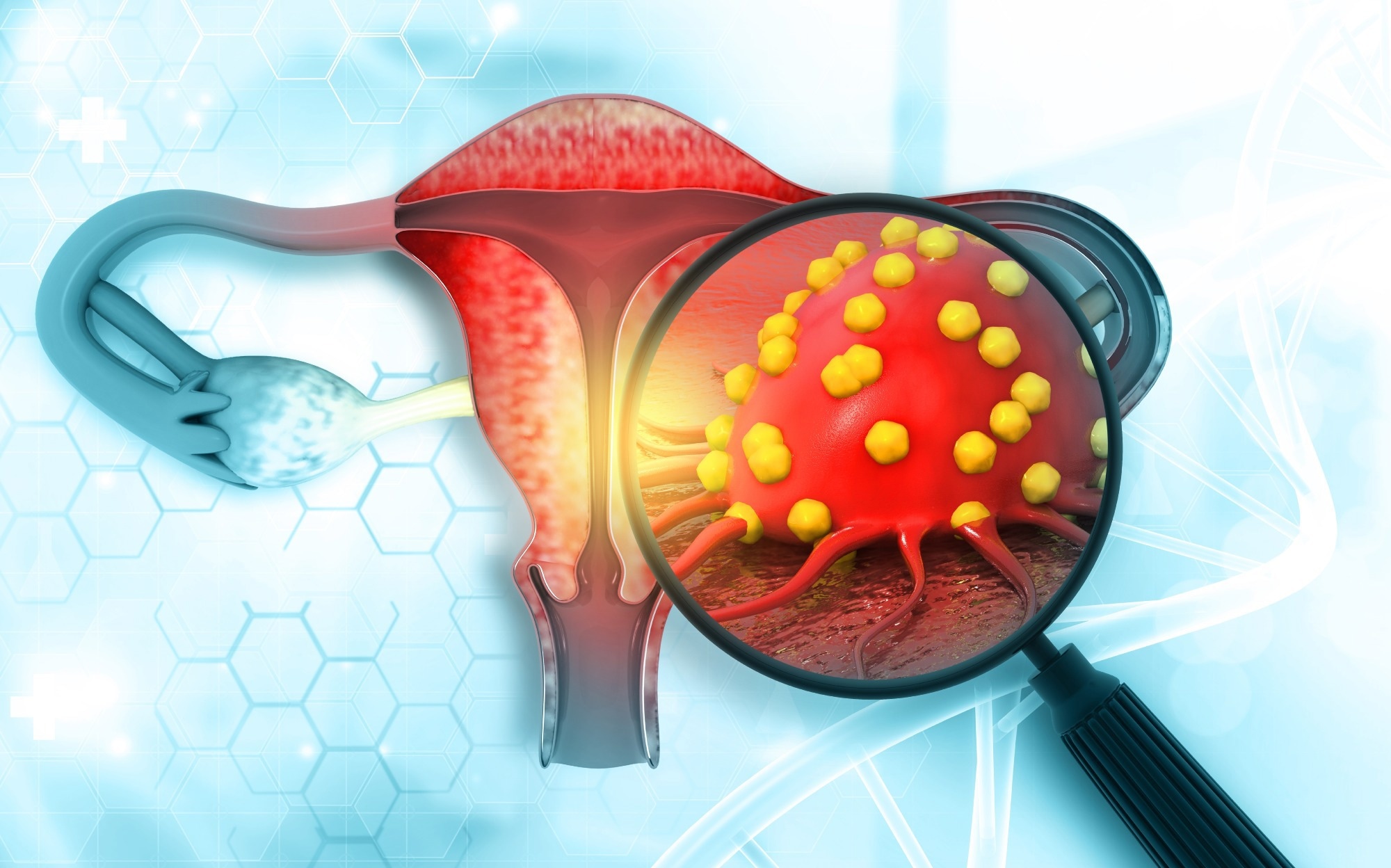
Endometrial cancer (EC) is a deadly disease that ranks as the sixth most common cancer in women worldwide. It claims hundreds of thousands of lives every year, with new cases increasing worldwide, particularly in developing countries.
Previous epidemiological observations have shown that many factors are associated with this condition, including ovulation and pregnancy. This may be due to the exposure to estrogen associated with these conditions. In fact, oral estrogen increases the risk of EC, as has been observed with estrogen-only hormone replacement therapy (HRT) for menopausal symptoms.
The risk is reduced when progesterone is added to HRT, suggesting that the ratio of estrogen to progesterone is the culprit for EC development. The combination oral contraceptive pill (COP), which contains synthetic progesterone and estrogen, has a protective effect against EC that increases with the duration of use. Progesterone may protect against EC, a theory supported by the reduced incidence of such tumors in women on long-term contraception with intrauterine progestin-secreting devices that suppress ovulation.
Interestingly, pregnancy, even if it ends in miscarriage or induced abortion, protects against e-cigarettes to a greater extent than COCP use. The risk of EC is also reduced in women who have had a live birth later in life. Explanations for these phenomena abound, including the shedding of abnormal cells during birth or abortion and the high levels of protective progesterone during pregnancy.
Both factors are likely even more important in older women, who are typically at higher risk for endometrial malignancies, but in whom late pregnancy results in the removal of such cells before they can proliferate, either mechanically or due to the high progesterone levels of pregnancy.
Excessively high BMI remains the strongest predictor of EC risk, underlying EC in 40% of cases in developed countries. This could also be due to higher estrogen exposure through androgen-estrogen conversion, which is facilitated by increased adipose tissue accumulation.
The relationship between BMI and EC could be due to the associated increase in fasting insulin levels, the amount of testosterone available to the body, and levels of sex hormone-binding globulin. Rising BMI worldwide could explain why cases are increasing in developing countries.
However, the question remains whether these are causes of endometrial cancer and, if so, whether they act independently or additively or synergistically.
Specifically, this study aimed to examine how years of ovulation and the number of babies born to a woman correlate with endometrial cancer risk and, if an association was found, to determine whether it could be causal.
The observational study used data from the UK Biobank (UKBB), which contains over 270,000 women. Only white European women were included in the current study.
Multiple variables were included, and confounding factors were taken into account as much as possible. The researchers also used the Mendelian randomization (MR) technique to assess the potential for causality. Here, genetic variants determine the causality of a connection between an exposure and an outcome.
To do this, they recorded the number of live births per woman and their age at first menstruation and menopause from previous studies. Body mass index (BMI) was taken into account, as was age at the time of the last live birth. These data were then analyzed by genome-wide association analysis to detect single nucleotide polymorphisms (SNPs) that occurred throughout the genome. They were associated with a higher number of years of ovulation, years of birth control pill use, or age at last birth.
What did the study show?
The results of the study, which included hundreds of genetic variants, showed that six were strongly associated with more live births and a reduced risk of EC. The results showed that the risk of endometrial cancer was inversely proportional to the number of live births. Women who had given birth to three babies had half the risk of EC as women who had not given birth. Similarly, the risk was increased in women who ovulated for a greater number of years.
“Researchers found evidence that reducing ovulation years could reduce the risk of endometrial cancer, but the strongest links pointed to childbirth.”
Genetics & Genomics eBook
Compilation of the top interviews, articles and news from the last year. Download a free copy
The risk of EC is known to be associated with lower age at menarche, older age at menopause, and higher BMI. While individual factors appeared to show a strong positive or negative association with EC risk, this effect diminished after adjustment for confounding factors, showing that risk was associated with age at last live birth, menopause, and BMI.
With the MR analysis, after compensating for confounding factors, the risk of EC was reduced by more than a fifth for women who had more babies. The risk reduction due to this factor was not influenced by the other known risk factors.
The protective effect of childbirth may be due to the tumorigenic effect of unopposed estrogen, which is counteracted by progesterone. This hormone rises rapidly in early pregnancy and remains high throughout pregnancy. This could explain the protective effect observed with COCP use, although this was not observed in the MR arm, perhaps due to lack of genetic data or because it does not act via genetic mechanisms.
The association of EC with older age at menopause could be due to and explained by the effects of factors such as high BMI or older age at menarche. However, MR showed no independent association between BMI and EC after adjusting for other factors.
“Our results highlight the importance of considering other predetermined risk factors with strong implications when performing MR analyses.”
Conversely, the negative association of number of live births with EC risk in MR analysis could not be explained by the influence of age at menarche or natural menopause or BMI. However, these may have affected the relationship.
The study also uncovered several loci associated with age at last birth and years of ovulation on GWAS, but many of these could be due to the effect of higher education with its associated delay in starting a reproductive career or to age at menopause.
Conclusion
A higher number of pregnancies was found to be an important protective factor, regardless of pregnancy outcome. This confirms previous studies. When examined separately, stillbirths did not appear to be protective compared to live births, but the researchers recommend further analysis before accepting this as valid.
Similarly, incomplete pregnancies, whether spontaneous or induced, were associated with reduced risk of EC, but less so than full-term pregnancy. Interestingly, a history of more induced abortions also had a more significant protective effect on EC risk than live births. This could be due to the rapid increase in progesterone compared to estrogen in early pregnancy.
This does not explain why induced abortions are more protective than miscarriages or live births, which have the same level of risk reduction. Perhaps women who are prone to abortions are different in some way from those who are not, or the process of abortion involves some specific protective factors.
Due to the lack of data, many questions remain unanswered, e.g. For example, whether women who had a younger age at natural menopause and should therefore be at lower risk of EC did not experience such protection because they received HRT with estrogen alone. The researchers did not know the age at EC diagnosis, although this is a significant risk factor.
There is a lack of consistency between the conclusions of the multivariate and MR arms of the analysis, probably because much of the latter was limited by the lack of data on genetic variants. MR analysis failed to confirm the strong positive and negative associations of ovulation years and COCP use with EC risk.
“To our knowledge, this is the first study to report that the number of live births may have a protective effect on EC risk, even when other risk factors are taken into account.”
Further research is needed to distinguish the effect of advanced age of last live birth on EC risk from that of higher live birth. Furthermore, the contradiction between the two analyzes must be resolved.
Source:
- Mehr Babys zu haben, senkt das Risiko von Endometriumkrebs. UQ-Nachrichten. https://www.uq.edu.au/news/article/2022/11/having-more-babies-lowers-risk-of-endometrial-cancer
Reference:
- D’Urso, S. et al. (2022). Mendelsche Randomisierungsanalyse von Faktoren im Zusammenhang mit Ovulation und Fortpflanzungsfunktion und Endometriumkrebsrisiko. BMC-Medizin. https://doi.org/10.1186/s12916-022-02585-w. https://bmcmedicine.biomedcentral.com/articles/10.1186/s12916-022-02585-w
.