

 Suche
Suche
 Mein Konto
Hybrid viral particles formed from co-infections exhibit immune evasion and extended tropism

In a recently published study in Nature Microbiology, researchers examined virus-virus interactions using human lung cells co-infected with two co-circulating viruses that cause respiratory infections, respiratory syncytial virus (RSV) and influenza A virus (IAV). Learning: Coinfection by influenza A virus and respiratory syncytial virus produces hybrid virus particles. Image credit: Kateryna Kon/Shutterstock Background Intracellular pathogens such as viruses generally exhibit tropism, showing affinity for select cell types. Some cells and tissues can be co-infected by taxonomically different viruses because different viruses can have an affinity for the same cell type. Coinfections provide an ecological niche for viruses to interact with each other. These interactions include…

Hybrid viral particles formed from co-infections exhibit immune evasion and extended tropism
In a recently published study in Natural microbiology Researchers examined virus-virus interactions using human lung cells co-infected with two co-circulating viruses that cause respiratory infections, respiratory syncytial virus (RSV) and influenza A virus (IAV).
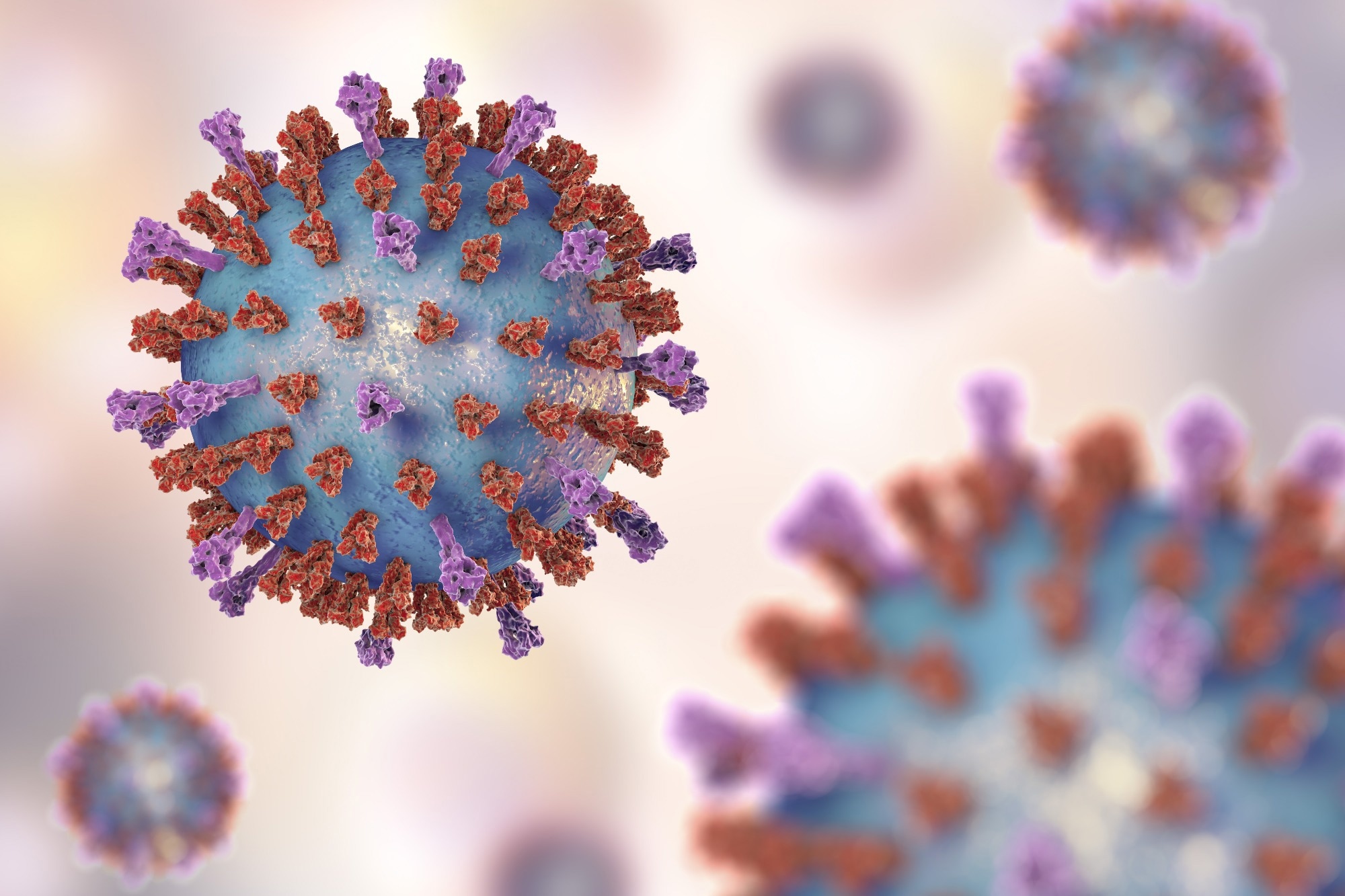
Lernen: Eine Koinfektion durch das Influenza-A-Virus und das Respiratory-Syncytial-Virus erzeugt hybride Viruspartikel. Bildnachweis: Kateryna Kon/Shutterstock
background
Intracellular pathogens such as viruses generally exhibit tropism, showing affinity for selected cell types. Some cells and tissues can be co-infected by taxonomically different viruses because different viruses can have an affinity for the same cell type.
Coinfections provide an ecological niche for viruses to interact with each other. These interactions include pseudotyping, where surface proteins from one virus are incorporated into the other virus, or they could lead to genomic rearrangements that could lead to entirely new strains with increased infectious potential. While some studies claim that disease outcomes are independent of co-infections, others indicate an increase in severe outcomes due to co-infections. However, the mechanisms of viral interactions during co-infections that determine disease progression remain unclear.
About studying
In the present study, Madin-Darby canine kidney cells (MDCK) and human epidermoid carcinoma cells (HEp-2) were used to culture hemagglutinin-1-neuraminidase 1 (H1N1) IAV and RSV strain A2 virus strains, respectively. Cultured human lung adenocarcinoma cells (A549) were infected with IAV and RSV individually and synchronously at high multiplicity of infection (MOI).
Plaque assays were used to determine infectious titers of IAV and RSV in MDCK and HEp-2 cells, respectively. Immunofluorescence microscopy was used to evaluate single and coinfected cells to determine the effect of coinfections on the localization of viral proteins and the proportions of infected cells. Virions containing IAV hemagglutinin and RSV fusion glycoprotein immunolabels were examined using super-resolution confocal microscopy to determine whether mixing of the two viral glycoproteins resulted in the budding virus particles containing components of IAV and RSV.
Additionally, cryo-electron tomography was performed to examine the structural properties of the RSV and IAV filaments budding from the coinfected cells. Furthermore, because hybrid viral particles would contain surface glycoproteins from both RSV and IAV, antibodies against the IAV hemagglutinin and the RSV fusion glycoprotein were used in neutralization assays against IAV and RSV viruses collected from individually and synchronously infected cells.
The cellular receptor for IAV, sialic acid, was removed using neuraminidase, and cells were inoculated with IAV and RSV viruses from individually infected or coinfected cells to determine whether incorporation of RSV glycoproteins could expand the IAV receptor tropism of hybrid virus particles. Cells were immunostained for the IAV and RSV nucleoproteins and quantified.
Breath Biopsy®: The Complete Manual eBook
Introduction to breath biopsy, including biomarkers, technology, applications, and case studies. Download a free copy
In addition, human bronchial epithelial cells were co-infected with RSV and IAV, and paraffin-embedded infected cultures were immunostained for IAV hemagglutinin and nucleoprotein and the entire RSV virion to determine whether other relevant biological systems formed hybrid virus particles.
Results
The results reported that IAV titers were equal to or slightly higher and RSV titers were lower in coinfected cells than in cells infected with the two viruses individually. In contrast, in cells coinfected with IAV and rhinovirus, IAV replication was inhibited. This suggested that the outcomes of coinfection were dependent on the type of viruses involved and the subsequent virus-specific cellular responses.
Furthermore, the study showed that the hybrid virus particles generated during co-infections contained structural, functional and genomic components of both parental viruses and were infectious. These hybrid viral particles demonstrated evasion of IAV-targeted neutralization and the ability to infect neuraminidase-treated IAV receptor-negative cells, indicating modified antigenicity and broad tropism properties.
The neutralization assay using anti-RSV glycoprotein antibodies showed that entry of hybrid virus particles into cells is mediated by the RSV fusion glycoprotein, suggesting that IAV may recruit an unrelated viral glycoprotein as a functional envelope protein.
Although IAV infections are generally limited to the upper respiratory tract, hybrid virus particles with structural and functional components of both viruses could enable IAV infections in the lower respiratory tract regions. These results indicate the potential increase in pathogenicity and severity of the disease, as well as complications such as viral pneumonia.
Furthermore, because IAV undergoes high mutation rates, hybrid virus particles that infect the lower respiratory tract could lead to the selection of virus particles with increased pathogenesis and greater tropism for the lower regions of the respiratory tract. The results also showed that hybrid virus particles were maintained across multiple rounds of infection and supported the spread of IAV into refractory cell populations.
Coinfection of human bronchial epithelial cells demonstrated the formation of hybrid virus particles in biologically relevant tissues and indicated that since IAV and RSV both circulate during the same season and share the tropism for ciliated epithelial cells, the likelihood of coinfections and in vivo generation of hybrid virus particles is high.
Conclusions
Overall, the study demonstrated that coinfections by RSV and IAV form hybrid virus particles that have modified antigenicity and expanded tropism and suggested the possibility of other such hybrid virus particle formations from coinfections with pleomorphically enveloped viruses such as RSV.
The authors believe that while the formation of hybrid virus particles depends on various factors other than structural compatibilities, such as overlap in circulation season and geography and tropism, coinfections pose the risk of hybrid virus particles with broad tropism and increased immune evasion.
Reference:
- Haney, J., Vijayakrishnan, S., Streetley, J., Dee, K., Goldfarb, DM, Clarke, M., Mullin, M., Carter, SD, Bhella, D., & Murcia, PR (2022) . Eine Koinfektion durch das Influenza-A-Virus und das Respiratory-Syncytial-Virus erzeugt hybride Viruspartikel. Naturmikrobiologie. doi: https://doi.org/10.1038/s41564-022-01242-5 https://www.nature.com/articles/s41564-022-01242-5
.