

 Suche
Suche
 Mein Konto
Impact of vaccinia virus-based vaccines on the monkeypox virus outbreak in 2022

There was a noticeable difference between the 2022 monkeypox outbreak (MPXV-2022) and previous outbreaks. The previous outbreaks resulted in a small number of infections and were mostly localized, while the current outbreak has resulted in more than 53,000 confirmed cases in more than 100 countries within a few months of the first report on May 7, 2022. The 2022 monkeypox outbreak was declared a global health emergency of international concern by the World Health Organization (WHO) on July 23, 2022. Phylogenetic analyzes of genome sequences obtained from samples collected from at least 15 countries reported that the West African...

Impact of vaccinia virus-based vaccines on the monkeypox virus outbreak in 2022
There was a noticeable difference between the 2022 monkeypox outbreak (MPXV-2022) and previous outbreaks. The previous outbreaks resulted in a small number of infections and were mostly localized, while the current outbreak has resulted in more than 53,000 confirmed cases in more than 100 countries within a few months of the first report on May 7, 2022. The 2022 monkeypox outbreak was declared a global health emergency of international concern by the World Health Organization (WHO) on July 23, 2022. Phylogenetic analyzes of genome sequences obtained from samples collected from at least 15 countries reported that the West African clade of MPXV (MPXV-WA) may be involved in the 2022 outbreak. However, this is unusual as this clade has historically low outbreak potential.
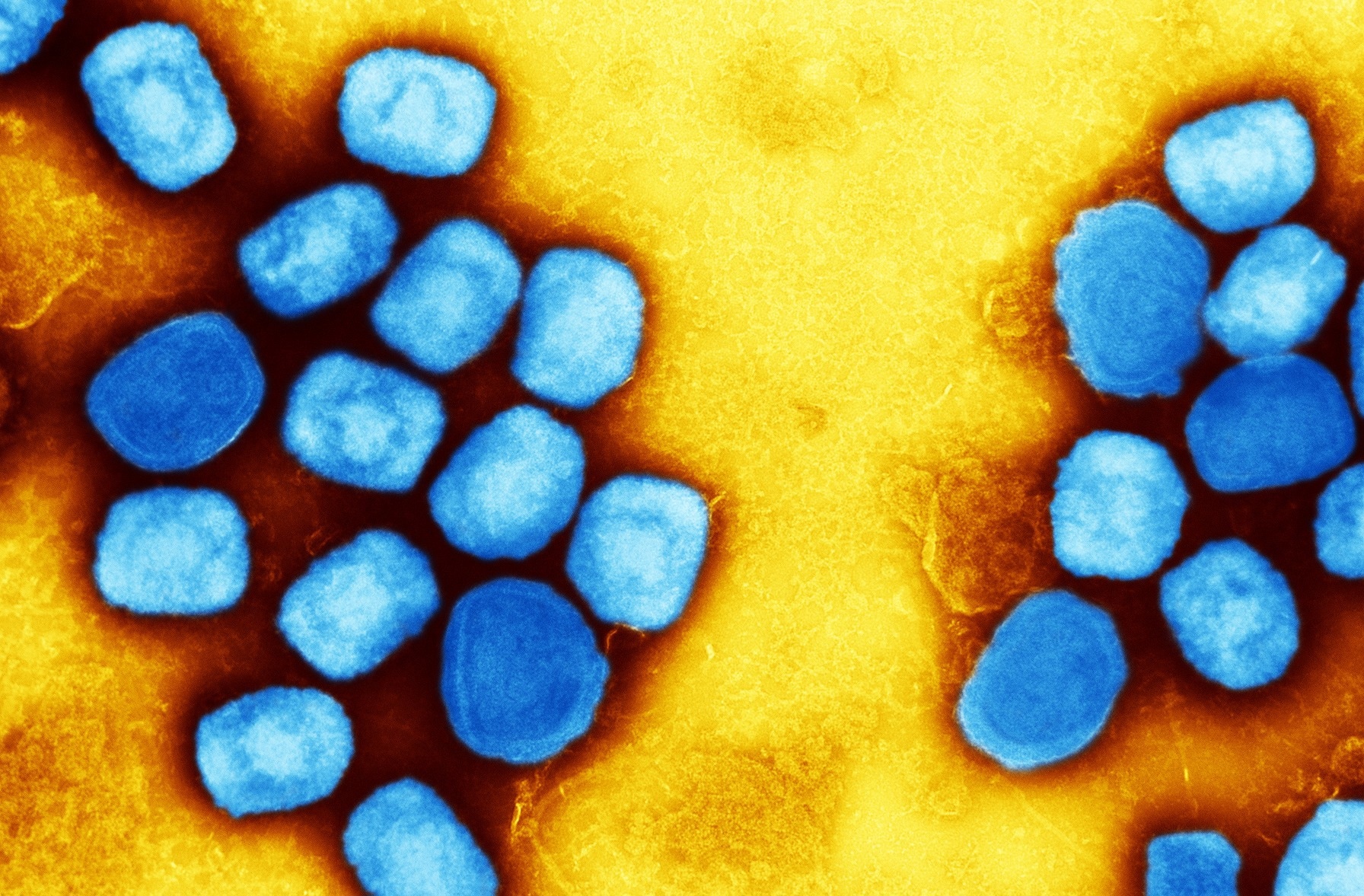
Vaccinia virus (VACV)-based vaccines, originally developed against smallpox, can be used to prevent and control monkeypox. Three known VACV-based vaccines are available, including first, second and third generation vaccines. The use of first-generation vaccines such as Dryvax is not recommended against MPXV for safety reasons. However, second-generation vaccines such as ACAM2000 are relatively safer compared to first-generation vaccines and can be used against monkeypox in the United States.
Genetics & Genomics eBook
Compilation of the top interviews, articles and news from the last year.
Download a copy today
Currently, a third-generation vaccine, Bavarian Nordic modified vaccinia virus Ankara (MVA-BN), is recommended by the US Centers for Disease Control and Prevention (CDC) and the WHO, mainly for high-risk groups. MVA-BN is also a VACV-based vaccine, but cannot replicate in humans and is therefore safer than the previous generation vaccines. However, the availability of MVA-BN is currently limited.
Although these VACV-based vaccines have been observed to have differences in safety profiles and replication, they have been reported to elicit strong T cell responses and high neutralizing antibody titers. Some previous studies also demonstrated their cross-reactive and protective immune responses against various MPXVs. Although MVA-BN and ACAM2000 have been found to prevent MPXV infections, these studies were conducted using the Congo Basin clade of MPXV (MPXV-CB). There are limited data to support the efficacy and cross-reactivity of these vaccines against the MPXV-WA clade responsible for the current outbreak.
A new study published in the Viruses The aim of the journal was to investigate the cross-reactivity of VACV-based vaccines against the MPXV viruses responsible for the 2022 outbreak.
About studying
The study involved downloading complete genome sequences of MPXV-2022, genome reference sequences of MPXV-CB and VACV, and reference sequences for MVA-BN, Dryvax, and ACAM2000 vaccines from multiple multiple sequence alignment databases. The cross-reactivity of the vaccines was assessed using the VACV reference sequence, as this served as a representative for the VACV-based vaccines. Additionally, pairwise sequence alignments were performed to detect genetic similarities.
Data on VACV-derived T cell and B cell epitopes were obtained from the Immune Epitope Database (IEDB). Eight VACV proteins were identified that served as targets for neutralizing antibodies in humans, while 121 VACV proteins were identified as targets of T cells. Finally, visualization of VACV protein crystal structures was performed.
![Mapping-Mutationen, die in MPXV-2022 und MPXV-CB beobachtet wurden, auf der für VACV (A) H3L verfügbaren Struktur [PDB ID: 5EJ0] und (B) D8L [PDB ID: 4E9O] Oberflächenproteine. Die Kernstruktur jedes Proteins ist grau dargestellt, während Mutationen und ihre Markierungen gemäß dem Schema in der Legende gefärbt sind.](https://redaktion.institut-der-gesundheit.com/wp-content/uploads/2024/05/ImageForNews_724287_16624168379806706.png)
Study results
The results showed approximately 84% genetic similarity between MPXV-2022 sequences and VACV reference sequences. The sequences were found to contain approximately 13% insertion/deletion (indel) and 3% single nucleotide polymorphisms (SNPs), corresponding to 27.5 k indels and 6.5 k SNPs. A genetic similarity of 94 to 98% was observed for the eight identified immunogenic proteins between VACV as well as the MPXV-CB reference sequence and the MPXV-2022 consensus sequence.
The same mutation site was observed in 4 of the 8 proteins between VACV and the two MPXV sequences. D8L and H3L were found to be the two proteins with the highest number of mutations that were similar to VACV. Furthermore, it has been observed that all common and unique mutations are exposed and therefore can be targeted by neutralizing antibodies.
In addition, a high level of genetic similarity between T cell epitope-associated 121 proteins of VACV was also observed with both MPXV-CB and MPXV-2022. 71.6% of VACV-derived T cell epitopes were found to share exact similarities with both MPXV-CB and MPXV-2022. However, genetic variation was observed in over a quarter of the T cell epitopes between VACV and both MPXV orthologs. Furthermore, it was observed that 89.2% of T cell epitopes were identical between MPXV-CB and MPXV-2022.
Therefore, the current study showed a high level of genetic similarity between the current MPXV-2022 and MPXV-CB. Furthermore, the genetic similarity between these two MPXV orthologs and the VACV reference sequence was also observed. This suggests that currently available VACV-based vaccines can protect against MPXV-2022. However, further studies are needed to determine the effectiveness of these vaccines against MPXV-2022.
restrictions
The current study has certain limitations. First, further experimental studies are needed to confirm the genetic conservation of immune factors among related viruses. Second, the study does not include the immunodominance hierarchy of proteins that can detect the effects of protein mutations.
Reference:
- Ahmed, SF et al. (2022). Es wird erwartet, dass Vacciniavirus-basierte Impfstoffe eine hochgradig kreuzreaktive Immunität gegen das Affenpockenvirus 2022 hervorrufen. Viren. doi: https://doi.org/10.3390/v14091960. https://www.mdpi.com/1999-4915/14/9/1960
.