

 Suche
Suche
 Mein Konto
What are the clinical features and complications in patients with monkeypox infection?

In a recently published study in Clinical Microbiology and Infection, researchers described the clinical features and complications of monkeypox (MPX) virus (MPXV) infections. Learning: Clinical characteristics of outpatients and inpatients with monkeypox virus infection: an observational cohort study. Image credit: Berkay Ataseven/Shutterstock Background The current global outbreak in 2022 has occurred via human-to-human MPXV transmission between non-endemic countries, while previous outbreaks in endemic countries have occurred via zoonotic MPXV transmission. The clinical profiles of MPXV-positive patients in the 2022 MPXV outbreak have not been well characterized. About the Study In the present observational cohort study, researchers described the demographic and clinical characteristics of MPX in 264 by...

What are the clinical features and complications in patients with monkeypox infection?
In a recently published study in Clinical Microbiology and Infection The researchers described the clinical features and complications of monkeypox (MPX) virus (MPXV) infections.
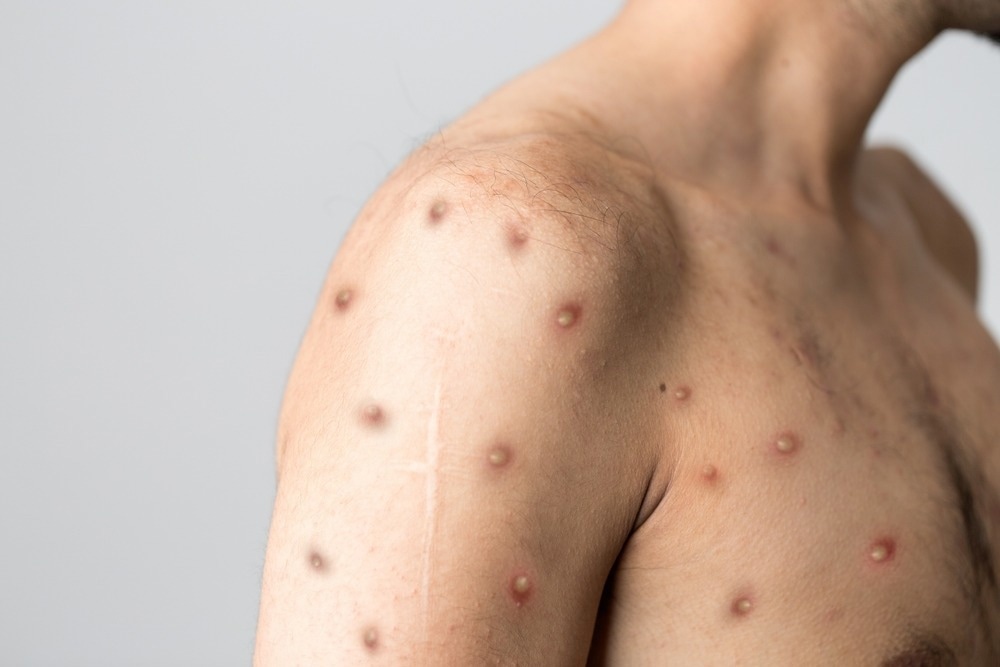
Lernen: Klinische Merkmale von ambulanten und stationären Patienten mit Affenpockenvirusinfektion: eine beobachtende Kohortenstudie. Bildnachweis: Berkay Ataseven/Shutterstock
background
The current global outbreak in 2022 has occurred via human-to-human MPXV transmission between non-endemic countries, while previous outbreaks in endemic countries have occurred via zoonotic MPXV transmission. The clinical profiles of MPXV-positive patients in the 2022 MPXV outbreak have not been well characterized.
About studying
In the present observational cohort study, investigators described the demographic and clinical characteristics of MPX in 264 polymerase chain reaction (PCR)-confirmed MPX patients attending a referral center in France.
The study included consecutively diagnosed MPX patients between May 21 and July 5, 2022 at the Bichat Claude Bernard University Hospital in Paris. ≥1 and ≤3 samples were obtained from the participants, viz. Oropharyngeal swabs, skin swabs and blood samples and real-time PCR assays were performed.
The assays have been validated by the CDC (Centers for Disease Control and Prevention) and the national center for orthopoxviruses in France, i.e. IRBA (Institut de recherche biologique des armées). Routinely collected data were anonymously extracted from patients' electronic medical records. Continuous variables were described as interquartile ranges (IQRs) and medians, while categorical variables were described as percentages and numbers.
Results
Among the participants, 99% (n = 262) were men and 95% (n = 245) were MSM patients (men who have sex with men), 42% (n = 90) had practiced chemsex in the last three months and 29% (n = 73) had human immunodeficiency virus (HIV). Over 70% (n=120) received HIV pre-exposure prophylaxis (PrEP). Over 46% (n = 112) of participants had contact with MPX cases, the majority of which (95%, n = 86) were sexual encounters.
The median number of sexually active partners in the previous month was five [IQR two to 10] and a history of STI (sexually transmitted infections) was reported by 89% (n = 209) of patients, of which 74% (n = 139) occurred in the previous year. The median duration between contact with an MPX-positive patient and onset of symptoms was six days (IQR three to eight days), consistent with the MPXV incubation period.
The average age of the patients was 35 years, 33% (n = 76) had traveled to regions outside Central Africa in the previous month and 18% (n = 38) had pets such as dogs or cats. Over 11% (n=29) patients had received smallpox vaccinations, and four of them had received ring vaccinations following exposure to third-generation smallpox vaccine (IMVANEX(c)) during the current outbreak in 2022.
Skin samples, oropharyngeal samples, and blood samples from 252 participants, 150 participants, and eight participants were MPXV positive, respectively. In 53% (n=136) of participants, there were no prodromal symptoms before the development of dermatologic lesions. The median time between symptom onset and the appearance of dermatologic lesions was three (IQR two to four) days.
Most participants developed fever (68%, n=171) and adenopathy (69%, n=174). Skin lesions were most commonly observed in the genital (54%, n=135) and perianal (40%, n=100) regions. Typical lesions observed were papules (34%), vesicles (57%), pustules (33%), ulcers (34%), eschars (24%) and rashes (8%). Notably, 17% (n = 45) of patients reported multiple relapses, and the median time between the appearance of eschar and the appearance of skin lesions was 17 days (IQR 12 to 18).
Of the participants, six percent (n = 17) were admitted to hospitals, all men, although none suffered from immunosuppressive diseases. MPX complications were observed in 36% (n = 92) of patients, and the most commonly observed were anal pain (18%) and cellulitis (10%). However, complications requiring hospitalization included cellulitis, paronychia, severe digestive and anal involvement, noncardiac angina and dysphagia, blepharitis, and keratitis, which were observed in four, three, four, four, one, and one patients, respectively.
All but one MPX patient had suspected bacterial superinfections and therefore received antibiotic medications with analgesics such as opioids (seven patients) and paracetamol (17 patients) and opioids (7/17). Patients with ocular involvement (n=2) received oral antiviral medications (tobramycin, valacyclovir, and ganciclovir) with dexamethasone and intravenous antiviral injections of cidofovir at concentrations of five mg per kg.
Four participants required surgical drainage (two cases and one case of paronychia and cellulitis, respectively), and Staphylococcus aureus was detected in all their samples. The median length of hospitalization was three days, and MPX management was multidisciplinary in 76% (n = 13) of cases. MPX symptoms completely disappeared in all patients except one patient with keratitis.
Conclusion
Overall, the study results highlighted the properties of MPX viz. (i) MPX occurs in MSM individuals, (ii) through sexual contact, (iii) most commonly affects anal and perineal regions, and (iv) severe complications include paronychia, superinfected dermatologic lesions, digestive and anal involvement, cellulitis, ocular lesions, angina, and dysphagia. Further research, including multicenter studies and longer follow-up periods, is needed to identify the risk factors for severe MPX complications and to develop treatment approaches involving specialists from different medical disciplines.
Reference:
- Mailhe, M. et al. (2022) „Klinische Merkmale von ambulanten und stationären Patienten mit Affenpockenvirusinfektion: eine beobachtende Kohortenstudie“, Clinical Microbiology and Infection. doi: 10.1016/j.cmi.2022.08.012.
.